08 March 2018

UEL Association of Canada meeting on Saturday, March 24

Kingston & District Branch of the United Empire Loyalist Association of Canada will meet on Saturday, March 24 at 1:00 p.m. at St. Paul's Anglican Church hall, 137 Queen Street (at Montreal Street). Speaker Joyce Fingland will discuss "DNA: Which Test and Why?". It may surprise some to learn that 21st-century DNA testing is helping descendants of 18th-century Loyalists connect with one another.

All are welcome. Visitors are also invited to join for a Sandwich 'n Square lunch before the meeting, 11:30 for 12:00 noon seating, $4.50. Further details at www.uelac.org/Kingston-Branch.


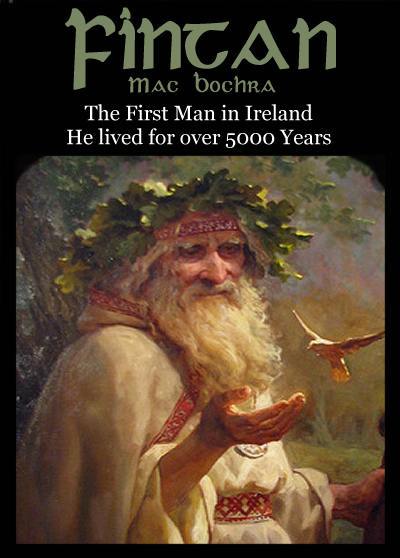
Fintan

The speakers at Saturday's all day seminar on Tracing your Irish and Scots-Irish Ancestors being given for BIFHSGO by the Ulster Historical Foundation are Fintan Mullan and Gillian Hunt. While the name Gillian is familiar Fintan was new to me. I wondered about the origin.

According to Wikipedia:

In Irish mythology Fintan mac Bóchra (modern spelling: Fionntán), known as "the Wise", was a seer who accompanied Noah's granddaughter Cessair to Ireland before the deluge. Bóchra may be his mother, or may be a poetic reference to the sea.

He was one of only three men in the expedition, along with fifty women, so he, Cessair's father Bith, and the pilot, Ladra, had sixteen wives each. Fintan's wives are named: Cessair, Lot, Luam, Mall, Mar, Froechar, Femar, Faible, Foroll, Cipir, Torrian, Tamall, Tam, Abba, Alla, Baichne, and Sille. He married Ebliu later. His only son was Illann.

His wives and children were drowned when the flood arrived but he survived in the form of a salmon, remaining a year under the waters in a cave called Fintan's Grave. He then turned into an eagle and then a hawk then back to human form. He lived for 5500 years after the Deluge, becoming an advisor to the kings of Ireland.

Another version of the story, in James P Mallory's book The Origins of the Irish, had 150 women rather than 50 and Fintan becoming the only surviving male. In what Mallory terms an "entertaining version" the entire troop of grieving widows charged after Fintan and in order to escape what could have been "an endless series of extremely tiring nights he either hid in a cave or turned himself into a salmon to survive for a thousand years and was later reconstituted as a man."

Fintan Mullan will not face the same challenge as his namesake but will need stamina of a different sort during the multi-stop UHF tour.

The image above is from the website Myths and Legends of Ireland - Irish Mythology.

Cumberland Township Historical Society reaches agreement with the Ottawa Public Library

At Wednesday evening's meeting of the Cumberland Township Historical Society it was announced by President Gérard Boyer that the OPL Cumberland Branch will take over and catalogue the Society book collection.

Also, the Society has a collection of local family trees which the library is prepared to take in their collection if the Society photocopies them into a standard format and rebinds them.

There is a further suggestion but no agreement yet that the City of Ottawa Archives might find a way to make these more widely available.

The Society is also coming close to publication of a volume on the early history of the Township.

07 March 2018

YouTube: Irish DNA Atlas

At the Genetic Genealogy Ireland event last month I particularly enjoyed Ed Gilbert presenting the latest update on the Irish DNA Atlas project.
Maurice Gleeson has used video from the Genealogical Society of Ireland inserting the slides which are much clearer than the original recording.
The most course division in Irish autosomal DNA found in the project divides genomes from the UK and some in Northern Ireland from the rest of Ireland and Orkney. 
If you have Irish ancestry, and when you can spare time to take it in, check it out at https://youtu.be/6QjRHa7wASg

Wiggins and Wiggins' Storm Anniversary

On Thursday, all being well with the industrial dispute, I'm giving a talk to a history class at Carleton University on Ottawa weather history. For some reason the topic of Wiggins and Wiggins' Storm has been selected for emphasis by Associate Professor Joanna Dean. Maybe it's taking advantage of the imminent anniversary of Wiggins' long-range prediction of a storm, 9-11 March 1883.

In preparation I went back to look at an item I wrote some 15 years ago on a now defunct website that can be recovered from the Internet Archive-- if you know where to look.
Here's the section on Wiggins.

Ottawa’s Weather Prophet

wig.JPG (2026 bytes)

Ezekiel Stone Wiggins was born in the Grand Lake area of New Brunswick on December 4th, 1839, the son of Daniel Slocum Wiggins and Elizabeth Titus Stone, both of United Empire Loyalist descent. He received secondary education in Ontario, and probably remained to become a teacher in Mariposa township — it was from there he married his cousin, Susan Anna Wiggins in 1862. In 1864 he published "The Architecture of the Heavens" proposing the unusual theory that there is no light in interplanetary space, only in the atmosphere of the planets. This led him to conclude that "worlds may revolve near us, but having no atmosphere may be forever hidden from the view of the astronomer." "Universalism Unfounded" followed in 1867 advocating a literal interpretation of the Bible.

He taught in Ingersoll, Oxford County, and was first principal of the Institute for the Education of the Blind in Brantford from 1871 to 1874. Following his father’s death in 1873 he returned to New Brunswick and established his own school for boys in Saint John. He became politically active, unsuccessfully running for political office, then moved to Ottawa and a job with the Federal Finance Department.

Wiggins avocation became storm prophecy and starting in 1881 he earned an international reputation..

His most widely known prophecy, for a March 1883 storm, was a public event, if not a successful prediction.

He refined his prediction techniques, and wrote to the New York Tribune on June 3rd 1884 postulating the existence of one or more invisible moons in order to explain deficiencies in his forecasts. A rebuff from the scientific community came in an editorial in The American Meteorological Journal:

"Mr. Wiggins assumes that weather and earthquakes depend on the moon and, when the moon will not do the work required of it, he freely adds another moon or two. Evidently the method is capable of indefinite expansion; a hundred invisible moons can be added if necessary, and with these he can account for anything. The simplicity and adaptability of this method needs no further illustration. We note that an additional advantage is that it disposes of all anxious labor and worry which most scientific investigators have to go through in adjusting their theories to known principles. We proceed, with sincere regret, to deprive Mr. Wiggins of the right of priority to his method. The fact is that it has been employed by operators of his class from time immemorial. But, though he loses his priority in discovery and method, he can not be deprived of the colossal imagination nor of the heroic contempt for logic, which are displayed with unmistakable clearness in his whole letter and in his previous publications, and his graceful disregard of the usually accepted principles of science are worthy of our highest admiration."

He persisted with storm forecasts but evidently became disillusioned with his lack of success. For a while Wiggins dropped into relative obscurity. He built a home in Britannia Bay, an Ottawa suburb, and served as President of the local yacht club.

In the 1900s he regained some prominence being quoted on various subjects in the Ottawa media. Headlines included "Professor Wiggins says the Sun is Inhabited", "Second Moon in the Heavens Responsible for Cold Weather in the Opinion of Prof. Wiggins". The Toronto Star responded: "Prof. Wiggins claims to have seen two moons lately, but lots of people in Ottawa get that way every night."

Wiggins remained a public servant with the Finance Department until two years before his death in 1910.  Newspapers were factual in their obituaries, emphasizing the positive --  "one of the most unique figures to come before the public eye in Canada."

In later years articles with titles like "Weather Seer Still Not Matched" gave a rosy picture of his weather prophecies —"tornadoes and blizzards which he pinpointed … struck precisely when and where he warned!"


Newspaper Coverage

New York Times: Saturday, February 10 1883
WIGGINS
Of course WIGGINS’S storm was a failure. Every sensible person knew that it was impossible that WIGGINS could foresee weeks in advance what sort of weather we should have on a given day. Nevertheless, there were thousands of people who, prior to yesterday, has a lurking faith in WIGGINS, and thought that perhaps he might be a true prophet. What WIGGINS really did was to take the chances that in a particularly stormy month there would be a storm on a given day. A timid prophet would have hedged, and instead of prophesying a storm on the 9th of February, would have prophesied a storm between the 7th and the 12th of the month. Such a prophet would very likely have hit the truth, but he would have received little credit for it, since nobody expects five consecutive days of pleasant weather in February. WIGGINS, on the other hand, selected the 9th of February, and no other day, as the date of his particular storm, knowing that if there should be a storm on that day his reputation would be made and no argument could shake the public faith in him. Had his prediction been fulfilled, probably half the people in this country would have believed in the terrible storm which he has also predicted for some day in March, and the approach of that day would have caused a real panic. WIGGINS knew that VENNOR had fallen into disrepute by making too cautious prophecies, and he resolved to stake everything on the success of a single prediction. Fortunately for the public peace of mind, he has failed, and henceforth he may prophesy ten hours a day without getting anybody to pay attention to him or to buy the almanac which bears his name.
The most curious feature of the WIGGINS incident – to speak after the manner of Frenchmen – is the unquestioning faith which the public has placed in the existence of WIGGINS. Even those who have doubted his prophecies have never doubted his existence. That there is some one who wrote the original WIGGINS prophecy of storms in March and February is undoubtedly true, for nothing – except, perhaps, a political speech in defense of protection – writes itself. But to believe that this unknown and utterly obscure writer of a newspaper paragraph is a great Canadian astronomer named WIGGINS, with a real telescope and a practical familiarity with transits of Venus, is impossible to any thinking man.
In the first place, "Wiggins" is clearly impossible. Even DICKENS could not make people believe in the existence of "Stiggins," and though the man would have been thought probable had he been called by almost any other name, he has always been regarded as a wild caricature simply because of his improbable name. There may be a "Higgins" who is an astronomer, and it is barely possible that there is a "Biggins" engaged say, in the livery-stable business, or possibly in the tinware trade. But when we are called upon to believe in a "Wiggins," too great a demand is made upon our credulity. No child crushed under the name of Wiggins could possibly reach maturity. Such a name would crush all ambition and interest in life out of a boy, and if by a chance a boy Wiggins ever did arrive at a man’s estate he would lose no time in formally changing his name and adopting a new one less offensive to decency and more worthy of belief.
Granting, for the sake of argument, that a Wiggins is possible, how can any one permit himself to believe in the existence of an astronomer Wiggins? An astronomer is a man who is sent at the cost of the nation on scientific picnics in connection with the transits of Venus, and who employs his time between successive transits in discovering new asteroids. No Wiggins ever went on an astronomical picnic. The astronomers engaged in such recreation are naturally careful in the selection of their associates. It is necessary that the public should believe that astronomy and not "junketing" is the ruling passion of observers of transits, and hence astronomers always wear names which give them an air of respectability. The presence of a Wiggins in a transit expedition would throw suspicion on the whole affair People would instantly say that the person calling himself Wiggins was clearly passing under an assumed name, and that instead of being a learned astronomer, he was, in all probability, a faro-dealer or a cornet-player hired by the real astronomers to aid in making their hours of relaxation pleasant. No person called Wiggins ever took part in a transit picnic, and hence we are very nearly justified in concluding that there is no astronomer of that name.
Moreover, the records of science may be challenged in vain to produce a single asteroid discovered by WIGGINS. The names of the discoverers of asteroids can be found in almost any almanac, but the name of WIGGINS is not among them, This pretended astronomer with the impossible name has never observed a transit of Venus, never discovered an asteroid, never quarrelled with another astronomer over the discovery of a new comet, and, in short, never given any signs of astronomical existence. The conclusion that there is no such astronomer as WIGGINS is inevitable, and it is a conclusion that every one ought to have arrived at long ago.
The impudence of the alleged WIGGINS is so great as to almost atone for his existence. The newspaper paragraph writer who conceived the idea of calling himself WIGGINS, of pretending to be an astronomer, and of prophesying a terrible storm for a fixed date has every qualification for making a brilliant success either as a plumber, a book agent, or a Congressman employed by Mr. ROACH to build up American shipping by forbidding Americans to own ships.
New York Times: Thursday, Feb 22, 1883
Scared by a Weather ProphetGLOUCESTER, M, Feb 21.—Wiggins’s prediction of a terrible storm from March 9 to 12 has deterred a number of Captains and crews (returned Georges Banks men) from making the next trip, which would bring them on the Banks at the time of the storm. The women are urging the men to stay at home, and it is feared that the idleness will become general among the Georges men, and the best time in the season for a good catch will be lost.
New York Times: Wednesday May 2, 1883
THE GHOST OF WIGGINS
STONE WIGGINS, the Canadian seer, astrologist, and weather prophet, rises superior to fate. He would have us believe that he is really a WIGGINS, and actuary, and not a mere abstraction. He has written a letter, dated at OTTAWA, April 27, 1883, and sent out in proof-slips to the newspapers of the United States. This document is signed "E. STONE WIGGINS," as if this were the name of a real person. It has repeatedly been proved, to the complete satisfaction of scientific persons of various nationalities, and of various degrees of dullness, that there never was a WIGGINS. And even admitting, for the sake of illustration, that a man bearing that remarkable name did actually exist in science, it was demonstrated tot he satisfaction of the majority of the human race that if there was a WIGGINS, and he did really write prophecies which bore his name, he should have been called ANANIAS and not E. STONE. Nevertheless, here comes this preposterous person, claiming to be E. STONE WIGGINS, and pretending that his lying prophecies were fulfilled. We sometimes hear of a variety of assurance known as "brazen check." This is an example of adamant.
The special occasion for the appearance of the letter from the alleged WIGGINS is a proposition to make the usual annual appropriation for the Canadian Meteorological Bureau. Meteorological bureaus, WIGGINS incidentally remarks, are a failure, because they are "utterly unable to predict a single hour in advance the approach of a great and dangerous storm." This is a heavy indictment of meteorological bureaus. Without stopping to inquire as to its truth, we must see that the only safety of a world lying in meteorological darkness and ignorance is WIGGINS. Of what avail is it that the meteorological bureaus watch the course of storms, and note the variations of the wind gauge and the barometer? WIGGINS says that all of these are rubbish. One must study the stars and observe the planetary forces, if he would know what weather to expect from day to day. Our costly apparatus, the telegraphic lines that convey observations from point to point with the rapidity of lightning, and all the paraphernalia which scientific men have invented to grasp the subtle influences pervading the earth and its atmosphere, must be discarded. What we really need is a multiplication of WIGGINSES. In place of Signal Service observers, we should have a WIGGINS at each available station. The, and not until then, we shall be able to forecast the weather.
But the sublimity of assurance is reached when WIGGINS calmly proceeds to characterize his predicted cataclysm of March 9,10 and 11 as an accomplished fact. Canadian frigidity can be no cooler than this. The Wiggins prophecy is not yet two moons old. Even the tender children have not forgotten the direful catastrophes which the Canadian seer declared would fall upon this devoted sphere. There was to be a double procession of storms travelling across this continent from the Pacific to the Atlantic; tidal waves in the Indian Ocean and the bay of Bengal; tornadoes, hurricanes, and things generally going to everlasting smash. There was the usual harmless March gale. A vessel was wrecked, as vessels are wrecked every day in the year, and an old lady on the Bay of Chaleurs lost a whole week’s washing by the blow. And now, when, several greater and unheralded (by WIGGINS) storms have come and gone, WIGGINS lifts up his voice as blithely as if he not been threatened with death by the angry sea-farers whom he deceived. He chatters about the earth’s centre of gravity, the moon’s conjunction with the sun, and the attractive powers of heavenly bodies. WIGGINS lags superfluous. If there ever was a Wiggins, he is dead and buried fathoms deep. It is a gross impertinence that he should revisit the pale glimpses of the moon which he has slandered, His bones are marrowless; there is no speculation in his almanac ...
© 1999-2001, John D. Reid

Berton Hurlbert: CWGC Beechwood

On 7 March 1918 Flying Officer Cadet Berton Earl Hurlbert was killed in a flying accident at Benbrook Field while training at Camp Talinfero, Fort Worth, Texas.
The body was returned to Ottawa for burial with military honours from the family home at 141 Fourth Avenue on 14 March to Beechwood Cemetery.
He was born 19 March 1893 in Augusta Township, Grnville County, Ontario, the oldest son and second child of farmer Berton A. Hurlbert and Gussic Birks Hurlbert.


06 March 2018

Harvest Your Family Tree Conference, Kelowna, 28-30 September 2018

Mary Read from the Kelowna & District Genealogical Society wrote to let me know that registration is now open for their Conference 2018.
They have a constellation of big name speakers: Blaine Bettinger,  Cyndi Ingle, Helen V. Smith, Dave Obee, Ottawa's own Lesley Anderson, and more.
It's a great time of year to visit British Columbia and the Okanagan with the average maximum temperature 18 C, minimum of 3 C, and fewer than 1 in 3 days with precipitation. Your experience may vary!
​
Find out all about the conference at https://kdgswix.wixsite.com/kdgs

Game of Genes

The second video posted to YouTube from the Genetic Genealogy Ireland sessions in Belfast last month is Donna Rutherford's talk which was the final one of the conference. She creatively used Game of Thrones as a departure point for a variety of DNA-related topics which would not otherwise warrant a place in the event.


The visual quality as well as the content is good; the audio is a bit muddy.

05 March 2018

Early Logging in Cumberland Township

Cumberland Township Historical Society will meet for a presentation on Wednesday, 7 March.

We know of the existence of three sawmills at the beginning of Cumberland Township’s history. We will review their existence, purpose and location and then jump to the 1861 census to identify the large scale logging that was going on then. 
The presentation is by Gérard Boyer and Thomas McNeely. 
7:00 p.m., Cumberland Branch of the the Ottawa Public Library.

Parking Charges at TNA

If you park at the UK National Archives be aware that under the innocuous heading "Changes to car parking at The National Archives’ site in Kew" TNA announces they are instituting charges for parking from 3 April 2018.
Why couldn't they be more straightforward and make the headline "Charges for car parking at The National Archives’ site in Kew instituted"?
Most of us don't go to TNA often enough to get worked up about it, but why a tiered charging scheme?
Up to two hours £2.50
Up to four hours £4.50
Over four hours £7.00
If I had a vote I'd opt for, say, a £1.00 per hour basis.

Find the TNA announcement at http://www.nationalarchives.gov.uk/about/news/changes-to-car-parking-at-the-national-archives-site-kew/

#NotAtRootsTech

Perhaps you've noticed I was quiet on the blog about RootsTech going on last week.

I went to RootsTech a few years ago and found it a fascinating experience. There were excellent talks, networking opportunities, a huge marketplace, American razzmatazz and hordes of folks at all levels of expertise. If you can't find something that appeals you're brain dead.

Trouble was it was just too much. I was only getting a small part of what was on offer, and it was so crowded on a couple of occasions I couldn't find a seat in the talk I'd chosen.

I'd rather attend a smaller more specialized event, like the Genetic Genealogy Ireland talks at Back to Our Past, Belfast, I recently returned from.

Then there's T****. When he was elected I decided to be selective about travel to the US. I'm not going to cut off my nose to spite my face but will need a compelling reason to travel there. I'd be more inclined to visit states that didn't vote for him, like New York, Colorado and California.

Airfare, accommodation, food and registration adds up. I'm not inclined to spend say $1,000 which goes to bolster the economy of T****'s America, especially states like Utah that voted for him.

Now the threat of starting a trade war doesn't help.

There are recording of some RootsTech sessions, including some that were not part of the live feed, available for replay through https://www.rootstech.org/.

I've not looked at any. If you have are there any you recommend?

04 March 2018

Gene-O-Rama 2018

13-14  April, Friday evening and Saturday, are the dates for the 2018, and 33rd edition of Gene-O-Rama.
It's not apparent unless you look at the mail-in form but there is a deadline of Friday 16 March for early-bird registration.
Those of us attending the BIFHSGO meeting that Saturday morning can register for a half-day at $20 at the early-bird rate, $23 thereafter.
Find information and links for the brochure and mail in form at http://ogsottawa.on.ca/

Which DNA Company?

At Saturday's Ottawa DNA special interest group we asked for a show of hands by those who had autosomal DNA test results as to where they could be found. That meant they'd either tested there or transferred results.

There are surprises.
Despite having the largest number of clients globally Ancestry does not top the list. Many group participants had experience going back several years, before Ancestry entered the market. FTDNA has frequently been represented at local conferences. And AncestryDNA does not accept uploads from other companies unlike most others.
LivingDNA being on a par with 23andMe likely reflects their presence at the OGS Conference in Ottawa last year whereas 23andMe has never had a presence at a family history conference in Ottawa (or Canada?).
MyHeritage, which was at the 2017 OGS conference, trails. That will likely change as the improved capabilities of the company analysis become apparent.

03 March 2018

Bethnal Green Disaster

On this date, 3 March, in 1943, 173 Londoners, most of them women and children, were crushed and asphyxiated in the single deadliest British civilian Second World War disaster.

A middle-aged woman and a child descending into an air-raid  shelter fell over, three steps up from the base and others in the orderly flow of people down the blacked-out staircase from the street fell around her, tangled in an immovable mass which grew, as they struggled, to nearly 300 people. Read more at Wikipedia.

If you may have had relatives in the area at the time here are the surnames of the deceased from the Commonwealth War Graves Commission database: AARONS; ASSER; BAILEY; BAKER; BASS; BEAKEN; BEGER; BENDON; BENNETT; BOSWORTH; BOWLING; BOXER; BROOKS; BROOKSTONE; BUTTERFIELD; CHANDLER; CHAPMAN; CLATWORTHY; COLEMAN; COLLETT; COURT; DAY; DONGREY; ELLAM; EMERY; FLETCHER; FORBES; FOWLER; FRENCH; GEARY; GROVER; HALES; HALL; HAMMOND; HARRIS; HAWLEY; HAYMAN; HEWITT; HIGGINSON; HILLIER; HISCOKE; HOYE; HUTCHINSON; INGLE; JOHNS; JOHNSON; JOLLY; JONES; JULIER; KOROBENICK; LAND; LAWSON; LAZARUS; LECHMERE; LEGGETT; LEWIS; LOFTUS; MAGUIRE; MASON; MATHERS; MEAD; MORRIS; MYERS; NEVILLE; NEWMAN; NEWTON; NIXON; PAPWORTH; PATTERSON; PERRYMENT; POOLE; PRICE; PUSEY; QUORN; RAULINAITIS; REDWIN; RELF; REYNOLDS; RIDDELL; RIDGWAY; ROCHE; SCEATS; SEABROOK; SEAR; SHARPE; SHEPHERD; SINNOCK; SMITH; SPEIGHT; SPICER; STEVENS; STRETCH; TARBUCK; TAYLOR; THOMPSON; THORPE; TILBURY; TRAYLING; TRICE; TROTTER; VANN; VANNER; WARRINGTON; WELCH; WHITEHEAD; WILSON; WOOD; WOOLNOUGH; YEWMAN.


02 March 2018

Important additions to MyHeritage

I hadn't expected to see the 1939 National Register for England and Wales  become available elsewhere than at Findmypast for several years, but MyHeritage has it - even if a transcription without images of the original. It's not quite a census, but does include exact birth dates.
Also released is a collection of 2 million Canadian obituaries post 1997, and a U.S. Yearbooks Name Index, 1890-1979 collection.

Here's the company press release.

March 02, 2018 04:10 PM Eastern Standard Time
TEL AVIV, Israel & LEHI, Utah--(BUSINESS WIRE)--MyHeritage, the leading global destination for family history and DNA testing, announced today the addition of three important historical records collections that provide value for family history enthusiasts worldwide.

MyHeritage releases new collections with 325 million historical records

1939 Register of England & Wales
Prepared on the eve of World War II, with 33 million searchable records, the 1939 Register is the most complete census-like collection for the population of England and Wales between 1911 and 1951. This is because the 1921 census of England and Wales is time-protected by privacy laws and will be available online only in 2022, the entire 1931 Census was destroyed by a fire, and no census was conducted in 1941. For each household member, the 1939 Register records name, gender, address, birth date, marital status, place of residence, and occupation. This collection is an extremely important resource for family historians and people with ancestors in England and Wales. The 1939 Register collection is not exclusive, but other than MyHeritage, it is currently available on only one other website. The initial collection on MyHeritage includes an index, without images.

Of the 42 million records of individuals in this collection, 8.2 million records remain closed due to privacy protection requirements, and about 700,000 additional records appear without full names. Records are closed for those individuals who were born less than 100 years ago unless matched to a registered death record. These closed records will be made public and added to this online collection on a yearly basis going forward.

U.S. Yearbooks Name Index, 1890-1979

In December 2017, MyHeritage published an extensive collection of U.S. yearbooks with 36,207,173 pages in 253,429 yearbooks. This collection was a free-text collection allowing users to search by name or keyword. Not stopping there, MyHeritage engineers have been working for the past year to develop an unprecedented automated name index from this collection. The fruit of this work is now released as a separate collection named the U.S. Yearbooks Name Index, 1890–1979. The new collection is one of the largest collections of digitized U.S. yearbooks in existence, containing 289 million structured records. In the new collection, the names of the students and faculty members have been automatically extracted using name extraction technology. The personal photos in the yearbooks have been automatically detected and extracted using picture detection technology, and in many cases the names and the photos have been associated with each other using a third proprietary technology developed by MyHeritage. Finally, technology has been developed to automatically differentiate between students and faculty members, to determine the graduation class of each student and to calculate birth years.

All occurrences of the same name in each yearbook were consolidated into one record with references to the pages where the person is mentioned. The end result is a one-of-a-kind structured U.S. yearbook collection in which names can be searched accurately (with synonyms and translations, which is often not possible in free-text collections), as well as matched automatically to the family trees on MyHeritage using the company’s Record Matching technology. This makes U.S. yearbooks one of the most valuable genealogical resources for family historians today, and this treasure trove of information is available in this unique and highly accessible form only on MyHeritage. The records list the person’s name, school’s name and location, and likely residence based on the location of the school. Where possible, a personal photo is provided. For each person, full access to all applicable yearbook pages is provided. Additional work is being carried out to complete the association of names with photos, and this will be released as an update to this collection in the future.

Canadian Obituaries

A collection of 2 million records documenting obituaries and memorials from the 10 Canadian provinces, spanning mostly 1997-2017. It includes the name of the deceased, the date of death, the publication source including locality information, and the text of the obituary or memorial — in English or French depending on the source. When available, a photograph of the deceased is also included.

Summary

“The depth and diversity of these hundreds of millions of historical records is a blessing for people searching for information about their families,” said Russ Wilding, Chief Content Officer of MyHeritage. “Aside from the release of the collections themselves, we have invested much effort and demonstrated technological innovation to make it as simple as possible to glean useful genealogical information from these historical records.”

The three new collections are accessible through SuperSearch™, MyHeritage’s search engine for historical records, which now contains 8.8 billion historical records. Searching the collections is free. A subscription is required to view the records.

Major Upgrade to MyHeritage Chromosome Browser

The following announcement is from MyHeritage.

The initial version of the MyHeritage Chromosome Browser, released in January 2018, was a one-to-one chromosome browser. It displays DNA segments shared by you with one DNA Match.
 
The new One-to-Many Chromosome Browser, with its support for indicating triangulated segments, is an exciting addition to MyHeritage’s growing arsenal of useful tools for genetic genealogy. The tool is completely free.

Also new is the ability to export the list of DNA Matches, along with several other export capabilities.
 
Please see the full press release here:
https://www.businesswire.com/news/home/20180302005426/en

Forthcoming Family History Books

The following are listed on amazon.co.uk as being published in the next two months.

The Family Tree Historical Newspapers Guide: How to Find Your Ancestors in Archived Newspapers
by James M Beidler
Published 20 Mar 2018
Format: Kindle Edition
File Size: 38474.0 KB
Print Length: 240 pages
Publisher: Family Tree Books
For US newspapers, already available in North America.

Street-Wise Guide to Doing Your Family History
by Teviot, (Lady) Mary
Published 29 Mar 2018
Hardcover: 160 pages
Publisher: Edward Everett Root Publishers Co. Ltd

Publishers Summary: This unusual book stands out in a crowded field. a It provides practical, expert, insider-knowledge. It includes a full guide to current websites. It offers many tips, short-cuts and helps to access the evidence you need. And to understandings of what this means. It is rooted in the many years of day-to-day enquiries in family history by the noted international expert Lady Teviot. It will be invaluable to the beginner and of great value to the more knowledgeable. It will help you rapidly to become street-wise' in what will be a complex but fascinating personal endeavour.

Review by Christopher Whittick, East Sussex County Archivist: "Lady Teviot has distilled over half a century's experience of family history research into this detailed yet highly approachable guide. Her style engages the reader from the outset, and succeeds in conveying a wealth of information through combining clearly-presented fact with details of her own genealogical journey, which has taken her from a beginner to a researcher with an international reputation. Every aspect of family history is covered, with hints and short cuts which will smooth the beginner's path in what can be a treacherous field. And don't think this book is just for the inexperienced – I have been working with records for over 40 years and as well as enjoying some new family history anecdotes, learnt much about the record sources which some of us take for granted. You may not be a Street-wise genealogist when you embark on this book, but you certainly will be when you finish it."

Tracing Your Georgian Ancestors 1714-1837: A Guide for Family Historians (Tracing Your Ancestors)
by John Wintrip
Published 30 Mar 2018
Paperback: 224 pages
Publisher: Pen & Sword Books Ltd
Publishers Summary: The Georgian period - 1714 to 1837 - was a key stage in our modern history so some understanding of it is essential for family historians who want to push their research back into the eighteenth century and beyond, and John Wintrip's handbook is an invaluable introduction to it. In a sequence of concise, insightful chapters he focuses on those aspects of the period that are particularly relevant to genealogical research and he presents a detailed guide to the variety of sources that readers can consult as they pursue their research. While fewer sources are available than for more recent history, obstacles in the way of further research can often be overcome through knowledge of a wide range of sources and a greater understanding the historical context, together with the use of sound research techniques. So the author provides not only a historical overview of relevant topics but he also describes the records of the period in detail. This expert guide to researching the Georgians will open up the field for experienced researchers and for newcomers alike.

Tracing Your Ancestors: Cambridgeshire, Essex, Norfolk and Suffolk: A Guide For Family Historians
by Gill Blanchard
Published 30 Apr 2018
Paperback: 224 pages
Publisher: Pen & Sword Family History
Publishers Summary: Gill Blanchard's practical and informative handbook will help you to trace your ancestors in the traditional counties of East Anglia Norfolk, Suffolk, Cambridgeshire and Essex and it will give you an insight into their lives. As well as guiding the researcher to historical records held in all the relevant archives, she explores the wealth of other resources that add the 'flesh to the bones' of our ancestors' lives. She describes how fascinating information can be discovered about the places they lived in and the important historical events they lived through, and she traces the life stories of notable people from all backgrounds who shaped the regions development over the centuries. Her account highlights the diversity of this part of England but also focuses on its common features and strong sense of identity. It introduces a wide array of research resources that will be revealing for readers who want to find out about their ancestors who lived here.


Answering a Query: "Your Genealogy Today: March/April 2018"

My copy of the new Your Genealogy Today appeared in my mailbox today and having just read it I'm taking the opportunity to respond to the comment posted by Sophronia to the previous post.

As this appears to be a primarily US publication, although they have offices in Ajax, ON, I am wondering if someone who subscribes can tell me if it has enough Canadian and Worldwide (UK) content to be worth the price of a subscription.
Your Genealogy Today is from Canada-based and owned Moorshead Magazines. The staff is Canadian.
It is circulated widely in the US and major content is written by US authors. Ten of the 12 authors in this issue are US based, one in Canada, one Wales.
Of the two longest articles, US-authored, one is entirely on Irish research, the other includes sources for immigrant origin information which could be useful beyond North Carolina--the article's subject.
Some of the other content is generic, not country specific, such as articles on gazetteers, a humorous article on not buying books, and advice on finding information in legal notices in newspapers.
In any magazine it's rare that every article appeals as you read the table of contents. I might buy a magazine if I find an article or two appealing, then with it in hand go on to find interesting content in other articles where I didn't expect it.
Only you can judge whether the content is worth the price for you.  Give it a try. Pick up a copy at a newsstand, or perhaps your local public library has a subscription.

Monthly backup nag

A gentle reminder.

01 March 2018

Ottawa DNA Group Meeting

This Saturday, 3 March, the BIFHSGO sponsored DNA group will be meeting at 9:30 am at the Ottawa City Archives, 100 Tallwood. All welcome.
I've been asked to give an update on the Back to Our Past (BTOP) conference in Belfast in February. The sessions were live streamed through the Genetic Genealogy Ireland Facebook group where an archive is available.
Better quality videos of presentations online are being uploaded to YouTube by Maurice Gleeson. The first, Debbie Kennett speaking on the DNA analysis of Titanic victims buried in Nova Scotia, is now online.


Also on the meeting schedule, in response to a member request, is watching a video on How to Create a Mirror Tree and discussion the pros and cons of this approach.
There will be a round table discussion with remaining time.