Parks Canada last month released, and I missed until now, film taken inside of the wreck of the HMS Terror from the Franklin Expedition.
A remotely-operated vehicle explored the interior of the ship, recording high-definition video of the cabins and the astonishingly well-preserved artifacts still in place. Note the mention of the possible preservation of documents.
09 September 2019
Exploring HMS Terror

DNA test experience survey results
The survey was completed by 61 people.
Responding on places your great-grandparents and following generations lived?

This is as expected, heavily weighted toward Canada and UK/Ireland — the survey was not publicized beyond the blog.
35% reported endogamy or pedigree collapse in their ancestry, 50% none, and the remainder responded maybe/don't know.
Those responding had experience with 181 tests from the five companies. AncestryDNA's latest ads now claim 20 million members so it's not surprising that 89% mentioned testing with AncestryDNA. Others in order were Family Tree DNA at 80%, then MyHeritage DNA 51%, Living DNA at 43% and 23andMe at 35%.
Overall 77% reported being somewhat satisfied or very satisfied (combined) with the test.
AncestryDNA led the pack with 94% combined satisfaction, followed by Family Tree DNA (81%), 23andMe (81%), MyHeritageDNA (77%) and, trailing, Living DNA (31%).
Comment
AncestryDNA leads in terms of both the number of times mentioned and combined satisfaction.
23andMe had the fewest test-takers those that did were fairly satisfied. They might also be happy that unlike the other companies, except LivingDNA, they also got a read in their mitochondrial and Y-DNA (if male) in the same test.
Living DNA has likely suffered in not having a database in which to find individual matches. The company now has a Family Networks feature which predicts relationships between clients "with groundbreaking detail" but for me, there are no matches.
08 September 2019
Sunday Sundries
Miscellaneous items I found of interest during the week.
What do we lose when records are digitised?
John Grenham contemplates the dark cloud accompanying every silver lining.
Introducing: MyHeritage Education
"If you think education s expensive, try ignorance" was a sign in a former workplace. The new online resource center for enhancing your understanding of MyHeritage’s tools, products and services, and to help you make the most of your family history research isn't expensive — it's free. Visit here.
Do Influencers Need to Tell Audiences They’re Getting Paid?
Interesting findings published in the Harvard Business Review in view of the comments to my post Should I experiment with affiliate marketing?
UK Diplomatic countdown to war
A guide to Ottawa’s forbidden wineries
There are quite a few. Who knew?
The 12 Best How-To Sites That Everyone Should Bookmark
CWGC Beechwood Cemetery Burials: James Henry Weedon
 | ||
Shared on Ancestry by
| creinke1330 |
Prior to enlisting he was employed at Russell Shaw Brick Yards, attested in Ottawa on 6 January 1916, sailed from Halifax with the 77th Battalion in June that year. He was hospitalized with arthritis in March 1917 and returned to Canada the following June.
He died early Monday morning, 8 September 1919 in St. Luke’s Hospital, following an illness of six weeks duration. He is buried at Beechwood Cemetery in section 29, lot 15.
His wife, Alice Louisa lived at 347 Arthur Street, Ottawa and they had four children: Florence Ann, aged I3: Alice Edith, aged I2; Henry John James, aged 8. and Edward Russell, aged 6 years.
07 September 2019
MyHeritage continues to grow acquiring Promethease and SNPedia

This is the company's first consumer health acquisition and10th acquisition since MyHeritage’s founding. Promethease will be made free through the end of 2019 and SNPedia will remain a free wiki resource for academic and non-profit use.
Read the news at https://blog.myheritage.com/2019/09/myheritage-acquires-promethease-and-snpedia/
Ancestry adds Pembrokeshire Electoral Registers
The new Ancestry collection Pembrokeshire, Wales, Electoral Registers, 1740-1978 contains 1,045,222 entries. It's compiled from 11 different types of registers and lists, the major ones being the 68 Registers of Electors with dates after the 3rd Reform Act, from 1885 to 1978 and, 35 Names of Person Entitled to Vote after the First Reform Act from 1834 to 1887.
The index was created using text recognition software. The index might show, typically, name, residence date, street address, electoral division with a link to the printed original page.
The originals are from the Pembrokeshire Archives, Haverfordwest
Advance notice: Discover Your Quebec Roots: QFHS one-day conference
Join fellow researchers for a day of discovery, 9:30 am to 4:00 pm on Saturday, October 12, 2019 at the Quebec Family History Society Heritage Centre “Simon Fraser House”, 153 rue Sainte-Anne, Sainte-Anne-de-Bellevue
I'm informed that limited space is available so reservations are a must. See full details and registration information at www.qfhs.ca
Cost is $40.00 for QFHS Members and $50.00 for Non-Members
06 September 2019
Ancestry adds Bristol BMB records
Over 5 million new "Bristol" Church of England Parish Registers and Bishop Transcripts from the Bristol Record Office are now available to search and browse on Ancestry. They include parishes from Gloucestershire and a few from Somerset.
Bristol, England, Church of England Baptisms, Marriages and Burials, 1538-1812; 1,915,478 records
This database includes records with dates ranging from 1538 up until 1754 for marriages
and 1812 for baptisms and burials, after which Hardwicke's Marriage Act and George Rose’s
Act respectively called for separate preprinted registers.
Bristol, England, Church of England Baptisms, 1813-1918; 1,847,025 records
Bristol, England, Church of England Marriages and Banns, 1754-1935; 1,045,461 records
These include images of the record in the same format you would get from the GRO after mid-1837.
Bristol, England, Church of England Burials, 1813-1994; 284,422 records
Findmypast adds Scotland Catholic and Yorkshire School Records

Over 236,000 additional records covering 146 parishes have been added to our collection of Scottish Catholic baptisms. The total is now 857,561 records.
Each result includes both a transcript and an image of the original document that will reveal a combination of birth date, baptism date, baptism place and parents' names. Images may also reveal the names of godparents or sponsors as well as additional comments.
Scotland Roman Catholic Parish Marriages
A further 129,000 Scottish Catholic marriages are also available to search, the total is now 405,062 records.
These transcripts and images reveal when and where the marriage occured as well as the names of their spouse and father. Images will often reveal additional details such as the names of witnesses and couple’s residences.
Scotland Roman Catholic Parish Burials
Discover where your Catholic ancestors were laid to rest with over 16,000 additional burial records.
All of this week’s Scottish Catholic additions are exclusive to Findmypast and cover 124 parishes across the country from 1745 to 1969. As well as birth year, death date, burial date and location, images may reveal their marital status, cause of death or additional comments.
Scotland Roman Catholic Parish Congregational Records
Last but not least, a further 114,000 congregational records are now available to search, a total of 456,022 in the collection.
Covering all eight Scottish Catholic dioceses, this collection includes registers of confirmations and communion recipients, as well as parish lists, seat rentals, and lists of people who converted to Catholicism.
Yorkshire School Logs
Records of those attending or teaching at Yorkshire West Riding schools in Brighouse, Elland, Halifax, Hebden Bridge, Ripponden, Sowerby Bridge and Todmorden between 1862 and 1959. This new and exclusive collection of 137,940 transcripts allows you to explore their school records to find the year and the school they attended.
International records update – Portugal
From the IGI, Portuguese records from 1570 to 1910 of more than 570,000 transcripts of baptisms, marriages and deaths.
Beechwood Cemetery Annual Historical Walking Tour
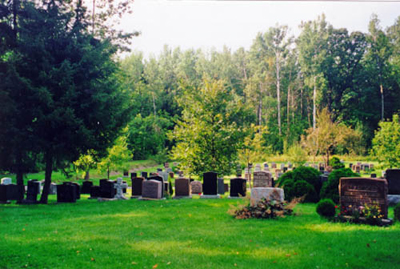
"Join us, as we honour 4 Canadians, who despite their impact in life, have faded into distant memories. They protected the city of Ottawa, helped combat racial issues, fought for the rights of veterans, and were leaders in their communities. Beechwood refuses to let them remain nameless any longer. Share in the stories of real men and women who will be brought to life by actors from Ottawa School of Theatre as we celebrate the unsung heroes."
05 September 2019
MyHeritage Live presentation feed this weekend, and more
There is a cornucopia of speakers and presentations at the MyHeritage Live event being held in Amsterdam this weekend. After an opening plenary with MyHeritage founder Gilad Japhet there are two tracks: genealogy with Liza Alzo, Maarten Fornerod, Yvette Hoitink, Daniel Horowitz, Denie Kasan, Maya Lerner, Mike Mansfield, Geoff Rasmussen, Mike Stangel, and James Tanner; DNA with Blaine Bettinger, Alon Diament Carmel, Roberta Estes, Yaniv Erlich, Leah Larkin, Ran Snir and Diahan Southard.
The presentations will be live-streamed on the MyHeritage LIVE website and on the MyHeritage Facebook page.
The program outline (pdf) indicates the first presentations start at 9 am Amsterdam time, which is 3 am ET. The early bird gets ...
A reminder that on Friday there are six webinar presentations by BCG speakers, mention previously.
And with your spare time, I can recommend two Legacy Family Tree webinars presented earlier this week and available free for a few days: Paul Milner on "Using Maps, Gazetteers and Directories for British Isles Research"; and Michelle Leonard on "Combining DNA and Traditional Research - In-Depth Case Studies."
More digital promised at LAC
Here's how Librarian and Archivist of Canada Leslie Weir responded to the question "What is your primary aim as Librarian and Archivist of Canada during your four-year term?"
My primary aim is to raise the profile of Library and Archives Canada through enhanced digital presence, responsive services and public programming, and engagement with the public in our new buildings and spaces.
It will be interesting to see what "enhanced digital presence" means. Is it more exhibit type social media — Facebook, Twitter, Flickr, etc? Hopefully, it's more than that. In the LAC 3-year plan published in May a goal was "We will increase access to our collection and expand opportunities for the public to enhance LAC's holdings." LAC clients will look forward to news on how that will be accomplished with digitization at a pace above that already achieved.
The drought of 1846
In the midst of the Irish Potato Famine, exacerbated by damp conditions, Ottawa was in a drought.
From the Bytown Packet for 5 September 1846
Intense Drought —The oldest inhabitant does not remember a dryer year, taken altogether, than this. All the small streams have been dried up long since; and the farmers up in the inland townships of Goulbourn, Huntley, &c., are suffering much for water to feed their cattle. The Ottawa is lower than it was in any part of 1842 when it was lower than ever it was previously known to be.—
This great river is actually fordable at the rapids above the Chaudiere — in fact a boy, with safety, can wade across the river.
Although far from being amongst the worst droughts it was not localized. The New York Herald, 26 August, 1846, reprinted the following from the Rochester American:
The dry weather now prevailing is very remarkable and oppressive. We have had next to no rain for three weeks. The sky is brass, and the earth iron. On Saturday a few drops of rain fell, scarcely enough to lay the dust. Gardens suffer, and not gardens alone—corn, potatoes, and spring crops generally, will be most seriously injured unless we shall be favoured with an immediate supply of rain. In the south part of the county it has been even more intense and long-continued than here. Streams are low to a degree nearly unprecedented.
There are no weather records for Ottawa and vicinity. In Toronto June was 30% drier than normal, July 18% wetter. August 1846 had only 56% of normal rainfall.
04 September 2019
Change in RootsTech London Keynote Speakers

If like me you don't know of her, she is a British parasport athlete competing in T38 sprints and C4 para-cycling events. She was part of the 2015 IPC Athletics World Championships and the 2016 UCI Para-cycling Track World Championships, in which she won world titles in the T37 100m and C4 500m time trial respectively. Cox competed in a variety of sports since an early age. In 2014, she was diagnosed with multiple sclerosis (MS) but did not let that stop her from achieving excellence in her life. Cox went on to win two gold medals and a bronze medal at the Rio 2016 Summer Paralympics. These medals made Cox the first Briton in 32 years to take gold in two sports at the same Paralympics games. Cox has broken records, won medals on the world stage, and made her country proud. Her inspiring story of determination, perseverance, and drive for success will be a fitting message for the RootsTech audience.
Kadeena is replacing Nick Barrett although, for members of the Nick Barrett fan club, he remains listed as a speaker and may have an additional MC role.
Forthcoming "Genealogy" books
A search for genealogy on Amazon.co.uk lists the following as to be published before the end of the year. Information is from the publisher.
How to Trace Your Irish Ancestors 3rd Edition: An Essential Guide to Researching and Documenting the Family Histories of Ireland's People
by Ian Maxwell | 5 Sep 2019
The purpose of this book is to highlight the most important documentary evidence available to the family historian wishing to research their Irish ancestry. It is aimed primarily at researchers whose time in Irish repositories is limited, and who want to know what is available locally and online. It covers more than eighteen individual sources of information, making it simpler to organise your search and easier to carry it out both locally and on the ground.
This books covers:
- Where to begin
- Researching online
- Civil registration
- Making sense of census returns, wills, election records
- Migration, emigration
- Local government and church records
The Family Tree Scandinavian Genealogy Guide: How to Trace Your Ancestors in Norway, Sweden, and Denmark
by David A Fryxell | 8 Oct 2019
Highlights include:
Strategies for identifying immigrant Scandinavian ancestors, plus how to trace them back to Europe from North America
Methods for locating Swedish genealogy records, Norwegian genealogy records, or Danish genealogy records within your family's town of origin
Detailed guides to finding and decoding common Scandinavian records, including: church records, civil registration records, census returns, property deeds, military records, and many more
Quick guides to Scandinavian history, geography, and language
Historical timelines, sample records, and resource lists that will bring your family history to life
Tracing Your Ancestors in Lunatic Asylums: A Guide for Family Historians
by Michelle Higgs | 30 Oct 2019
How can you trace forebears who were patients in lunatic asylums and find out about their lives? What sources can you consult to discover their personal histories and gain an insight into their experiences? In this concise, accessible handbook, Michelle Higgs answers these questions. She provides a fascinating introduction to the subject and gives readers the means to explore the records for themselves. She concentrates on the period from the eighteenth century through to 1948 when the National Health Service was founded and looks in particular at the Victorian era which is the most popular period for research. Using original records, contemporary accounts, photographs, illustrations and case studies of real individuals, she brings the story of the asylums and their patients to life. Different types of institution are described such as private madhouses, county lunatic asylums, facilities for idiots and imbeciles, and military mental hospitals. Chapters look at the admission procedures and daily routine of patients, plus different kinds of mental illness and how they were treated - for instance, those with depression or mania, criminal lunatics, mothers with puerperal insanity, epileptics and soldiers suffering from shell shock. There are sections on the systems in Scotland and Ireland, as well as England and Wales. Information is provided on all the relevant sources, from wills and the census to casebooks and admission and discharge registers.
Tracing Your Scottish Ancestry through Church and States Records: A Guide for Family Historians
by Chris Paton | 30 Nov 2019
Despite its Union with England and Wales in 1707, Scotland remained virtually independent from its partners in many ways, retaining its own legal system, its own state church, and its own education system. In Tracing Scottish Ancestry Through Church and State Records, genealogist Chris Paton examines the most common records used by family historians in Scotland, ranging from the vital records kept by the state and the various churches, the decennial censuses, tax records, registers of land ownership and inheritance, and records of law and order. Through precepts of clare constat and ultimus haeres records, feudalism and udal tenure, to irregular marriages, penny weddings and records of sequestration, Chris Paton expertly explores the unique concepts and language within many Scottish records that are simply not found elsewhere within the British Isles. He details their purpose and the information recorded, the legal basis by which they were created, and where to find them both online and within Scotland's many archives and institutions.
RootsTech London: Canada meetup

03 September 2019
DNA test experience survey
To limit fake responses you must be logged on to a Google account to participate.
Thank you for your participation.
Carleton University Shannon Lectures
Lecture topics for the 2019 Shannon Lecture series are now posted.
This year's topic is Rebooting Biography with Charlotte Gray as Convenor:
"Historical biographies have always been a popular avenue into the past, but with the facts about the famous and not-so-famous available at the tap of a keyboard, today’s historians and biographers are reshaping the genre.The schedule is:
The conventional steady hike through the chronology of a life is giving way to group biographies, to micro-histories which turn a spotlight onto a limited period of an individual’s life, and to previously unheard voices. Writers continue to use biography as a vehicle for wider social and cultural histories, while assessing the past in ways that resonate with contemporary audiences. Increasingly, authors who want to take life-writing outside the cradle-to-grave frame are embracing the freedom offered by digital publishing.
Lecturers will speak about the subjects of their recent biographies, but also about the choices they made in how they presented their material.
All lectures start at 1:00pm followed by a reception from 2:30-3:30pm."
Friday, October 4, 2019: “New Vehicles for Old Stories: Canadian mining history in a True Crime frame” by Charlotte Gray.
Friday, November 1, 2019: “Challenging the “White Man’s Country” Narrative: How Black railway porters fought for civil rights, equality and inclusion”, by Dr. Cecil Foster
Friday, November 8, 2019: “Feminism and the Supreme Court: How the first two women appointed to our Top Court widened judicial debates” by Dr. Constance Backhouse
Friday, November 15, 2019: “Historical Biography and the Larger Context: The global outlook of Joseph Conrad” by Dr. Maya Jasanoff
Friday, November 29, 2019: “As I remember it: Building digital space to share the life history and teachings of an Indigenous elder” by Davis McKenzie & Dr. Paige Raibmon
02 September 2019
Looking back a century: Labour Day 1919 in Ottawa
As far back as 1919, as reported by the Ottawa Citizen, the city had a reputation at the town that fun forgot. But a century ago the paper reported an exception.
"There has never been in the annals of Ottawa such a memorable holiday as the one yesterday. Statutory and legal holidays in the city are as a rule rather prosy and unexciting, but yesterday was indeed an exception. It was a day crammed full of red letter doings, a day filled with the stuff of which history is made. It was all due to the visit of the Prince of Wales, that popular young heir to the throne, who, by his charm and personality, by his tact, consideration, courtesy and his smile has melted the noted rather adamant exterior of folk hereabout and found beneath it a heart pulsating with warmth and affection, eager to give expression and demonstration to its feelings."

Did you know that one of the duties the Prince of Wales performed that day was laying the cornerstone of the parliament tower (Peace Tower)? The inscription on the stone included letters with dots underneath that are roman numerals summing to the year 1919.
A plaque with the french translation was added at a later date, but without the coding which is known as a chronogram.
Subscribe to:
Posts (Atom)


