18 June 2019

News Release: Library and Archives Canada’s new preservation centre: a unique Canadian environmental project

Library and Archives Canada’s new preservation centre: a unique Canadian environmental project
Tuesday, June 18, 2019 – Gatineau, Quebec – Library and Archives Canada
Today, Library and Archives Canada (LAC) and the Plenary Properties Gatineau (PPG) consortium, which is responsible for constructing a second preservation centre in Gatineau, Quebec, revealed the design of the building that will be located directly behind the current Preservation Centre.
In many ways, the new building will set a global standard, following the example of the existing Preservation Centre, which is Canada’s pride and the envy of other memory institutions at home and abroad.
The new preservation centre will be the first “net-zero carbon” facility dedicated to archival preservation in the Americas, and the first federal building constructed to the requirements of Canada’s Greening Government Strategy. The main features of a net-zero carbon building are:
·       minimal carbon emissions from energy consumption, achieved through building design and efficiency measures;
·       energy needs met through carbon-free fuel sources; and
·       minimal embodied carbon in building materials.
It will also be the world’s largest preservation facility equipped with a high-tech automated archive storage and retrieval system. This means that our precious national collections will be kept under optimal preservation conditions.
The PPG proposal was selected for this public-private partnership because it meets all of the required technical criteria and can be implemented at the best possible cost to taxpayers. The consortium will:
·       design, build and finance the new building;
·       optimize storage space in the current Preservation Centre; and
·       operate and maintain both facilities.
The ultra-modern facility will increase LAC’s capacity to store Canadian archives and resolve the critical shortage of space expected in the very near future. Construction will begin in 2019 and lead to the creation of hundreds of new jobs, with the opening expected in 2022. 
Quotes

“This new, state-of-the-art preservation facility in the National Capital Region will help Canada remain a leader in the preservation and promotion of our invaluable documentary heritage. Our government is confident that this preservation centre will solidify Library and Archives Canada’s place at the forefront of preservation throughout the world, for the benefit of present and future generations.”
-          The Honourable Pablo Rodriguez, Minister of Canadian Heritage and Multiculturalism
“Our government is proud to be a part of this important infrastructure project. The new Library and Archives Canada preservation centre project will create good middle-class jobs, foster innovation and protect the environment, all while improving services for Canadians and creating an iconic new building in the Gatineau landscape.”
-          Steven MacKinnon, Parliamentary Secretary to the Minister of Public Services and Procurement and Accessibility
“This new flagship building, which will accompany the award-winning and world-class Preservation Centre in Gatineau, is yet another testament to Library and Archives Canada being able to set itself apart in opting for a green and sustainable infrastructure. Once built, this new state-of-the-art facility will ensure the preservation and accessibility of our rich collection of treasures for centuries and for generations to come.”
-          Guy Berthiaume, Librarian and Archivist of Canada
“We are thrilled to be partnering with Library and Archives Canada and to preserve the heritage of our country in what will be a state-of-the-art, iconic facility, and the first Net Zero Carbon archival centre in the Americas. We look forward to working with our partners to deliver this project, and supporting the Government of Canada in its commitment to sustainable infrastructure and the preservation of our documented history.”
-        Brian Clark, Project Director, on behalf of Plenary Properties Gatineau, a partnership combining the strengths of Plenary Group, PCL and ENGIE Services

Quick facts
·       By pursuing a sustainable, green approach, LAC has significantly reduced its environmental footprint since 2011. It has cut its number of preservation spaces from 22 to 5, while shrinking their total area from 237,000 to 124,000 square metres and maximizing the space used.
·       Construction of the new preservation facility, optimization of the current Preservation Centre vaults, and project funding will cost approximately $330 million. This amount does not include the operating and maintenance costs of the two facilities over 30 years.
·       Although LAC is adding new, essential space to meet its current and future needs for the storage and preservation of analogue documentary heritage (including official federal government records, for which it is the continuing memory), it continues to make significant strides in digitizing its collection to achieve greater accessibility.
The public will be able to consult LAC’s collections while this work progresses, apart from a few brief service interruptions.

LAC Planning a Newspaper Summit

Librarian and Archivist of Canada Guy Berthiaume informed me during an interview last week that LAC is planning a newspaper summit in the Fall. The newspaper collection and need for a Canada-wide approach to digitization is something I've been advocating as a LAC role for years, with little success, even though LAC did hold a similar summit in October 2002 (pdf).

Maybe there's something in the air. Chris Paton's blog reports that The National Library of Scotland (www.nls.uk) is currently holding an online survey concerning its digital newspaper collections, which will run until Friday July 26th. Here's the NLS announcement:

Reader Survey of Digital Newspaper Collections

The National Library of Scotland is carrying out research into the accessibility and use of Scotland’s newspapers as they are to be found online. The National Library provides access routes to newspaper eResources to registered Library members. Other digital newspaper collections exist elsewhere either providing online open access to view digital newspapers or closed access behind paywalls. 

We will be very grateful to you for taking 3-5 minutes to complete 10 survey questions about your experience of using online newspaper collections and how they might be improved. The information you supply will be used to consider how to enhance access routes to newspapers of interest to Scottish audiences.

Any personal information you supply through this survey will be held and used by the National Library of Scotland for the purposes of handling your feedback. For full information about how we will hold and use your personal information, see our privacy page, in particular our fundraising privacy notice and our feedback and complaints notice.

Thank you.

The National Library of Scotland
June 2019

To take part in the survey visit https://www.surveymonkey.co.uk/r/QZT8JCG

Will LAC conduct a similar survey to obtain input from those not at the summit?

I expect to post the audio of my interview with Guy Berthiaume in the next few days.

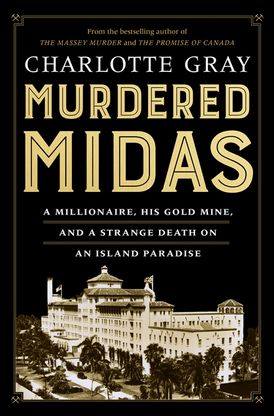
Charlotte Grey publishing a new book

A gold mine. A millionaire. An island paradise. An unsolved murder. A missing fortune.

Charlotte Grey's new book, to be published in September, has all the elements of a winner — as if the author's name alone was not enough to recommend it.

Get a preview in this podcast from Canadian Geographic where Charlotte is interviewed by David McGuffin.

Perth & District Historical Society June Meeting

On Thursday, 20 June at 7:30pm PDHS turns to visual arts of paintings and sculptures - and the Canadian side of Frederic Remington’s work.

Frederic Sackrider Remington (1861-1909) is well-known as an artist of the American West.  He explored the frontier between civilisation and the wilderness, in a body of work that includes over 3400 flat works, 22 subjects in bronze and 8 books.  Remington placed an emphasis on the “types” who shaped, and were shaped by, the frontier experience: cowboys, soldiers, mountain men, explorers, coureurs de bois, voyageurs, and peoples of the First Nations. 

It is not well known that Canada was an integral part of Remington’s vision of the frontier experience.  From his earliest work in magazine illustration to the masterful oil paintings created at the end of his career, Canada was central to his basic concept of North America.  For him, the frontier was a region of international scope.  As an historical and cultural backdrop, the Canadian stage was equal to that of the U.S., and for some of his purposes, superior.  And, throughout his life and career, Remington was deeply tied to the culture and landscape of the eastern woods and waters, with Quebec, Ontario and northern New York a persistent focus of his work. 

Laura Desmond, Education Specialist at the Frederic Remington Art Museum in nearby Ogdensburg NY, will present an overview of Remington’s Canadian subjects, illustrating her presentation with a wide range of Remington’s paintings and drawings.  She will also explore how his Canadian-themed works are both typical and distinct from those depicting his U.S. subjects. 

Desmond has worked at the Remington Museum for two years, creating educational programmes that expand and deepen an understanding of Frederic Remington’s work, and of art and art-making more generally.  She also assists the Museum Curator in the design, research, installation and presentation of exhibits at the Museum.  Laura Desmond's previous museum experience includes collections, exhibitions and programme delivery at the Potsdam Public Museum and at the Richard F. Brush Art Gallery in Canton NY. 

The meeting is at Perth's Royal Canadian Legion, 26 Beckwith Street E., Perth, (Toonie Donation).

17 June 2019

How Do I Digitize and Share a Ton of Old Family Photos?

From Lifehacker. You likely already know.

https://lifehacker.com/how-do-i-digitize-and-share-a-ton-of-old-family-photos-1835484124

The Future for OGS

To ratify the Actions of the Board of Directors for the period through June 21, 2019.

It's an agenda item for the Annual General Meeting of The Ontario Genealogical Society, something  I've not seen before.

The world has changed substantially reflected in reduced society memberships at a time when one might expect retiring baby boomers to swell the ranks. That's not just in OGS, not just in family history societies.

This precipitated the Society launch of a brand, Ontario Ancestors, legally registered as a business name for use by The Ontario Genealogical Society.

It's not unusual for businesses to have a variety of brands. Cheerios, Häagen-Dazs, Yoplait, Nature Valley, Pillsbury and Betty Crocker are General Mills brands.

But in the case of Ontario Ancestors, it's not a product under the company umbrella, it's the whole organization and so appears as a re-brand replacing The Ontario Genealogical Society. The Board of Directors denies this — "a re-brand was not the intention."

What was the intention? Ontario Ancestors distinguishes the Society from US Societies that also use OGS — Ohio, Oregon and Oklahoma. The hope is the brand will sell better in the large US market and bring in new members.

The new brand surely won't be successful as just a cosmetic change. How will the organization evolve to serve the more distributed membership as well as the existing membership and society at large?

OGS has not been static. Province-wide or rather more than province-wide services like the eWeekly Update and webinars are examples of services recently introduced. There is a growing social media presence. Is that enough?

At the heart of the society are Ontario-based volunteers, and volunteer fatigue is a major issue. OGS Branches have closed, or struggle along with the same people in leadership roles. There's a hollowing out. Attend any meeting and you'll hear a plea for people to fill vacant positions, often to an audience many of whom have already done their time.

That's despite the established finding that volunteering provides benefits like better health, living longer, emotional support, less social isolation and, feeling of contributing to a greater good.

The move to market the Society in the US is unlikely to bring in volunteers at the branch level. Is the future of OGS as a stronger centralized organization with weaker branches?

Pro or con Ontario Ancestors I encourage you to attend the OGS Annual General Meeting to be held on Saturday, June 22nd at 10:00 am at the London Convention Centre, London, Ontario. Express your views, politely — Directors are volunteers too — but firmly.

16 June 2019

Victorian convicts in Milbank, Parkhurst and Pentonville prison records

TheGenealogist has released over 100,000 individuals into their expanding Court & Criminal Records collection. With this release, researchers can find the details of ancestors that had broken the law and were incarcerated in the harsh conditions of early Victorian convict prisons - including some that were only children!

The new data will allow the family history researcher to discover:

● Over 100,000 individuals in records covering the years 1838 to 1875
● Registers of prisoners inside Millbank, Parkhurst and Pentonville prisons.
● Each prisoner's age on conviction
● The marital status and whether the prisoner can read or write
● The convict’s former trade
● When and where they were convicted, their crime, sentence, where and whence received, previous offences, when removed and to where.

These fully searchable records are from the HO24 Home Office: Prison Registers and Returns 1838-1875 for Millbank, Parkhurst and Pentonville.
Read TheGenealogist’s article “Criminal records can reveal ancestors locked up in convict prisons” at:
https://www.thegenealogist.co.uk/featuredarticles/2019/criminal-records-can-reveal-ancestors-locked-up-in-convict-prisons-1122/

Sunday Sundries

Miscellaneous items I found of interest during the week.

Essex's medieval history
A blog post summary of a meeting held on 18 May looking at Essex as a county on the Edge of England, London and rebellion. Thanks to Brenda Turner for the tip.

Old Photos of  Essex Kent & London
A Facebook page. Thanks to Ann Burns for the tip. Also from Ann, a map of London from 1572.

Kin support and the English poor: evidence from Lancashire, c.1620–1710

Advance Notice: Kitchener Public Library Genealogy Fair 
KPL is organizing its seventh annual Genealogy Fair on Saturday, November 2, 2019. The event will run from 9:30 am to 4 pm at the Central Library — open to the public with no admission charge.

The Strangers’ Guide To London
From Spitalfields Life — RootsTech London attendees beware!

Happiness may be a choice – except that it’s constrained by vested economic interests
Mentions the Canadian Index of Wellbeing.

Cars of the future that will help fight climate change
"EVs have great potential to reduce emissions, they won’t as long as they’re charged using electricity generated from the same old dirty fossil fuels."

The newly released BP Statistical Review of World Energy shows that fossil fuels continue to account for the major part of primary energy production, and world carbon emissions grew by 2.0% in 2018.

Carbon Capture and Sequestering is a Sham
Best Carbon Capture Facility In World Emits 25 Times More CO2 Than Sequestered is the title of an article in CleanTechnica showing there’s no green in air carbon capture the way that Carbon Engineering is doing it, but that there are small niches where much wiser solutions like Global Thermostat‘s make sense. Carbon capture is a distraction designed by fossil fuel interests to direct attention and money away from renewable technologies and conservation.

15 June 2019

Local Library Developments

How's your library service? How is it changing? Is the Ottawa Public Library typical?

Some items in a draft OPL Strategic Plan 2020-23 caught my attention:

  • The proportion of seniors is expected to almost double from 12.4 percent in 2001 to 20.3 percent in 2031.
  • “Holds” account for 1/3 of all circulation at OPL, a proportion that is trending upward. 
  • Cultural trends are not confined to those associated with reading, education, and the arts but should also include access to sports and recreation as opportunities for adding value and increasing the library’s market base of active card-holders. 
  • The continued preference for paper books despite an increase in digital reading.
  • Borrow-ship – Traditional models of ownership are changing resulting in a rethinking of the value of ownership and seeking out of more collaborative models of use. (Comment: Maybe à la Marie Kondo a book only sparks joy for the time it takes to read it.)

There's a lot more in the document. 

The proposed strategic plan is, by 2023, to increase the number of active cardholders by 25 percent by improving OPL’s community relevance by:

1. Redesign the Library Experience
- Conduct a programming review
- Define the ideal experience across physical and virtual channels
- Create the destination experience for the OPL component of the Ottawa Public Library - Library and Archives Canada Joint Facility. (Comment: Imagine zip lines and climbing walls in the new joint facility).
- Assess the impact of barriers to service
- Develop the physical space experience.

2. Build Organizational Capacity
- Redesign the employee experience
- Renew leadership accountability
- Develop data-driven decision-making.

3. Promote OPL’s value
- Develop and implement a brand strategy
- Develop and implement a fundraising plan
- Strengthen stakeholder relationships and advocacy
- Strengthen the Intellectual Freedom program.

Another item on libraries that came to my inbox is Dick Eastman's blog post Libraries without Librarians on the trend for open libraries giving patrons access to books, computers and other resources by themselves at times when the library isn’t staffed. It appealed to me as I live in a library desert — no community library. This might be an affordable way to provide more equitable library service.

British Postcard Images Free

The Newberry (Library) has launched a digital archive of over 26,000 high-quality images of picture postcards produced by pioneering British company Raphael Tuck & Sons during the first half of the 20th century.

With that many images, there's bound to be something relevant to your family history. The images are not only British. There are 91 labelled Australia and 169 Canada including several of Ottawa. This image is less than one kilometre from my Norfolk childhood home.

https://www.newberry.org/newberry-releases-digital-collection-26000-early-20th-century-postcards

14 June 2019

Findmypast additions this week

Kent Baptisms
New transcript records covering two new parishes, Fawkham St Mary (1,501 records) and Northfleet St Botolph (18,125 records), have been added to the collection of Kent parish baptisms.

Kent Marriages and Banns
The parish of Northfleet St Botolph with 8,952 transcript records has been added to the collection.

Kent Burials
Over 14,000 new transcript records from the parishes of Fawkham, St Mary (947 records) and Northfleet, St Botolph (13,537 records) are now available to search.

England, Phillimore Marriage Registers, 1531-1913
A new, fully searchable collection of Phillimore Marriage Registers containing approximately 2.3 million names and record marriages is now available at Findmypast from more than 1,500 parishes in
Berkshire, Buckinghamshire, Cambridgeshire, Cheshire, Cornwall, Cumberland, Derbyshire, Devon,
Dorset, Essex, Gloucestershire, Hampshire, Hertfordshire, Huntingdonshire, Kent, Leicestershire,
Lincolnshire, London, Middlesex, Norfolk, Northamptonshire, Nottinghamshire, Oxfordshire, Somerset, Suffolk, Warwickshire, Wiltshire, Worcestershire, Yorkshire West Riding.
Search to view a transcript or an image of the original published page.

Scotland, Scottish Peerages
Explore this comprehensive history of the Scottish peerage between 1716 and 1914. The collection includes nine volumes of The Scots Peerage along with six other titles including a single-volume Jacobite peerage, all pdfs.

International Records Update – Denmark
More than 6.9 million baptisms, marriages and burials in three new Danish indexes spanning the years 1635 to 1917 are now available to search and will generate hints against your Findmypast family tree.

Quinte Branch OGS June Meeting

On Saturday, 15 June "Doing research from a distance using the Archives of Ontario's website" is the topic for the Branch meeting at Quinte West Public Library, 7 Creswell Dr, Trenton 1-3 pm.

Speaker Danielle Manning's presentation will be of particular interest to researchers unable or unwilling to travel to Toronto to visit the Archives of Ontario in person. Learn how to use the Archives of Ontario’s website and Microfilm Inter Loan Program to access collections – particularly records that are helpful for genealogical research.

13 June 2019

FreeBMD June Update

The FreeBMD Database was updated on Wednesday 5 June 2019 to contain 270,304,784 unique records (269,939,666 at previous update).

Years with major additions, greater than 5,000 records, are: for births 1964, 1978, 1982, 1984-86; for marriages 1965,1980, 1984-86; for deaths 1984-86.

www.freebmd.org.uk/

Normandy 75th Anniversary Fields of Fire Tour

An interesting series of blog posts by Sara Karn, a student and teacher of history who has just completed a tour guide experience to the battlefields in France.

The eleven-day trip included visits to both First and Second World War sites, including the Canadian National Vimy Memorial, Hill 70, Pegasus Bridge, as well as the Normandy landing beaches.

Sara and tour partner Alex Souchen took part in two ceremonies, one on 6 June at the Juno Beach Centre to commemorate the D-Day landings and another a few days later to dedicate the Canadian Gunner Memorial.

Find the series of blog posts at https://storiesfromthebattlefields.wordpress.com/category/normandy-75th-anniversary-fields-of-fire-tour/. You may well get some tips if a battlefields tour is on your bucket list.

Thanks to Jane Down for the tip.

BC Archives Additions

The British Columbia Archives now offers online access to births (1854-1903), marriages (1872-1943), deaths (1872-1998), colonial marriages (1859-1872) and baptisms (1836-1888). The recent additions are 1943 marriages and 1998 deaths with 1904 births to be added soon.

Many but not all have images of the original registration. and it's free!

OGS Conference and RootsTech London

Two of the speakers at the Ontario Genealogical Society (Ontario Ancestors) conference in London, starting on Friday next week, are also scheduled speakers at RootsTech London in October. Yes, both conferences are in London — but on opposite sides of the Atlantic.

David Allen Lambert from the New England Historic Genealogical Society (American Ancestors) will present a Friday 21 June workshop Virtual Family Reunions: Embrace Social Media to Reunite Your Distant Cousins, the that evening Charity Begins in Our Home and two presentations during the regular sessions Before They Were Loyalists: Researching Colonial New England and New York Ancestors and Researching Canadian and American World War I Veterans. At RootsTech he is presenting Online Family Reunions – using Social Media to locate cousins to share and preserve Family History.

John Boeren will present How to Start Your Research in the Netherlands on Sunday 23 June. Sadly it's in the same timeslot as the presentation I'm giving with Glenn Wright. In October his RootsTech talk is Tracing Your Ancestors in the Netherlands.

Not to be overlooked at the OGS conference are the FastTrax sessions (pdf), 30-minute mini-information presentations, offered on Saturday and Sunday exclusively by exhibitors in the Marketplace hall.


Ottawa Branch OGS June Meeting

This Saturday, 15 June at the City of Ottawa Archives, 100 Tallwood Drive, Nepean

10:30: Genealogy: Back to Basics - Genome Mate Pro Workshop
Presenter: Jason Porteous
Helps you to use Genome Mate Pro and new tools from Borland Genetics which allow you to partially/fully phase your DNA test results (ie. separate maternal from paternal chromosomes to create a "mono" DNA kit that on GEDmatch will return matches to one parent while also greatly reducing false matches). He's also open to discussing chromosome mapping as well. Bring your laptops or tablets and your DNA data (downloaded from your test company) to Room 226.

13:00: Presentation: Newspaper Digitizing Project of the Arnprior & McNab/Braeside Archives
Presenters: Irene Robillard and Emma Carey.
As of June 2018, the AMBA complete collection of local area newspapers dating from 1863 to 1937 became available online and free to the public. Over 700 issues of local newspapers were digitized, the bulk from the Arnprior Chronicle. They are searchable, browse-able and downloadable. In February 2019, a project that links indexes of birth, marriage and death notices to the digitized issue of the newspapers that they originally appeared in. Ottawa branch of the Ontario Genealogical Society provided a grant that made this project possible.

15:00: Computer Special Interest Group

12 June 2019

Legacy Webinar with Cyndi Ingle

Tracking Your Digital Breadcrumbs: Bookmarks, Toolbars, Notes, and Other Applications is a free-to-view live webinar at 8 pm EDT today, Wednesday 12 June 2019.

"Clicking links means you can start off on a web site for one specific topic and end up dozens of web sites away on many different topics. It’s easy to get lost and lose focus on what you were trying to find in the first place. And with so many web sites to use in your research, how do you keep track of them all? How do you organize what you use regularly? How can you get back to a site at some point in the future? We have several ways to help you gain control of your digital bread crumbs."

Cyndi Ingle is the creator, owner and "webmaster" of the award-winning web site Cyndi's List of Genealogy Sites on the Internet. Come to the BIFHSGO conference in September where Cyndi will present a pre-conference workshop and four talks.

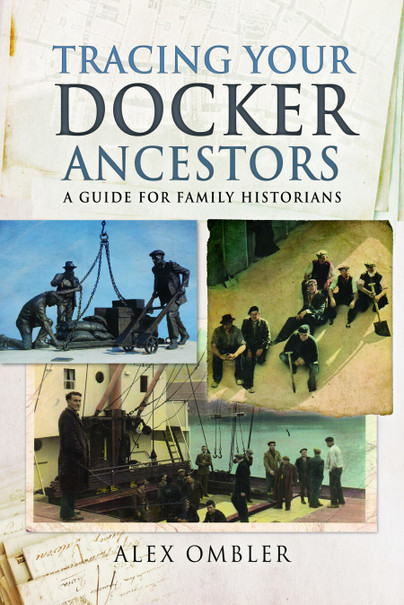
Book Review: Tracing Your Docker Ancestors

This April 2019 publication is another in the more than 50-book "Tracing Your ..." series from publisher Pen and Sword. They range alphabetically from "Air Force" to "Yorkshire".
This volume on Dockers is fairly typical of those where specific occupational records are scarce. The first chapter: Getting Started: Basic Family History Documents covers sources like civil registration, census, newspapers, and directories. The following chapters treat aspects of life on the docks: The Origins of the Dock Labour Force, Daily Life on the Docks, Tools and Equipment, Trade Unions, Beyond the Dock Wall: Dockside Communities, Docks and Dockers During the World Wars, The National Dock Labour Scheme, Dock Strikes and the Decline of the Dockers 1967-1989. 
There are extensive references on where to find resources which are mainly administrative. Unless an ancestor was involved in that administration, such as being a union official or for some other reason stood out from his peers, you won't find much personal information. A very few, such as the archive of the National Amalgamated Stevedores and Dockers' Union, 1880-1982, do include individual's names. A few others that include names are closed.
The book concludes with a ten-page glossary of types of docker and two-page index.

Tracing Your Docker Ancestors (Paperback)
A Guide for Family Historians
By Dr. Alex Ombler
Imprint: Pen & Sword Family History
Series: Tracing Your Ancestors
Pages: 150
ISBN: 9781526744043
Published: 25th April 2019

11 June 2019

Who Do You Think You Are? 2019 Celebrities Announced

The spotlight for this summer season of BBC Who Do You Think You Are? is on Kate Winslet and Daniel Radcliffe. See the announcement here.

A Canadian featured in the series is comedian Katherine Ryan who grew up in Sarnia, Ontario. Her father, Finbar was born in Ireland. On WDYTYA?, she discovers her ancestral links to the Newfoundland cod trade.

YouTube: Making the Most of your Autosomal DNA Test

A further talk is online from the Family Tree Live event at Alexandra Place, this one by Scottish genetic genealogist Michelle Leonard.
Michelle will be making two presentations at RootsTech London in October: DNA Is Dynamite - How To Ignite Your Ancestral Research, and DNA Segment Data & Advanced Autosomal DNA Techniques as well as participating in a panel discussion.

10 June 2019

RootsTech London Announces Schedule of Presentations

What do Colin Chapman, Else Churchill, Janet Few, Maurice Gleeson, Celia Heritage, Debbie Kennett and, Diahan Southard have in common?

Presenters at RootsTech London in October — they've all previously been speakers at a BIFHSGO annual conference. Almost all have placed in the top five in the Rockstar Genealogist poll.

Like previous RootsTechs each of the three days has lots of choices — six sessions each day with typically ten choices in each timeslot, except for the headliner daily11 am celebrity session.

The word cloud composed from the titles of all the talks shows there's a DNA event within the schedule — genetic genealogy presentations in almost every time-slot, and sometimes more than one.

Find the schedule of presentations, except for 19 sponsored talks TBA, posted here.

The Digital Irish Famine Archive

Makes accessible eyewitness accounts of the Irish famine migration to Canada in 1847-1848 that would otherwise be unknown. It also pays tribute to those who cared for Irish famine emigrants.

The archive contains the digitized, transcribed, and translated French language annals of the Grey Nuns of Montreal, or Sisters of Charity, who first tended to Irish famine emigrants, especially widows and orphans, in the city’s fever sheds in 1847 and 1848. It also includes annals from the Sisters of Providence and correspondence from Father Patrick Dowd, who worked alongside the Grey Nuns in the fever sheds, as well as testimonies from Irish famine orphans, like Patrick and Thomas Quinn, Daniel and Catherine Tighe, and Robert Walsh, who were adopted by French-Canadian families.

http://faminearchive.nuigalway.ie/

Online database of 2,500 fatalities in Nova Scotia coal mines

We are nearing the anniversary of the death of William Davis, a coal miner born in Gloucestershire shot and killed at New Waterford, NS during a 1925 strike action calling for improved working conditions.

Today, 10 June the Museum of Industry in Stellarton is launching a database with names of those who died between the Drummond Mine explosion in Westville, 1873 and the 1992 explosion at Westray.

Read more about this initiative in this article by Brendan Ahern.

09 June 2019

BIFHSGO Update

These 50 people are part of the audience, members and guests, who attended the always popular Great Moments session at the June BIFHSGO meeting on Saturday morning. The total attendance was likely around 175.

It was preceded by the Annual General Meeting which didn't attract quite as many members. President Duncan Monkhouse ran the meeting very efficiently assisted by a clear presentation on the financial position by Treasurer Marianne Rasmus. The Society ran a small deficit for 2018.

Directors leaving the Board, Andrea Harding and Lynda Gibson were heartily thanked for their service. John McConkey remains on the Board moving over to take on the Research role. New Director Diane Brydon assumed responsibility for Programs. The Education role is vacant.

Congratulations to Jean Kitchen and Bert Hayward who were added to the Society Hall of Fame. The award for the best before-BIFHSGO educational talk by a member, as voted by the membership, went to Dena Palamedes; best presentation by a member to Marianne Rasmus and; the best article in Anglo-Celtic Roots to Lynne Willoughby.

Nigel Lloyd, Mike Jaques, Gillian Leitch and Roberta (Bobby) Kay all gave strong and enjoyable Great Moments presentations which should in due course become available online in the members-only part of the Society website. If you're not a member consider joining to view these and all past presentations. That's an extra benefit when you join the Society to attend the 25th-anniversary annual conference.

In closing the meeting Andrea Harding reminded about the 8 August event DNA and Online Resources for Discovering Your Lost Family History.

Subsequent to the meeting I learned that there were 17 entries in the 25th-anniversary writing competition. Results will be announced at the annual conference.


Sunday Sundries

Miscellaneous items I found of interest during the week.

UK Office of National Statistics Interactive Content
Life expectancy calculator
Baby names explorer

Overlord Embroidery
The Overlord Embroidery at The D-Day Story Museum in Portsmouth, England tells the story of D-Day and the Battle of Normandy in 34 extraordinary hand-stitched panels with a total length of 83 metres. Thanks for the tip Brenda Turner who visited in 2012 and writes "it is fabulous and not well enough known. The embroidery is so detailed that I could read the regimental patches on the uniforms of Canadians who went ashore at D-Day."

A DNA Detective Story - the Bush Baby (Julia Bell)


Royal College of Nursing Digital Archive - Pilot site
The RCN Archive holds the most important collection of nursing history in Europe. Holdings date from the 1870s to the present day and capture the evolution and development of the nursing profession. Explore the archive catalogue at https://archives.rcn.org.uk/CalmView/Default.aspx? which includes 2 items mentioning Ottawa, 10 for Canadian and 75 for Canada.

Oranges & Lemons Churches

A New Method of Disposal of the Dead
In Volume 1: 1888-1889 of Public Health, the Journal of the Society of Medical Officers of Health.— "Dr. Cooper, of Pittsburg, subjects the dead body to hydraulic pressure and condenses it into a small solid almost water-free block. The body of a full-grown man can, by this process, be reduced to a cube of twelve inches. Dr. Cooper exhibits a small cross, which at a superficial glance, has a resemblance to marble. “ That,” says he, “ is the body of a child converted into a handsome ornament." The cost of compression is about £2.

5 of the Best Alternatives for Windows Movie Maker
Microsoft has permanently discontinued Windows Movie Maker, the only video editor I have ever used. As I only used it a couple of times I'm not looking for a heavy-duty replacement. This look promising.

08 June 2019

National Library of Scotland: Recent Map Additions

The National Library of Scotland holds well over 1.5 million maps. About 15% are digitized with plans to scan over 30,000 maps each year (115 maps each weekday) for the next five years. That would mean 25% of the collection digitized by 2024.

You can keep informed on progress at the NLS Recent Additions page. The latest entry is an updated Find by Place - with Marker application.

Learn more about the NLS map scanning program at the Digitising the Library’s Maps blog post.

Book Review: Tracing Your Freemason, Friendly Society & Trade Union Ancestors

This is one of the latest books from prolific UK history and family history publisher, Pen and Sword.

It would be the exception if a British male ancestor was not a Freemason, member of a Friendly Society or a Trade Union. My father and grandfather were, they left artifacts, so I looked to learn more from this new book.

The early material is on sources, those you find like those artifacts, oral history and published records. Chapter four is on the early history back to Greece, if not the Garden of Eden, Rome and Guilds.

The next three chapters, constituting 70% of the text, are devoted to the three types of organization in the title.

Freemasonry, offering an oath-bound social space for ritual and social bonding and engagement in charitable work, reached peak membership in the 1950s and 60s. In the chapter, you'll learn about the history, how to get information on members, including on Ancestry and elsewhere as well as a summary of controversies. Look for mention of individual lodges of possible relevance.

Friendly Societies, such as the Oddfellows, combined fellowship with mutual assistance through insurance. As in the previous chapter, there's much detail illustrating activities. With the introduction of the Welfare State membership went into serious decline.

The chapter on Trade Unions offers similar information on their history, culture and sources of information on membership. Membership peaked at 13 million in 1980 then declined through the years when Margaret Thatcher was Prime Minister and after down to 8 million in 1997. As with the other chapters, there are many sources and websites listed to aid investigation.

Tracing Your Freemason, Friendly Society and Trade Union Ancestors
by Daniel Weinbren
Publisher: Pen & Sword
Published: 2019
Format: Paperback
Pages: 188p
ISBN9781526710338

07 June 2019

Newspapers.com Free Access Weekend

I received an email that "all papers on Newspapers.com will be free until June 9, 2019 at 11:59 p.m. MDT. Registration required. After the free access period ends, you will only be able to view papers using a paid Newspapers Publisher Extra subscription. Terms and Conditions apply."

This is the site that includes the Ottawa Journal and Ottawa Citizen archive.

WARNING: Sometimes this type of trial only works for those who receive the email. Give it a try if interest but be prepared for possible disappointment.

Ancestry adds HUGE Essex Church of England BMB Collection

Records in this new Ancestry collection for Essex are transcripts, each with a link to an image of the original at Essex Archives Online for purchase at £2.99.

Essex, England, Church of England Baptisms, Marriages and Burials, 1538-1812:  4,389,173 records
These early records are from parish registers of baptisms and burials during the years 1538–1812, and marriages during the years 1538-1754.

Essex, England, Church of England Births and Baptisms, 1813-1918:  3,937,941 records
Essex, England, Church of England Marriages, 1754-1935: 1,968,439 records
Essex, England, Church of England Deaths and Burials, 1813-1994: 730,118 records

FamilySearch lists 431 parishes in Essex including those often thought of as in London. Your London ancestor may well have lived in Essex and commuted into the City. Geographically RootsTech London is being held in the ancient county of Essex.


Findmypast additions this week

England & Wales Merchant Navy Crew Lists 1861-1913
Over 135,000 new Portsmouth records have been added to our collection of Merchant Navy Crew Lists. The records document the role and employment of each member of the crew. Individuals would 'sign on' when they began their employment, either at the start of the voyage or when they joined the ship at one of its ports of call. They 'signed off' at the end of the voyage or, if they chose not to finish, at a port of call.

Greater London Burial Index
Over 28,000 miscellaneous records have been added to the Greater London Burial Index. Covering the years between 1399 and 1992, Anglican and non-conformist parishes and including City of London Burials, Middlesex Memorial Inscriptions, Middlesex & City of London Burials Index and the South London Burials Index.

UK Electoral Registers & Companies House Directors 2002-2019
Over 1.6 million new additions are now available for a total of 115 million from England, Wales, Scotland, Northern Ireland, Isle of Man and the Channel Islands. Search registers of UK directors whose companies are registered with Companies House along with the UK's electoral registers beginning from 2002.

International Records

New Jersey Marriage Index, 1901-2016 Image Browse

Browse through over 300 volumes of the New Jersey marriage index organised annually in alphabetical order by either the bride or groom's name from 1901 to 2016. Containing well over 200,000 individual records, this collection will enable you to discover who married, when they married and where. In the later indices, the record will span two pages. On the first page, you will read the names and the second page will show the municipality, county and date.

Sweden
Over 12 million Swedish baptisms, marriages and burials consisting of the following indexes:

Sweden Baptism Index 1611-1920
Sweden Burial Index 1649-1920
Sweden Marriage Index 1630-1920

06 June 2019

The Story of Abraham Roberts, Moonshiner?

In the Global Genealogy Newsletter for 5 June Rick Roberts writes an eye-opening story illustrating the importance of not completely accepting nor discounting juicy family stories.
You can subscribe to the newsletter here where you'll also find information on new arrivals at GlobalGenealogy.com and events where Rick and Sandra will be present.

BIFHSGO June Meeting

The agenda for Saturday, 8 June 2019 at The Chamber, Ben Franklin Place, 101 Centrepointe Drive, is:

9:00 to 9:30 am -- Annual General Meeting
10:00 am to 11:30 am -- Great Moments

A Dark Chapter in a Successful Life, presented by Nigel Lloyd 
"My Great Great Grandfather, Edward Lloyd, was one of the 19th Century’s most successful publishers and newspaper proprietors. His paper, Lloyds Weekly News, became the only newspaper in Britain to have a circulation of more than a million copies in the nineteenth century. This talk focuses on his private life: He had nineteen children by three different women. While sorting out these relationships, a dark chapter is revealed."

A Poor Racine, presented by Mike Jaques
The Times newspaper in 1854 published an article about poverty in Bethnal Green, London, and made mention of “a poor Racine”.  Research to try to identify this Racine and determine whether he was a relative resulted in an unexpected discovery.

Finding Frances, presented by Gillian Leitch
Wife of Jean Victor Baron and then John Inigo Wright, mother to Richard John Baron and John William Wright, daughter of Richard Guise and Elizabeth Windham, the younger sister of Sarah Elizabeth Cutler: these have been the only ways of knowing Frances. She has been an enigma.  Through a lot of research, spots of good luck and great help her identity and her life in the late 18th and early 19th century London has become a “Great Moment” in research.

Footnote:  This is the last BIFHSGO meeting until September 😢, but remember the special one-day event on Thursday 8 August in the same room at Centrepointe "DNA and Online Resources for Discovering Your Lost Family History". Find out more and register.

Canadians’ role in D-Day

From History Extra.

Of the nearly 150,000 Allied troops who landed or parachuted into Normandy on 6 June 1944 as part of Operation Overlord, 14,000 were from Canadian forces. As the 75th anniversary of D-Day is commemorated, Dr. John Maker considers the contribution of Canada’s army, air force and navy to one of the Allies’ most pivotal wartime operations…https://www.historyextra.com/period/second-world-war/canadian-canada-d-day-ww2-allies-contribution-effort-juno-beach/

More on D-Day from History Extra.

05 June 2019

Ancestry adds UK, D-Day War Diaries and Photographs, 1944

This collection might help fill in the gaps in what you know about a British family member who was part of the Normandy landing on D-Day. A survey conducted in the UK for Ancestry.co.uk has discovered that only 25% of the 61,715 soldiers that took part in the landings ever spoke to family members about the operation.

A third (33%) of Brits with a D-Day ancestor have lost all records of their family members story – including photos, letters or documents – over time
Only 15% of people that are aware of their ancestor’s involvement in D-Day spoke openly about it, with a further 15% saying they never brought it up
17% of Brits have no idea whether they have a relative that took part in the landings
31% of family members didn’t want to discuss the landings as they had lost too many friends, 32% simply wanted to put the day behind them and 24% were too modest to discuss their role.
The war diaries from TNA document operations for select British units on 6th June 1944 and include reports on action, intelligence summaries, and other pertinent material. Is there a war diary for a British regiment or unit of interest to you? Available are;

1 Hampshire Regiment Infantry
1 King´s Own Scottish Borders Infantry
1 Royal Norfolk Regiment Infantry
102 Anti-Tank Regiment
114 Light Anti-Aircraft Regiment
120 Light Anti-Aircraft Regiment Royal Artillery
141 Regiment Royal Armoured Corps
168 Light Field Ambulance
186 Field Ambulance
2 Essex Infantry
2 Gloucestershire Infantry
2 Lincolnshire Regiment Infantry
203 Field Ambulance
223 Field Ambulance
224 Field Ambulance
24 Lancers
3 Commando Special Services
33 Field Regiment
4-7 Royal Dragoon Guards
505 Company Royal Engineers
53 Medium Regiment Royal Artillery
6 Airborne Division Armoured Recce Regiment
6 Airborne Division G
6 Commando Special Services
62 Anti-Tank Regiment
7 Battalion Parachute Regiment
716 Company Royal Army Sevice Corps
73 Light Anti-Aircraft Regiment Royal Artillery
76 Field Regiment Royal Artillery
8 Brigade Field Ambulance
90 Company Royal Army Sevice Corps
HQ 185 Infantry Brigade
HQ 231 Infantry Brigade
HQ 27 Armoured Brigade
HQ 5 Para Brigade
HQ 8 Armoured Brigade GP
HQ 9 BR Infantry Brigade
Inns of Court Regiment
Marines War Diary Landing Craft Reports Normandy area
Staffordshire Yeomanry.

The 44 photographs are from the Imperial War Museum.

Father's Day Sale at Family Tree DNA

You don't have to be a father! See what's on offer at www.familytreedna.com/.


Most Wikipedia’ed People Map of the UK

Who is connected with a place in your UK family history?

On this map place names are replaced by their most Wikipedia’ed resident, either born in, lived in, or connected to the place.

There's a similar map for the US.

OGS Webinar: Linda Reid on DNA Painter

Register for the next OGS Monthly Webinar being streamed on Thursday, 6 June 2019 - 7:00 PM ET.

Linda Reid will present on DNA Painter
The DNA Painter website provides wonderful utilities for genetic genealogists. The site has two distinct parts: profiles and tools. This presentation will focus on “profiles”, which allows researchers to “paint” their chromosomes, indicating which segments of DNA came from different ancestors. Options will be shown: painting to the grandparent level or painting to every distant ancestor whose DNA contribution is identified. It will look briefly at the tools section, which provides an interactive version of Blaine Bettinger’s Shared centiMorgan Project and a “What are the odds?” tool for testing hypotheses.
Click here to Register.

04 June 2019

Rethinking the Southern California Genealogy Jamboree

After 50 years the Southern California Genealogical Society and Jamboree is taking a year off to review and reinvent in anticipation of a return in June 2021.

In its 3 June announcement SCGS cites the factors causing reevaluation;

  • online webinars and virtual conferences;
  • competition for resources, speakers and genealogy dollars.

I hope SCGS also consider the climate change cost of running the conference. Just one return trip from Los Angeles (LAX) to Chicago (ORD), which is only part of the way if you travel from YOW (Ottawa) emits 1 ton of CO2 (depending on how you calculate it). You can do the calculation yourself here.

As there is no expectation that commercial aviation will use non-fossil-fuel aircraft for another couple of decades climate change impact is a factor SCGS should consider. As their announcement states, Jamboree has never shied away from change.

When it returns SCGS aims to offer;

  • an outstanding educational conference in the form you want and at a reasonable price;
  • a fun and friendly learning environment for serious genealogists.
Could those aims be achieved without bringing everyone together at one location, perhaps at a network of local centres?

Update to Irish Civil Records

An additional 2 years of records of births, marriages and deaths are added to www.irishgenealogy.ie.  The marriage index data for the years 1864-1869 inclusive is also updated along with additional images. The years now covered by the release of the historic records are;

Births: 1864 to 1918 indexes and register images (1917 & 1918)
Marriages: 1864 to 1943 indexes and register images (register images 1864-1869; indexes and register images 1942 & 1943)
Deaths: 1864 to 1878 indexes only; 1879-1968 indexes and register images (indexes and register images 1967 & 1968).

That's according to a post on IrishGenealogyNews which also note that still outstanding are;

Marriages (non-Roman Catholic only): 1845 to 1863 register images
Deaths: 1864 to 1878 register images.

Digitized vs Searchable

On 29 May the Deseret News ran an article U. Library digitizes 100 years of The Provo Herald.

Buried in the fourth paragraph is that the archive, which is available online and free to the public is that "every page of every issue is keyword-searchable, a feature that cannot be replicated in print or on microfilm."

Although having images - sometimes called digital microfilm - available is an undoubted advantage it's nothing like as valuable as searchable text even if the search is far from perfect.

Having the search extend across the entire text of the entire corpus is in turn much more valuable that only issue by issue.

That's something I've been asking for from BIFHSGO's corpus of Anglo-Celtic Roots, but which I'm informed is not feasible with the current system and budget.

Maybe that's also the case for the 657 issues of the Arnprior Chronicle recently made available through the Arnprior and McNab/Braeside Archives.

Pity!

Osgoode Township Museum Free Genealogy Workshop


03 June 2019

YouTube: Finding Long Lost Family with DNA

A further video from the DNA sessions at Family Tree Live, this one by Maurice Gleeson. As always with Maurice's presentations highly recommended.


New Brunswick Great War Project

From the Provincial Archives of New Brunswick, the New Brunswick Great War Project is an ongoing program to preserve and illustrate a collection of sources relating to this province’s commitment to the Great War (1914-1919). Its principal aim is to provide both researcher and genealogist alike the foundation for a better understanding of the relationship between war and society. While great effort has been made to balance local with provincial topics, the project is heavily biased towards those sources dealing with military personnel, their families, and the wartime activities they engaged in.

The first of the project's two parts provides the names and vital statistics of approximately 32,000 soldiers and nurses of the Canadian Expeditionary Force (CEF) who are linked to New Brunswick’s military effort. Not all of the men and women who are connected to New Brunswick’s wartime record have been identified. Efforts are underway to correct deficiencies.

The second part of the project provides users with 106,000 articles drawn from eight provincial newspapers, namely the Kings County Record, the St. John Standard, Fredericton’s Daily Gleaner, the Campbellton Graphic, the Daily Telegraph and the Sun(Saint John), the Daily Times(Moncton), the North Shore Leader(Newcastle), and the Tribune(Campbellton). Articles, ranging in date from 1914 to 1920, the largest category of clippings details the extent of New Brunswick’s military contribution to the Great War, from recruiting to the publication of personal letters and the twice-daily casualty list. Eventually, this project will be expanded to include a total of ten provincial newspapers – five of New Brunswick’s largest dailies and five regional weekly newspapers – and upwards of 150,000 articles in both official languages. Indexes have been provided to narrow potential searches by location, by topic, by title keyword, and by date.

See also The Fredericton Soldier Biography History Initiative giving short biographies of over 100 soldiers from Fredericton and vicinity.

Filip Konowal VC

Today is the 60th anniversary of the death of Filip Konowal who received the Victoria Cross for his actions during the Battle of Hill 70 in Lens, France.
No. 144039 A./Cpl. Filip Konowal, Can. Inf.
For most conspicuous bravery and leadership when in charge of a section in attack. His section had the difficult task of mopping up cellars, craters and machine-gun emplacements. Under his able direction all resistance was overcome successfully, and heavy casualties inflicted on the enemy. In one cellar he himself bayonetted three enemy and attacked single-handed seven others in a crater, killing them all.
On reaching the objective, a machine-gun was holding up the right flank, causing many casualties. Cpl. Konowal rushed forward and entered the emplacement, killed the crew, and brought the gun back to our lines.
The next day he again attacked single-handed another machine-gun emplacement, killed three of the crew, and destroyed the gun and emplacement with explosives.
This non-commissioned officer alone killed at least sixteen of the enemy, and during the two days' actual fighting carried on continuously his good work until severely wounded.
His life story, which includes having a charge of manslaughter in Hull, Quebec, dismissed on the grounds of mental instability, is told at https://en.wikipedia.org/wiki/Filip_Konowal. He is buried at Notre Dame Cemetery in Ottawa.

02 June 2019

The New LAC/OPL Building at 555 Albert

On Saturday afternoon I had the opportunity to attend a consultation session — Phase 2: Spaces and Relationships asking for public input on how spaces in the new LAC/OPL facility complement one another, the exterior and the views. The welcome and introductory remarks were by OPL CEO Danielle McDonald and Librarian and Archivist of Canada Guy Berthiaume.

The session lasted two hours and mainly consisted of breakout groups of about 8 people discussing a strawman layout of the facility.

I had gone to the Saturday session with two points I wanted to make.

First, LAC used to provide affordable community meeting space. Room 156 was available for groups such as the Ottawa Branch of OGS for monthly meetings. With the auditorium and other meeting spaces, it was suitable for small conferences where three parallel sessions could be accommodated. The new facility should be able to accommodate such conferences. That was all before the disaster precipitated by a previous Librarian and Archivist, the one who succeeded Ian Wilson and whose name is best forgotten.

Second, I wanted to make sure that OPL was prepared to devote the resources to a shared genealogy facility and not just rely on LAC staff. At present, OPL does not even have a person dedicated to the Ottawa Room, which will be part of a separate facility in the new building. While there is genealogy expertize it resides in staff at various OPL branches.

I was encouraged by the group session. There was considerable expertize at the table and no hesitation to suggest changes to the strawman layout proposed. One person pointed out the contrast between the OPL spaces which were more dynamic — children, teen, maker space — and the LAC space which was more academic with tables and bookcases. Is that inevitable owing to the nature of their mandates?

The UK National Archives (TNA) has a large and busy space where no reader pass is required to access online materials for free which elsewhere are pay-per-view. Also, the British Library where similarly the newspaper area has an open access section with no reader pass required. The very existence of a registration requirement is a barrier.

Of course, it would help if LAC, and also OPL had more resources digitally searchable such as newspapers and directories. That will eventually happen and perhaps the new facility will stimulate the transition.

As a national as well as a local facility all Canadians are invited to share their thoughts and comments with the architects regarding the location of major program spaces and uses within the building. Until June 5, have your say here in how this new landmark destination comes to life!

Another view on the importance of libraries.

Are you going to RootsTech London?

I'm just one of several Canadians I know crossing the Atlantic to London to attend RootsTech, London, 24–26 October 2019 — just before the latest BREXIT deadline.

My hotel was booked some weeks ago as I knew it was THE family history event in England (and the UK) to attend this year. Now I just learned my application to be an Ambassador has been accepted. That means I get inside information to put on the blog as it's released and at the event.

I was pleased to learn that the event is not expected to be as big as the 20,000 plus attendee events in Salt Lake City which for me is overwhelming — still big — likely a bit less than half the size. Also, the facilities are better than in Salt Lake, and the program is not US-oriented.

Find out more about RootsTech London — Event Genealogy with a British accent — at www.rootstech.org/london/. The three-day pass is currently a discounted £99. 

Keep following the blog for news, discounts and added opportunities.

Sunday Sundries

Miscellaneous items I found of interest during the week.

Maple Leaves: Discovering Canada through the Published Record
Using WorldCat, the world’s largest and most comprehensive aggregation of data describing global library holdings traces the boundaries of the Canadian presence in the published record: i.e., materials published in Canada, by Canadians, or about Canada.

How to Find Old Pictures of Ontario Online
From the Toronto Public Library.

About the 359 Canadian soldiers killed at Juno Beach
The following is an extract from an Ancestry.ca press release.
Analysis of the Canada, WWII Service Files of War Dead, 1939 – 1947 collection on Ancestry.ca
reveals that the average age of Canadians who died on D-Day was just 23 years old. The youngest
soldier to have fallen was 19 years old, while the oldest was 48.
The records also reveal that most of the fallen soldiers (71%) were single, and came from all over the
country, with the highest proportion from Ontario (33%), followed by Saskatchewan (16%) and
Manitoba (14%).
In addition, roughly one in ten (9%) of the Canadian troops that died on D-Day were emigrants to
Canada, from countries including Ireland, Scotland, Argentina, India, The Netherlands and
Switzerland. The records themselves reveal – in rich detail – the lives of the brave men that sacrificed
their lives, such as:
• Richard Reginald Irvine, born in Dublin, Ireland, was a Flying Officer in the Royal Canadian Air Force. He emigrated to Canada to work at Iroquois Casino and Hotel in London, ON, before moving to Kirkland Lake, where he worked as a radio announcer for CJKL Kirkland Lake. Before he left for the war, Irvine was the commercial manager of the radio station CJLS in Yarmouth, NS. Among his hobbies he listed “collecting unique newspaper cartoons,” and he also enjoyed bowling, hunting, cycling and swimming, all “moderately.” He died at age 32 on D-Day during air operations.
• Cpl. John William Wilton Parr, born in Darjeeling, India before emigrating to Victoria, BC, where he worked as a service station manager before enlisting in the Canadian army. On September 5, 1943 Parr was appointed Corporal, but was sadly killed in action against the enemy aged 32 on D-Day.
• Sgt. Peter Jacob Martinus Modderman, positioned as a parachutist in the 1st Canadian
Paratroop Battalion. Modderman was born in Rotterdam, South Holland and emigrated to
Beazer, Alberta, to work as a rancher before the war. Modderman was granted permission to marry while in the army and married Sarah Beth Olsen on May 27, 1943. He died just over a year later in action aged 31 on D-Day.
• Albert Wilson Kennedy, who held the position of Rifleman and was killed in action aged just 20 on D-Day. Kennedy was born in Greenock, Scotland, and emigrated to Mimico, ON. Before enlisting in the war, he was a truck driver.
To gauge the understanding of modern Canadians’ understanding of the conflict, Ancestry also commissioned a survey that reveals people’s knowledge of the soldiers who enlisted and fought in WWII, with the findings suggesting that Canadians’ perceptions of WWII vary from the reality.
The findings revealed that 64% of Canadians polled believed the average age of those that served
and died on D-Day would, in fact, be younger than 23 – with 9% believing it to be as young as 12-17.
Additionally, almost two-thirds (64%) can’t imagine themselves enlisting in the army at the age of 23,
compared to over a quarter (26% cent) who can.

Genographic Project Ending
While new tests are not being sold National Geographic currently plans to maintain the site, through which customers may access their results, until the end of 2020. For ideas on transferring your results see Roberta Estes blog post. Thanks to Susan Courage for the tip.

Why Ethnic Majorities Lash Out
Demographic change, global interconnectedness and even the rise of democracy can make majorities feel as if their dominance is endangered.

The Climate Crisis
When people see a problem as too big, they might stop believing that anything can be done to solve it.

Why giant human-sized beavers died out 10,000 years ago
Giant beavers the size of black bears once roamed the lakes and wetlands of North America. Fortunately for cottage-goers, these mega-rodents died out at the end of the last ice age.

01 June 2019

Registration Open for "DNA and Online Resources for Discovering Your Lost Family History"

Come to Ben Franklin Place, Nepean Centrepointe on Thursday 8 August for a rare Summer genealogy event. Three internationally-known speakers will explore "DNA and Online Resources for Discovering Your Lost Family History"

Daniel Horowitz: MyHeritage Treasure Trove: An overview of features for family research, and Integrating DNA and Family History Research at MyHeritage.

Daniel Horowitz is Genealogy Expert at MyHeritage, the leading global destination for discovering, preserving and sharing family history. Daniel is a Venezuelan-born genealogist living in Israel. Computer engineer and linguist, he applies his training to his genealogical passion as one of the first to join MyHeritage.

Leanne Cooper: The Wonders of WikiTree: Collaborative Genealogy and DNA

Leanne Cooper is a frequent local speaker with roots mostly in New Brunswick and Prince Edward Island, and back to the UK.

Lesley Anderson: Secrets & Shenanigans: How AncestryDNA was used in an unexpected mystery

Lesley Anderson has worked for Ancestry.ca for over 11 years as their Canadian Spokesperson and has been involved in the personal research of her family tree for over 50 years.

This free event is offered by the Ottawa Public Library in partnership with British Isles Family History Society of Greater Ottawa (BIFHSGO) and Ottawa Branch, Ontario Genealogical Society and open to all whether you live in Ottawa or elsewhere.

Register via Eventbrite.

Findmypast Additions This Week

Scotland, Dumfriesshire Death & Burial Index
Explore Scottish ancestry with over 39,000 death and burial records from Dumfriesshire. Many of the burial records include additional details such as their last address, parents' names and birth date.

Transcripts were created by the Dumfries & Galloway Family History Society. Some records will also include additional notes which may provide you with address, birthplace, birth date, parents' names, and possibly more.

Cardiganshire Baptisms
Over 74,000 additional records from across 45 parishes have been added to this collection which not totals128,749 entries. Some of the earlier records are in Latin. There are 17,672 for Jones, 12,861 for Davies, and 9,875 for Evans.

Cardiganshire Marriages and Banns
Over 65,000 additional records from across 45 parishes have been added to this collection now totalling 35,595 banns and 79,738 marriages.

Cardiganshire Burials
Over 81,000 additional records from across 45 parishes have been added to this collection. There are now 142,931 records in the collection in parishes from Aberporth to Ystrd Fflur (Strata Florida).

The 45 parishes are: Aberporth, Aberystwyth, Holy Trinity, Aberystwyth, St Michael & All Angels, Bangor Teifi, Betws Bledrws, Betws Ifan, Betws Leucu, Blaenpennal, Blaenporth, Borth, Brongwyn, Capel Bangor, Capel Cynon, Cardigan, Cellan, Cilcennin Ciliau Aeron, Dihewyd, Eglwys Fach, Eglwys Newydd Elerch, Ferwig, Gartheli, Gwnnws, Henfynyw, Henllan, Lampeter, Llanafan, Llanarth, Llanbadarn Fawr, Llanbadarn Odwyn, Llanbadarn Trefeglwys, Llanddeiniol, Llanddewi Aberarth,
Llanddewi Breifi, Llandyfriog, Llandygwydd, Llandysiliogogo, Llandysul, Llanerchaeron, Llanfair Clydogau, Llanfair Orllwyn, Llanfihangel Genau'Rglyn, Llanfihangel Genau'R-Glyn, Llanfihangel Y Creuddyn, Llanfihangel Ystrad, Llangeitho, Llangoedmor, Llangorwen, Llangrannog, Llangwyryfon,
Llangybi, Llangynfelin, Llangynllo, Llanilar, Llanllwchaearn, Llanrhystud, Llansantffraid, Llanwenog,
Llanwnen, Llanychaiarn, Llechryd, Lledrod, Mwnt, Nancwnlle, Penbryn, Penrhyncoch, Rhostie, Silian,
Talgarreg, Trefilan, Tregaron, Tremain, Troedyraur, Verwick, Ysbyty Cynfyn, Ysbyty Ystwyth, Yspytty Ystwyth, Ystrad Meurig, Ystrd Fflur (Strata Florida).


International records

Pennsylvania, Register of Mine Accidents
Discover whether an ancestor was involved in a mining accident in Pennsylvania. Within this collection of more than 163,000 records are large numbers of immigrants which is indicated by their nationality along with vital information about the accident itself and whether it was fatal.
The records are from the Department of Mines and Mineral Industries documenting mine accidents for the anthracite districts and the bituminous districts between 1899 and 1972. They are held by the Pennsylvania State Archives and links to the PDF versions of the accident registers are available on the transcripts. The records explain where the accident happened, the cause, whether the accident was or was not fatal, and who was at fault. A few examples of the accidents include caught in a conveyor belt, runaway trip wrecked into an empty trip, crushed with a possible fracture of the leg, fallen roof, and falling coal.

Italian collections
Celebrate Italy's Festival of the Republic on June 2nd by unearthing your Italian roots. Three indexes containing over 3.1 million births, marriages and deaths are now available to search and explore on Findmypast. These indexes span the years 1806 to 1900 and will generate hints against your Findmypast family tree.
Sourced from the International Genealogical Index, these records span the years 1806 to 1900 and will generate hints against your Findmypast family tree.

Internet Genealogy: June-July 2019

Is this the best ever issue? I may be biased — read on. It's certainly a contender!

Online Journals: At the Tip of Your Fingers - 24/7
Diane L. Richard looks at journals and newsletters you might find useful in your research. A list of 14 free (or somewhat free) online publications. They're mostly US-based although the first is Signatures, from Library and Archives Canada.

Finding the Perfect Fit: Genealogy Blogs that Suit Your Fancy
Sue Lisk looks at some valuable family history blogs to assist you with your research.
I've commented favourably on Sue Lisk's well-crafted contributions to previous issues and not just because she mentions ancestry in the Ottawa Valley. This time the topic is six genealogy blogs, including Genealogy à la carte, Olive Tree Genealogy, Canada's Anglo-Celtic Connections and, Janet (Iles) the Researcher.

The Future of Genealogy
Lisa A. Alzo asks the experts what the future holds for genealogists! Blaine Bettinger, Schelly Talalay Dardashti, Pat Richley-Erickson, Thomas MacEntee, Stephen Morse, Greg Nelson and Angela Walton-Raji opine on what's coming in the year and in the next 5-10 years. I like such predictions and hope like several of the experts we see handwriting recognition become reality as has been the predicted, and longed for, for many years?

REVIEW: Bad Images? Vivid-Pix Can Fix!
Tony Bandy looks at Vivid-Pix Restore. It isn't clear why one would choose this over other software. There's a free trial which Tony suggests trying.

Lineal Links
Joe Grandinetti looks at free online cruising available for New York passenger arrival lists.

Researching Enslaved Ancestors
Diane L. Richard offers several database resources to assist in your research.

Resources for Mapping Your Hispanic Ancestor's Lives
Gena Philibert-Ortega looks at mapping tools for your Hispanic research.

Veterans Administration Master Index, 1917-1940
David A. Norris looks at a helpful US World War I genealogical resource.

REVIEW: HEIF, WebP, and AVIF
Tony Bandy looks at three new image formats you might encounter as you do your family research.

Getting a Ticket - For Genealogy
David A. Norris looks at ephemera, souvenirs and more that might add valuable context to your family history. Just the ticket!

Tea, Anyone?
Sue Lisk looks at sites that honour the social tradition of the Victorian tea. Some things I didn't know!

NET NOTES EXTRA
Diane L. Richard offers an expanded collection of websites that you want to know about.

Back Page
Dave Obee: Have we reached the peak of the DNA wave?  Dave starts the column with "I'd hate to get ahead of myself here, but ..."  He may well have done so. He already broke down some major brick walls but there are many more in this world yet to succumb while mistaken or fake trees online will be a continuing reality.


31 May 2019

British Newspaper Archive additions for May

The British Newspaper Archive and sister database FindMyPast now has a total of 32,067,059 pages online (31,675,134 last month). 29 papers (99 last month) had pages added in the past month. Dates range from 1825 to 1999.

Newspapers with more than 10,000 pages added during the month:

TITLEPAGESDATE RANGE
Reading Evening Post626721980-1981, 1984-1985, 1991-1992, 1999
Sandwell Evening Mail450521986, 1988, 1990, 1994
Irish Independent241501987, 1998
Cheddar Valley Gazette195321957-1980
Ealing Leader185081993-1995, 1997
Harefield Gazette183241991-1992, 1994-1997
Course of the Exchange171161825-1894, 1896-1908
Staines & Ashford News167901993-1995, 1997
Kington Times166061915-1959
Pinner Observer162161991, 1996-1997
Football Post (Nottingham)147621950-1972, 1974-1979
Field138781859, 1878, 1882-1883, 1901
Amersham Advertiser130581986, 1993-1995, 1997
Tottenham and Edmonton Weekly Herald108061869, 1874, 1879, 1889, 1891, 1899-1912