There's a great double bill for BIFHSGO's March meeting on Saturday, 1 March 2008 at Library & Archives Canada.
At 9 am there will be a Pre-BIFHSGO talk by Murray Watson entitled Unlocking Memories: recording and listening to family histories. Murray is the author of “Being English In Scotland,” and is currently conducting oral history research with postwar English-born immigrants to Canada.
At 10 am the main talk is by David Thomas, a BIFHSGO member presents "The Great Trek" recounting the 1813 to 1815 odyssey of a group of cleared Highlanders to Lord Selkirk’s Red River Colony in Manitoba and thence to Ontario, called "the most appalling journey ever undertaken by ... European emigrants to North America."
Members may also pick up their copy of the March issue of Anglo-Celtic Roots.
29 February 2008
BIFHSGO March Meeting
28 February 2008
NZ Cenotaph Database
If your searching for family strays a large database from the other side of the world could be a goldmine. The website for Auckland's War Memorial Museum includes a link to Cenotaph, a biographical database of New Zealanders who have died in the 19th century, from the New Zealand Wars and South Africa, through the First and Second World Wars to Korea, Malaya and Vietnam. That isn't just war dead, but anyone who served.
The database already consists of 115,000 records, including for 1,000 women who served as nurses or in other roles, many of which include a portrait taken from published sources or supplied by family members, drawing on information from a range of published sources and from the Museum Library's manuscripts collection and references to personal items on display in the Scars on the Heart galleries.
I found quite a good entry for Capt Conrad Gordon Saxby who died in London in the influenza epidemic at the end of WW1. He is buried in Brookwood Military Cemetery. Saxby was the grandson of Stephen Martin Saxby, a British naval instructor well known along the shores of the Bay of Fundy for his supposed prediction of a hurricane which struck the area in October 1869. In fact he had forecast a storm, but did not specify the area in which it occurred.27 February 2008
LAC Consultation Summary - 26 Feb 2008
Despite adverse weather about 30 people, plus LAC staff, attended the afternoon consultation session on Tuesday 26 February. The session was led by LAC Assistant Deputy Minister Doug Rimmer, with Director General of Services Michelle Doucet assisted by consultant facilitator John Benesh.
After introductory remarks and a briefing on LAC, the first substantive item was a presentation and discussion on the proposed improvements to LAC services, building on email consultation with members of the Services Advisory Board.
1. Add one hour of fully staffed services weekdays
LAC response: the extra hours would be applied in the different services, as follows:
Reference Services and Canadian Genealogy Centre
Monday, Wednesday and Friday 9:00 am – 4:00 pm
Tuesday and Thursday 10:00 am – 5:00 pm
Consultation Services
Monday to Friday 9:00 am – 4:00 pm
2. Increase the range of activities in the consultation rooms outside regular hours (self-serve photocopying, etc.)
LAC response: will review and simplify approaches to rights management . A single researcher service agreement will soon replace separate forms for the use of digital camera, facilities, etc. Microfilm printer/scanner self-service will be available during all opening hours. Purchase of new printer/scanner equipment plus revised researcher agreement digital camera use will be permitted during self-service hours on Saturdays (six-month pilot project). Hiring of part-time staff for Saturdays (from 9:00 am to 4:00 pm) plus revised researcher agreement .
3. Improve access to research tools
LAC response: Will make research tools and more computer terminals available to users after service hours. Will increase the hours of access to the reference rooms, as follows:
Monday to Friday until 8:00 pm
Saturdays and Sundays from 10:00 am – 2:00 pm
4. Improve service quality by reviewing the organization of work and internal procedures
LAC response: On-going public consultations will inform the design and implementation of a new LAC Services Strategy. Pursue the development of new public access systems (AMICAN), such as: pre-registration off-site ordering of material.
While participants generally saw these as improvements there was continuing concern about accessibility of consultation services to those not able to get to the building during regular business hours. One suggestion was to have a full service Saturday once a month.
The discussion broadened and there were many specific comments, some reflecting service that should be available but was not offered in the particular case.
The second major element of the afternoon was consideration and voting to identify priority within a list of issues previously raised by clients. They were:
1. Quicker and more accurate delivery of purchased reproductions and photocopies;
2. Quicker response to reference enquiries;
3. Quicker access to telephone service;
4. Provide confirmation of on-site loan orders/other requests;
5. "My boxes aren't here!"
(4 and 5 about were combined for voting)
6. Clients don't know how to begin research, are physically lost in the building;
7. Enforce quiet in the consultation rooms;
8. Digitize more finding aids to government records and provide better access to electronic databases;
9. Line-ups to consult both reference archivist and consultation staff;
10. Lack of access to specialist librarians and archivists;
11. Aside from Genealogy, all researchers share less space;
12. Replace/maintain microfilm readers. Allow portable scanners;
13. "I can't find it on your web site!";
14. Announce when new holdings available.
The comment was made that some are much more costly than others. Most should be pursued anyway as part of good management. I didn't count the votes but my impression is that 4/5, 8 and 12 attracted most support.
The meeting was quite amicable, although attendees weren't shy about expressing their concerns and frustrations. Michelle Doucet noted that management would be accountable for improvements promised.
An official meeting summary, including the evening session, will be posted on the LAC web site.
26 February 2008
LAC public consultation
Today, Tuesday 26 February, sees public consultation sessions scheduled at Library and Archives Canada.
They will take place in Room A, located beyond the sunken lobby on the main floor of the Library and Archives Building, 395 Wellington St., Ottawa.
There will be two sessions: the first will take place from 2:00 - 4:00 p.m. followed by a second session from 7:00 - 9:00 p.m.
The agenda has a strong focus on hours of service.
If you've had concerns about hours of service this is your opportunity, don't miss it. Although there's snow in the forecast only 5 cm are forecast before evening, hardly anything compared to what has truly been our winter of discontent.
25 February 2008
February Backlog
This isn't a confession about the genealogy items I'm missed posting while away, but the unlikely name of a man I found while researching my ancestors in Norfolk. It's one that came to mind while reading a short article, In Search of Silly Names, in the March issue of Ancestors magazine.
The article, by Russell Ash, summarizes the research behind his book Potty, Fartwell and Knob: Extraordinary but True Names of British People published last October and reprinted six times by Christmas. You'll be amazed at the names some British parents give their children; Philadelphia Bunnyface, Bodicia Basher and Ostrich Pockinghorn are mentioned in the article. Luke Warm, Minty Badger, Tiny Slurd and Albena Whalebelly also.
For more on the book go to russellash.com. It sells at a good discount at amazon.ca.
24 February 2008
Newspapers Digitisation Project: British Newspapers 1800-1900
While on London earlier in the month I had the opportunity to try out the result of this digitization project at the British Library. First made available in October last year, it comprises 1,000,000 pages of content drawn from a geographically diverse range of British newspapers.
Searches were completed very quickly and scans of the pages found downloaded quite quickly. The page is sub-divided into articles, or segments. Searching with a combination of terms finds only items within the article, not the whole page as with other digitized newspapers I use more frequently.
I started with simple searches on surnames in my family tree across the whole range of content and found an overwhelming number of hits. To reduce them to a manageable number you need to be quite selective in the search by specifying a single publication, location and/or date range.
The quality of the OCR was exceptional. I tried checking a few pages found with a search on cholera, the words identified are highlighted, then checking for the same word not highlighted in the article. I didn't have time for an exhaustive test but found very few cases where the word was not highlighted.
Plans for the project in 2008 call for digitising 3,000,000 pages of British newspapers and to offer worldwide access to that collection via a sophisticated searching and browsing interface on the web. I hope some way will be found to provide affordable access for those of us outside the UK.
22 February 2008
British WW1 Medal Cards on Ancestry
After three weeks away getting relief from Ottawa's winter weather it's good to return and find a significant new British resource on Ancestry.co.uk.
Images of the front of British WW1 medal cards have been available for some years through TNA's web site's Documents Online service. At £3.50 per image viewing them is an expensive resource through Documents Online.
The cards were subsequently de-accessioned, and saved from destruction by the Western Front Association. Part of the reason for saving them was that many had additional information on the reverse side that had not be captured digitally.
Ancestry have rescanned the cards, including the reverse. Information recorded includes: name of solider, corps, rank, regiment number, name of medal received, and other information pertaining to the soldier's military service.
The content varies a bit depending on the type of card used. For details are better explained at the Documents Online site than by Ancestry.
I was fortunate and found an address of the reverse of one of my family member cards.
Some people I searched for were not found. The scanning is likely incomplete.
09 February 2008
Mary or Margaret or Annie?
At a recent Gloucester Historical Society meeting there was mention of a tornado that struck Ottawa on 6 June 1888 killing three people. The storm demolished a Catholic church and set fire to the Protestant hospital ... a non-denominational event.
A comment at the meeting was that it was a cyclone, but that's not a term that would be used today in North America. A deadly tornado in Ottawa is pretty rare. As a former meteorologist I was curious about it, and interested to see what online historical research might reveal, especially about the fatalities.
An article on page 1 of the 8 June 1888 issue of the (Toronto) Globe, available online to Ottawa Public Library cardholders, stated there were three fatalities.
The 15 June 1888 issue of the weekly Perth Courier, accessible free with registration from Paper of Record, gave the names of the fatalities as Mary McVeigh, age 12; Wm Grey; and John Mulligan, age 55.
Checking the names in the Ontario civil registrations for 6 June 1888 showed no death registration for a Mary McVeigh, but there are two separate McVeigh registrations, for a Margaret McVeigh, age 12, registered on 16 July 1888 with cause of death " accidentally and instantaneously killed by the falling down of the Roman Catholic Church in a hurricane." Much later, on 22 April 1889 the 6 June 1888 death of Annie McVeigh age 12 was registered with no cause given.
W Grey, age 23, had his 6 June 1888 death registered on 22 April 1889 with the cause given as fever.
John Mulligan, age 51, a farm labourer, had his death registered on 14 July 1888 with cause given as "accidental, death was instantaneous."
The damage from this event was widespread along the Ottawa valley. The listings of barns blown down and other structural damage in local newspapers would make from an interesting postmortum on the unusual event.
For the genealogist its another example, if any is needed, reminder us to always check the full range of available resources for any event.
07 February 2008
LAC public consultation on services
Here's a reminder, early as I don't expect to be blogging much for a couple of weeks, about LAC's public consultation. The sessions are 2 - 4 pm and 7 - 9 pm on Tuesday 26 February at LAC's main building at 395 Wellington St in Ottawa.
Aside from the issue of opening hours some other concerns I've heard are outages on the website, backwardness in implementing online services, reluctance to acquire files of genealogical interest that do not meet archivist deemed standards for archival collection, food services, and policy on use of digital cameras.
05 February 2008
Major expansion at World Vital Records
Malcolm Moody at Archives CD Books Canada informs me that 88 items from their catalog will be appearing on the World Vital Records service. WVR made a major announcement a few days ago that also includes content from findmypast.com and digitized newspaper content which looks suspeciously like that from Cold North Wind.
Times of economic challenge are always good times for takeovers, consolidations and building partnerships. Yahoo being taken over by Microsoft would be just the most high profile current case.
These type arrangements are good for the consumer as long as there is still some competition. Its frustrating to have to manage multiple subscriptions. A danger is duplication in offerring, you find yourself paying twice to get some things just to get a few unique items.
Malcolm says their content is only being licences to WVR so presumably can be withdrawn if the arrangement doesn't work for either party.
31 January 2008
Light blogging
Expect postings here to be light to nil for most of February. Check out the links listed in the left hand column if you feel the need for a fix.
New decade added to ancestorsonboard
Findmypast.com have added outbound ships passenger lists, completely indexed, for 1940-1949 to there offerring. They claim there are now 20 million people in the ancestorsonboard database. Ancestorsonboard records start in 1890 and cover all long-distance destinations from the UK.

30 January 2008
January tag cloud
What's this blog about? Here's what I've been writing about this month, courtesy of Tag Cloud
29 January 2008
Living the poor life
The latest in a series of podcasts from The National Archives, available here, is about the Poor Law and a project being proposed to digitize and index link documents at TNA relating to selected poor law unions.
The presentation is by TNA specialist Paul Carter. He gives background to what he characterizes as the "good detailed and intimate information in the records."
The 1834 Poor Law Amendment Act created larger administrative units, termed Unions, than the previous parish-based system. This deterrent system, which Scrooge so favoured, was overseen by a Poor Law Commission, a central government body. The correspondence between the Commission and the local Unions comprises 16,700 volumes presently catalogued only by union and date range with no indication on the information within.
The results of a pilot project indexing and linking to images of original documents for the Southwell Union Workhouse in Nottinghamshire are available here.
Funding is being sought for similar projects on 20 other unions, named in the podcast, out of the more than 600 that existed in England and Wales. Carter gives examples of the type of information found in these records that may be helpful in researching the genealogy and life of an ancestor unfortunate enough to have been in the workhouse.
It would have been desirable to have the slides as well as the audio available. Nevertheless, TNA is to be congratulated on sharing this information on its web site.
28 January 2008
Abney Park Cemetery
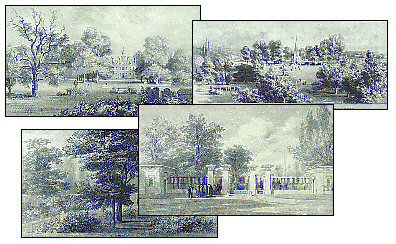
Abney Park, 32 acres in north-east London, catered to Non-Conformists (Methodist, Baptist, Congregationalists, Wesleyan etc.) Burials start in May 1840.
There is a free basic search available without registration. Free registration gives you access to an advanced search where you can limit the search to specified years and/or section of the cemetery. There is also a "sounds like" metaphone search and the ability to screen an entire GEDCOM.
An earlier London burial ground for Dissenters was Bunhill Fields which is indexed as part of a collection of City of London burials by findmypast.com.
27 January 2008
Comments on LAC service hours
Copied below is my input to Library and Archives Canada, as a member of the Services Advisory Board, to questions and options for extending hours of service presented to Board members. Input from readers of this blog were considered in developing my response, but the final text below is my opinion.
What clients want is reliable and prompt access to the material they need, to be able to conveniently review it, and make notes and copies for later in-depth research. Some need prompt access to newly identified material resulting from their research during the same visit, especially those from outside the NCR.
Whatever extended hours are decided, it will do little for client satisfaction if the service is unreliable. Prompt retrievals must be a priority. Clients should never be put in the situation of arriving at the building to find the material requested was not placed in the locker, the order slip left on the last visit is found in a box with a notation that the film is out on loan, or that the material is unavailable as its with an archivist. It is simple to notify clients by phone or email when retrieval standards can't be met, and would be even easier with an online ordering/notification system remotely accessible.
The cost of providing a full service hour is $1.2K; a consultation room hour $0.07K; and a reference room hour $0.02K/hr. I strongly encourage LAC management to look at sub-dividing the full service activity. For example, provide telephone and online consultation later in the day, so that folks in the West have access at reasonable hours, without that meaning everything else has to be open late. Extend the hours of retrieval service without providing access to a professional archivist and librarian at the same time.
A) Regarding how to allocate an additional full service hour, there is a diversity of preference. Some prefer an 8:30 am start, some 9:00 am which is my own preference.
B) Regarding consultation room hours, I hear a strong preference for opening 4 hours on Saturdays together with some extension on weekdays (option 2). I go along with that, and would prefer that the Saturday hours be in the afternoon.
C) Regarding reference hours, the cost per hour is so small the hours should be the maximum.
In closing two comments from one of my respondents, an Ottawa area genealogist:
If there was a security station on the 2nd floor that meant we had access to city directories outside of regular hours I would think I'd died and gone to heaven.
With the ability to photocopy from microfilm on weekends---and a fully automated electronic ordering system that would allow us to order archival or library materials ourselves, onsite or from home---I would be quite happy.
You can provide your input using the channels mentioned in this LAC posting.
26 January 2008
Naming Patterns
An article in today's Ottawa Citizen reminds me than one of the early challenges of being a parent is to choose a name for the child that satisfies all the grandparents. An early challenge for the grandparents is to keep smiling when you hear that choice.
Middle names are a good way to commemorate ancestors, if not as good as first names. Multiple middle names kept as many people as possible happy; the heir to the British throne is Charles Philip Arthur George. In my family we couldn't quite keep up with the royals; two middle names were used for each of us kids. When it came to researching my family history it came in really handy that one of mine has been used as a middle name for four generations, and before that it was a last name.
These days parents often look to celebrities for inspiration. That's not much help in genealogy, although it may give future generations of family historians insight into the parent's tastes in popular culture.
In days of yore traditional naming patterns often held sway. In England the first son was named for the father's father, the first daughter for the mother's mother. Then things were reversed, the second son named for the mother's father and the second daughter for the father's mother. After that the father and his brothers in birth order were used for sons, and the mother and her sisters for daughters.
In Scotland there was a naming pattern which honoured the parents father and mother first, as in England, but switched to names of grandparents rather than siblings.
Other cultures had different traditions, which caused a bit of a problem in mixed marriages.
The Ottawa Citizen article told the story of a Jewish family pressured to follow tradition and name a new child after a recently deceased and respected relative. Apparently it is no longer much in fashion, and was applied only in the Ashkenazic Jewish community. Sephardic Jews following a pattern much like the English.
If you're looking a specific naming pattern try Googling "naming patterns" and the appropriate nationality or culture. You'll probably find several references available.
25 January 2008
Forthcoming LAC databases
The next database scheduled to appear on the Library abd Archives Canada website will be an index to Canadian forces killed in action during the Second World War. Name, rank, serial number, birth and death dates as well as the file number at LAC will be included. The individual's service file itself is not digitized. To see that, and it is worthwhile, you'll have to visit LAC or order a photocopy.
An index to Upper Canada land petitions, transcribed from a card index, is nearing completion and should be online in the next few months, possibly by the end of March.
24 January 2008
Where has your DNA been?
 Inspired by some US genealogy bloggers listing where their ancestors were 100 and 200 years ago, to the left see a depiction of where my ancestors were living. Using the My Maps feature of Google Maps makes it almost too easy to produce.
Purple pins are for 1808, the blue for 1908.
My ancestors liked to move around. The only place with pins of both colours, hard to see, is London, England.
Two of the westernmost purple pins are the locations of my Y- and Mitochondrial DNA.
If you see things broad brush, my ancestors were in Western Europe and those two commonly analysed DNA components are a fair representation of my overall genetic origin, at the time.
If you look at details, and most genealogists do, the map illustrates the limitations of state of the art DNA analysis for genealogy.
23 January 2008
Recent changes at LAC

You will also find a new security station on the 3rd floor. It was staffed but not fully operational when I was there on Monday.
Clients of Library and Archives Canada who use our public research/consultation facilities at 395 Wellington will notice the presence of a new security desk on the third floor of this building as of January 21, 2008
This is one of several new security measures which were approved by Library and Archives Canada's Management Board in 2007 and is intended to enhance the security for our collections, employees and visitors.
What's new?
Full-time security presence on the third floor, the security post in the foyer is operational from:
- 8 a.m. to 11 p.m. on weekdays
- 10 a.m. to 6 p.m. on weekends
Increased rounds on the second floor by security personnel.
What changes are being implemented?
- Inspection of bags on entry and exit from the third floor
- More frequent rounds in consultation rooms by security personnel
- Enforcement of the requirement for clients and visitors to wear their identification cards at all times, as per the Regulations Governing the Use of Research Materials and Facilities
- Revised sign-out procedures and random inspection of bags at the ground floor security desk.


