October is Women's History Month in Canada, as proclaimed in 1992.
Ancestry.ca points to some women prominent in Canadian history found in their records. See an extract from their press release below.
One prominent woman they don't mention, although she is well represented in their records, is former Ottawa mayor Charlotte Whitton. Not one to mince words she said of Ottawa City Council "I don't think a third of them are there just to serve the City", which rings as true today as more than a quarter of a century ago. To get a first hand view of the mayor, together with her forthright views, see the video here.
Here are some of the less well Canadian women from the Ancestry.ca press release:
o Emily Stowe from Norwich Township, Ontario was Canada’s first woman to practice medicine. Stowe is considered by many to be the mother of the suffragist movement in Canada. (1881 Census of Canada)
o Carrie Derick from Clarenceville, Quebec was a geneticist who gained international recognition for her research on heredity. When McGill University in Montreal appointed her as full professor in 1912, she was the first woman to receive this status in Canada. (1871 Census of Canada)
o Eileen Vollick from Wiarton, Ontario was Canada’s first licensed female pilot and played a large role in opening the field of aviation to Canadian women. (1911 Census of Canada)
o Elsie MacGill, born in Vancouver, British Columbia was the world’s first female aircraft designer and led Canada’s fighter plane production during the Second World War. (1911 Census of Canada)
01 October 2009
Great Canadian women

30 September 2009
U.S. Patent and Trademark Office Patents, 1790-1909
Ancestry has made available a database contains invention patents granted from 1790-1909 by the United States Patent and Trademark Office (USPTO). The database contains: In addition there are images of the patent documentation when available. A search on Canada as a keyword found 14,180 hits.
Scottish business archives - link
Chris Paton on his SGNE blog posts on a presentation he attended on Scottish business archives for family historians.
Barnardo's Family History Service
The October issue of Ancestors magazine includes an article by Karen Wicks "Every Child Regardless" about the Barnardo's archive at Barkingside. Approximately one in three of the more than 100,000 home children sent from England to Canada between 1869 and the Second World War came with Dr. Barnardo's Homes.
I have previously heard reports of people being led a merry chase in trying to get access to an ancestor's Barnado's record. It appears there is now more of a routine procedure, described in the article and on the Barnado web site at www.barnardos.org.uk
A basic record search costs a non-refundable £15. This will establish if your relative was a ‘Barnardo’s boy or girl’ and if there are records; in most cases if there was a child there will be records.
There are three packages available for purchase:
- Admission Package - £70, comprising admission history, placement details, individual photograph, precis and homes information sheet.
- Full History Package - £85, comprising admission history, placement details, individual photograph, precis, homes information sheet, record book entry, situation book entry (boys only), and location photographs.
- Photograph Package - £20, comprising a photograph of the child and the home(s) they lived in.
29 September 2009
Is more researcher identification needed?
The US National Archives and Records Administration (NARA) have published a proposed rule, here, that would require all users of their facilities to obtain a researcher card. At present researchers who only access microfilm resources do not need such registration.
Researchers at Library and Archives Canada, and at the Archives of Ontario, are required to have a researcher card to access all documents held. That applies to microfilm just as much as original records or those accessed through in-house computers. By contrast, in my most recent trip to the UK I found no requirement for a reader card, or even to sign in, to access substantial online, microfilm and library materials at The National Archives. A reader card is required to view original records. At the London Metropolitan Archives you are required to sign in but there is no serious identity check, even to access and handle original documents.
NARA's rationale for the enhanced requirement is to "strengthen our security to
protect buildings, people, and the records we hold" and also "help ensure more accurate counting of researchers to measure our performance in customer service delivery and to effectively allocate resources."
This change seems rather strange given another part of the proposed rule at NARA that would eliminate a three hour limit on the use of microfilm readers. The rationale is that there are no longer waits for microfilms. Apparently as the use of this equipment goes down regulation of its use needs to go up!
Beware - at LAC
Don't leave anything of value in your locker on the ground floor at Library and Archives Canada. On Monday I had a coat, bag and hat stolen from a locker. It was locked, but evidently even new locks recently put on the lockers were insufficient to deter this thief. Fortunately there was nothing irreplaceable taken, my most valuable materials were with me, but that has not always been the case. It will be from now on. Beware.
I've also heard reports recently of concern on the part of ladies regarding men lurking, and security saying its a public building and there's little that can be done until something happens!
Is there is sufficient and obvious security camera coverage of the public areas?
28 September 2009
The oddest baby names in Canadian history
The following is a press release from Ancestry.ca
ANCESTRY.CA REVEALS THE ODDEST BABY NAMES IN CANADIAN HISTORY
Toronto, ON – September 28, 2009) In honour of the birthday today of two of the most absurdly named children the world has ever known – Pilot Inspektor, son of actor Patrick Lee, and Moon Unit, daughter of legendary musician Frank Zappa – Ancestry.ca has dug deep into its historical records to reveal some of the worst baby names in Canada’s history, and discovers that giving children strange names is neither a new trend, nor one reserved for Hollywood celebrities.
Some of the most unusual names in Canada can be found as far back as the 1840s and prove that when looking for a unique name for a child, parents took cues from almost anywhere. From the palace to the barnyard and from fruit orchard to the heavens above, here are some of the finest, funniest and often times most unfortunate historical Canadian names.
Names of Divine inspiration:
- Jesus Christ Long - born in 1879 to Samuel, a watchmaker, and his wife Isabella in Middlesex County (from Ontario, Canada Births, 1869-1909)
- God Moses Fleshman - born in 1883 to parents Hannah and Joseph, Russian immigrants, in Lanark County, Ontario. Moses would later move to the Prairies – or as some people like to call it – God’s country (from Ontario, Canada Births, 1869-1909)
Canada’s ‘Royal’ family:
- King Farrell - born in 1886 to parents William and Frances, Irish immigrants who raised King as a Methodist (from 1911 Census of Canada)
- Queen Brittain - born in 1900 in Brant County, Queen grew up in a house with seven siblings, none of whom were named after royal titles and no doubt felt aggrieved (from Ontario, Canada Births, 1869-1909 and 1901 Census of Canada)
- Prince Hutchison - born in 1842 to John, a farmer, and grew up in a house in the Maritimes with six other children (from 1851 Census of Canada East, Canada West, New Brunswick, and Nova Scotia)
- Princess Orth - born in 1881 to parents John and Alice in Oxford County, Ontario (from Ontario, Canada Births, 1869-1909)
The SPCA Wing:
- Horse Love - this 17-year old worked, perhaps predictably, as a farm labourer, earning a meagre $180 in 1910 (from 1911 Census of Canada)
The Gwyneth Paltrow/Chris Martin Wing:
- Apple Coutts - born to Alfred, a farmer, and his wife Elizabeth in 1904 in Elgin County, Ontario (from Ontario, Canada Births, 1869-1909)
- Festus Apple Ryder - born in 1881 to his wagon-maker father, Hugh, and wife Sarah. Festus would grow up to become a labourer and marry at the age of 27 in what one can only imagine was a festive ceremony (from Ontario, Canada Births, 1869-1909)
Everyone Loves the Holidays:
- Merry Christmas James - not born to Jesus Christ Long, but in fact to parents John and Jennie in 1867 (from Ontario, Canada Births, 1869-1909)
- Happy Newyear Kerwenyee -born on New Year’s Day in 1877 to John, a farmer, and his wife Louisa (from Ontario, Canada Births, 1869-1909)
The Joke’s on You!
- Jester MacNut - lived in Colchester, Nova Scotia (from 1891 Census of Canada)
- Ruby F. Hoax - claim that she was related to Colchester’s own Jester MacNut is currently being investigated... (from 1911 Census in Colchester, Nova Scotia)
- John Joke - a jovial Finnish immigrant that had settled in Kindersley, Saskatchewan (from 1916 Census of Canada)
Be My Valentine?
- Love Peace Joy - a 25-year old who was born in India and came to Canada to work in the Bible industry (from 1911 Census of Canada)
- Amor Figydt - this 35 year-old lived in a small house on St Paul Street in Toronto, Ontario with his three children and his mother (from 1911 Census of Canada)
- Romance Clark - born in the US, this 15-year-old lived with her family in Moosejaw, Saskatchewan in 1911, after immigrating to Canada the previous year (from 1911 Census of Canada)
- Myholy Cupid - a 24-year-old recent Polish immigrant to Canada, working 40-plus hour work weeks as a street labourer, sharing a lodge with other Polish immigrants (from 1911 Census of Canada)
- Valentine Couture - a 3-year-old with a love of fashion? (from 1851 Census of Canada)
Karen Peterson, Marketing Director for Ancestry.ca comments: “Searching through historical records has never been more fun or easy, thanks to the online preservation and indexing of family history records such as censuses, birth and marriage records, passenger lists and immigration records.
“If you’re lucky, you just might find that you are a descendent of Jesus Christ! Jesus Christ Long that is.”
To find out more about your family history visit Ancestry.ca and let the journey begin.
Registrar General Annual Reports on births, deaths and marriages
We all know there's nothing more fascinating than sitting down and getting tucked into reading a good annual report. Yeah!
Apparently there are enough of us looking for context for our family and history studies who find this sort of thing interesting for the company Anguline Research Archives to find it worthwhile reproducing on CD the Registrar General's Annual Reports for 1901. Isn't the long tail wonderful!
The company describes it thus:
The contents of this report includes population (census & estimated). Detailed statistics of Births, Marriages and Deaths including causes. Offences against the Registration Acts, Literacy. A Meteorological Report for the year 1901.
There are also included many interesting abstracts of Births, including number, rates, sex, illegitimate; Marriages, including number, rates, forms of marriage, ages signatures in marriage register etc. etc.; Deaths including number, general death rate, sex, ages, infantile mortality, urban and rural mortality, causes of deaths and deaths in public institutions etc.
Also covered is strength and mortality of the Army & Navy ; Births & Deaths at sea and a tabulation of causes of death due to disease, both general and local. Etc.
Plus an index of Registration Districts, Sub-districts and Urban Districts.
A useful reference guide for family and local historians which could be used to good effect in conjunction with the 1901 census.
That's only one year. I wondered if there are other issues available so turned to Google books. Unsurprisingly the answer is yes -- it wouldn't make much of a blog posting otherwise!
Google books have free full view versions of the Registrar General's annual report of births deaths and marriages for England from 1856, volume 17, which happens to include considerable discussion of the cholera outbreak of 1853 - 54, volumes 20, 26, 28, 36, 37, 42, and 47 which is for 1886.
The Internet archive only have a few issues but they do include the fourth report dated 1842.
Depending on the search terms you choose your search may also turn up other similar reports from Scotland, Ontario, and several Australian states.
27 September 2009
One Man, Two Names, Three Families, And Much Intrigue
During her memorable visit to Ottawa a week ago for the BIFHSGO conference Colleen Fitzpatrick asked if people had read her articles in Ancestry Magazine [the US version]. Not many had. I did get the magazine for a while, there was a special promotion with an ancestry.com subscription, but because it was so US-centric it didn't really appeal to me.
Surfing around on the Internet I came across one of her recent articles from the magazine which appealed to me. It involved a man who hid his past, something I'm wrestling with at the moment, and a breakthrough with the aid of DNA analysis.
There's a web version of the article from July of this year here, which includes a link to a PDF version of the more complete article, all free.
26 September 2009
DAWESROOTS
A couple of days back I commented on how OGS is missing the boat by running old-fashioned essay competitions rather than a 21st-century equivalent which would appeal more to the younger generation.
M. Diane Rogers pointed out that "it's not only the young working with the 'new media' either. Some of us grandparents aren't paper bound anymore."
Diane's point was reinforced for me when Bob Dawes, one of the leaders in Quinte Branch of the Ontario Genealogical Society, drew my attention to his new blog at www.dawesroots.blogspot.com/ "intended for those who are interested in the genealogy of Thomas DAWES / DAWS / DAW who was born in Hadlow, Kent, England about 1809 and married Ann LANGRIDGE in Lewes, Sussex, England on 10 November 1834."
We all know it's a good idea to write our family history but that can be quite daunting when you think about completing a whole book. Writing a blog for your family history is one way to cut the challenge down to size, and makes the information available for Internet cousins to find.
With increasing effort to archive the Web it's also a way you can preserve your family history research for that time, perhaps decades in the future, when one of your descendants or members of your extended family become curious about their roots.
As a bonus, Bob tells me it has already stimulated some of his UK Internet cousins to research common lines.
Internet Genealogy Oct/Nov 2009
The new issue of Internet Genealogy magazine landed in my mailbox on Friday. I saw it last weekend while in conversation with Ed Zapletal and Rick Cree from Moorshead magazines. It contains a lot of good stuff including my most recent article "Newsworthy Genealogy: British newspaper archives" which discusses the increasing number of online sites for accessing archives of British newspapers.
Lisa A. Alzo contributes five articles "Help! My ancestors are hiding!", "Old photos on the 'net", "Fancy Footnote pages for your ancestors","Fast, frugal fixes for your old photographs", and "A Cuil search engine!"
Susanna De Groot, from Windmill Genealogy and the National Institute for Genealogical Studies writing on "Searching for ancestors in the Netherlands," and Rick Norberg on "Irish genealogy: getting started online" are both of direct interest for my family history. I'll probably look later at Michael John Neil's article on "The US Census: more than meets the eye!"
Internet Genealogy is published in Toronto and sold throughout North America. I've never seen it on a newsstand in England. It is in the collection of the Society of Genealogists. In Ottawa it's available at the Main and Nepean Centrepointe locations of the Ottawa Public Library and, likely, several public libraries across Canada.
25 September 2009
Changes to service at TNA
The UK National Archives have announced their decisions regarding changes in services in order to meet budget requirements. In brief:
- Moving to a five-day week (Tuesday to Saturday), from 4 January 2010, with an extension of opening hours and document ordering times for the remainder of the week
- Charging for use of the public car park, with an annual season ticket available for frequent users (based on vehicle emissions, in keeping with government guidelines)
- Changes to copying and microform services, with the aim of simplifying the process for users
Although the main thrust of their proposals is unchanged in implementation there does appear to have been a bit of tweaking around the edges in response to the consultation comments
Read the TNA release here, and additional information from Chris Paton here.
For those of us who only visit TNA infrequently the impact may be minimal, as long as we remember not to try and visit on a Monday. However, the building was already quite crowded during my last visit, and it could become a zoo when six days worth of visitors are shoehorned into five.
On the positive side there could be benefits for online users if more effort is directed to enhancing web services.
24 September 2009
OGS student essay competitions
The following is an announcement from the Ontario Genealogical Society.
The Ontario Genealogical Society has established two essay competitions for students. Both require a paper to be written on a topic within family history. Both carry a prize of $500 and publication in Families.
The Dr. Don Brearley Genealogical Essay Prize is open to secondary school students in grades 11 and 12. For this, the first year, it is open to Toronto District School Board students only. In future years it will be available to students in other Ontario school boards. See the Guidelines for complete information. Submission deadline is February 26, 2010.
The Mike Brede Genealogical Essay Prize is open to any full-time student in a university or community college who is either a resident of Ontario or attending an Ontario university or community college. See the Guidelines for complete information. Submission deadline is February 26, 2010.Warning. The following is opinion.
With this initiative the management and Board of the OGS miss an opportunity and demonstrate lack of imagination. Another essay competition is something their grandparents would have felt comfortable with, familiar territory for them. Students today, on the other hand, are interested in expressing themselves through less staid means, multimedia and web content. It would have been eye opening for the Society if they were faced with evaluating YouTube videos, blogs, maybe even a series of tweets
23 September 2009
PRONI temporary closure
There was mention of a temporary PRONI closure at an Ottawa Branch of OGS Irish Group meeting last evening.
According to the BBC the Public Record Office of Northern Ireland, is moving to headquarters in Belfast's Titanic Quarter in May/June 2011.
The records will be not be available for physical access between September 2010 and May 2011.
There is more detail at Chris Patton's SGNE blog.
Useful websites for UK family history
While at the UK national archives (TNA) a couple of weeks ago I picked up the March 2009, the latest, edition of the information sheet "Useful Websites for Family History." It doesn't seem to be on their website in its entirety and I'm reluctant to reproduce the whole thing. Here are just a few I hadn't come across before:
http://rmhh.co.uk/occup/index.html - listing of names of occupations found in the census
www.arbeia.demon.co.uk/museums/location/uk/ukmilmus.htm - a guide to UK military and regimental museums
www.pcansr.net - Boer War nurses
www.bathnes.gov.uk/BathNES/lifeandleisure/leisure/localarchives/georgian/default.htm - search the Bath Chronicle newspaper 1770 - 1800
www.canalmuseum.org.uk/collection/family-history.htm - canals and canal families
www.open.ac.uk/ou5/Arts/chemists - British Chemists (1880 - 1970)
22 September 2009
Being close to the user
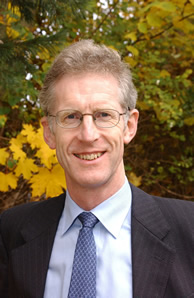
I was not enthusiastic when I first heard that someone with that title was coming to the conference. Over the years I've become accustomed to hear people at top levels in the public service in various countries give presentations full of bureaucratize.
Macniven was refreshingly different. His two presentations were substantive. He actually sat down in the computer consultation room and helped participants one-on-one, something I also understand he had done at the major Homecoming event in Scotland earlier in the year.
When I queried him about access to their records for local history studies, which can be prohibitively costly on the pay-per-view basis of the Scotland's People website, he indicated that GROS were open to making special arrangements on a case-by-case basis. He pointed to a case with the University of Guelph where such an arrangement is in place.
21 September 2009
Drouin Collection returns to Ancestry
Following resolution of a dispute between Ancestry.com and the Drouin Genealogical Institute the previously available records from Drouin have now reappeared on the Ancestry website.
Drouin had previously asked that the records be withdrawn as Ancestry had failed in its contractual obligation to properly and fully index the database prior to the original publication, a contention that was upheld by a judge in an arbitration hearing. It isn't clear what Ancestry.com is doing to remedy its contractual failure.
This news was welcomed at the BIFHSGO conference this past weekend by genealogists with Catholic relatives in Eastern Canada and parts of the US.
History of the site of TNA at Kew
In the most recent TNA podcast, recorded earlier this month, GIs and POWs: Kew in the Second World War, historian Christopher May reveals the wartime history of The National Archives' Kew site. The presentation focuses on the site user by American servicemen stationed there created the maps used in the Normandy landings of 1944, and the use of the same buildings to house Italian prisoners of war who helped to clear bomb damage in London.
The site was taken over by the UK Public Record Office in 1972.
Not much of family history interest in the presentation, interesting local history.
Find it at www.nationalarchives.gov.uk/podcasts/gis-and-pows.htm
The future of family history
On Sunday, in the final session of the annual British Isles Family History Society of Greater Ottawa conference, I had the privilege of being a panelist, with Bryan Cook, Colleen Fitzpatrick and Glenn Wright, in a session on the future of genealogy. Here are my opening remarks:
Most of us start out our family history investigation using the information we have ourselves, orally from our family, from documents and family artifacts. It’s a surprise to me that some people don't go much beyond that and still manage to develop interesting family stories. They use their family network, increasingly with the help of Internet cousins.
It doesn't take long for most researchers to move beyond, to government records. Recent years have seen that becoming easier with the tremendous strides in the ability to access these resources using indexes and transcriptions on the Internet, often linked to images of original records. Now you can pretty well get access to all civil registration and census information, at least that not subject to privacy restrictions, either the complete record or an index online. It's wonderful progress.
In addition you can access records online which were only talked about in somewhat hushed tones when I started. They were unindexed - difficult sources to deal with. I'm thinking of the US St Alban`s border crossing records and ships passenger lists. Plenty more are being tackled or remain to be tackled: land records, probate, military, criminal, poor law, burial. Then there are religious records. There’s plenty of work for indexing volunteers and indexing companies in China, India and Sri Lanka to be getting on with.
But human indexing in 19th, and online availability 20th, century technology. What is exciting me these days is machine transcription being used in book and newspaper digitization projects.
Perhaps you saw my article in the latest Anglo Celtic Roots where I wrote about finding my great-grandfather being convicted in 1879 of embezzling 30 pounds from his employer, a bank on London’s Oxford Street, where he'd worked for 10 years. The newspaper article said his salary was 155 pounds a year, he was recently married, and had a first child on the way. Despite his lapse his employer asked that in view of his good employment record he be dealt with leniently.
My information was from a digitized newspaper in the 19th Century British Newspaper Library project. I’d never have found it if the newspaper hadn’t been digitized and word-searchable. Although it's not exactly information I would have chosen to find about one of my ancestors it did turn a man who I previously knew only from a series of government records into someone I got a more visceral feeling for. That's the stuff of family history, and not the sort of thing you’re likely to learn from preciously conserved family-held records -- that type of record is usually deliberately forgotten!
If civil registration and census online was wonderful progress, digitized newspapers are, or will be, a revolution. No human intervention was involved for that newspaper – that’s a 21st century revolution.
The magnitude of achievement these newspaper digitization projects represent isn’t well appreciated. The 19th Century British Newspaper Library project comprises two million pages, containing 10 billion words or 50 billion letters.
Compare it to the rightly much heralded Human Genome project. The human genome contains three billion letters, and only four unique ones, A C G T. The British Library Newspaper Project is much richer, 50 billion letters, perhaps 94 of them unique if you count lower and upper cases, numerals and symbols, and they’re in different fonts and cases.
True, much of a newspaper is junk for your family history, but that’s just like DNA most of which is not ancestry informative.
With such richness I feel confident that extending the digitization of information sources, especially newspapers, through machine interpretation of text will provide the biggest breakthrough for family history in the next few years. Perhaps we will also see progress on machine transcription of handwritten documents. For those who doubt it just look at the improvement on the quality of the machine interpretation of newspaper text during this decade.
Here in Ottawa we’re particularly backward, none of our major newspapers have been digitized. As perhaps some of the biggest beneficiaries of newspaper digitization we, the family history community, should be vocal and active in promoting newspaper digitization.
20 September 2009
Scottish News
At the BIFHSGO conference this weekend the Society was pleased to welcome Duncan Macniven, Registrar General for Scotland since 2001. He gave two informative talks, on Scotland's Demographic History since Victorian Times, and How to Find Your Own Scottish Ancestors.
During the presentations he made it known that the Scotland's People website will soon be adding Catholic records, and that records of the Kirk Sessions will become available next year. Images from Valuation Rolls, at first for years intermediate between census years, are also planned to be added. The 1911 census will become available in 2011.
He also mentioned that there is some potential for extra Scottish information to be made available by suppliers other than Scotland's People, including Ancestry, although negotiations are at an early stage.


