19 December 2015
SCGS FREE webinars
Jill Morelli - The 'Push' and 'Pull' Decision-making of the 19th Century Emigrant.
Saturday, January 2, 10:00 AM PST.
Diahan Southard -Making YDNA and mtDNA Part of your Family History.
Wednesday, January 20, 6:00 PM PST
Tom Underhill - Scanning and Photo Retouching for Beginners.
Saturday, February 6, 10:00 AM PST
Nicka J. Smith - The Family Historian's Publishing Primer.
Wednesday, February 17, 6:00 PM PDT
Julie Goucher- Origins & Evolution of a OneName Study or Surname Research.
Saturday, March 5, 10:00 AM PST
Thomas Jones- Inferential Genealogy: Deducing Ancestors’ Identities Indirectly .
Wednesday, March 16, 6:00 PM PDT
Michael L. Stauss - Researching Your Civil War Ancestor: A Comprehensive Study.
Saturday, April 2, 10:00 AM PDT
James Baker - The Peripatetic Germans: Emigration and Immigrations (1693-1914).
Wednesday, April 20, 6:00 PM PDT
Gena Philibert-Ortega- Once Upon a Time at an Antique Store: Telling the Story of Mrs. E.G. Stetson.
Saturday, May 7, 10:00 AM PDT
Jean Wilcox Hibben, PhD, CG - Translating Latin Records of German (and other)
Catholic Churches .
Wednesday, May 18, 6:00 PM PDT
James Beidler- Finding a German Home Village Online.
Wednesday, June 15, 6:00 PM PDT
Drew Smith - Organizing Your Genealogical Research Process.
Wednesday, July 20, 6:00 PM PDT
George G. Morgan - Five Reasons the Records Aren't in the Courthouse.
Saturday, August 6, 10:00 AM PDT
Teresa "Tessa" Keough - What’s In a Name? Every Surname Tells a Story.
Wednesday, August 17, 6:00 PM PDT
J. H. Fonkert - Discover Family History in Historical Newspapers Online and Off.
Saturday, September 3, 10:00 AM PST
Elissa Scalise Powell - How Did My Pennsylvania Ancestor Get There?: Migration Trails West. Wednesday, September 21, 6:00 PM PDT
Mary K. Roddy- Trails West.
Saturday, October 1, 10:00 AM PDT
Pam Vestal- Genealogical Pits I've Fallen Into and How to Avoid Them!.
Wednesday, October 19, 6:00 PM PDT
Cyndi Ingle- The Case of the Broken Link: Decoding the URL.
Saturday, November 5, 10:00 AM PST
Tammy Hepps- The Ancestor Deep-Dive: How You Can Find Out Everything There Possibly is to Know About Your Ancestor.
Wednesday, November 16, 6:00 PM PST
Barbara Randall- Weaving the Research Quilt.
Saturday, December 3, 10:00 AM PST
Dr. Michael Lacopo- Using Tax Records for Genealogical Problem Solving.
Wednesday, December 21, 6:00 PM PST
There's a pdf with details on this series at www.scgsgenealogy.com/webinar/media/2016webinar-handout.pdf
English and Irish additions at Findmypast
This week's additions from Findmypast.co.uk are:
Suffolk Baptisms
Transcriptions of 351 Suffolk parishes with 742,992 records are in this index from the Suffolk Family History Society. Depending on date information available will include name, baptism date, baptism place, the names of their parents, father's occupation and any additional notes.
If you're wondering if a parish of interest is included check out the list with start and end years at www.findmypast.com/articles/suffolk-baptism-index-place-list. I notice the north Suffolk parishes of Ashby, Bradwell, Belton, Burgh Castle, Fritton and Lound are omitted; Gorleston and Hopton are included.
Dublin Registers & Records
Search or browse eight publications of parish records from the Church of Ireland in over 2,500 pdf images. Find baptism, marriage, and burial dates, names of their parents and spouse from dating from the early 1600s to 1800.
18 December 2015
Updating the 1939 National Register of England and Wales
When Find My Past released the 1939 National Register on 2 November I was disappointed that records for my mother and her brother were redacted.
My mother died in 2012 but apparently there was no way for TNA and Find My Past to know that. However, as the 100th anniversary of her birth was just a few days later I decided to wait and see if it automatically became available. It did, some days after the 100th anniversary of her birth.
Her brother died in 1942 serving with the RAF and is recorded in the Commonwealth War Graves Commission database. I was surprised that wasn't adequate evidence for the redaction to be lifted automatically. He died in the crash of a Coastal Command Sunderland flying boat and is buried in Oban, Scotland. Somewhat to my surprise Scotland`s People had a record for his death which I sent on requesting opening the National Register record. The immediate reply indicated it might take two weeks to consider the case. About 10 days later I received an email informing it had been opened despite his first name Edward being transcribed Gilbert.
The process of opening redacted records appears to be working reasonably well. Does anyone else have any similar or contrary experience?
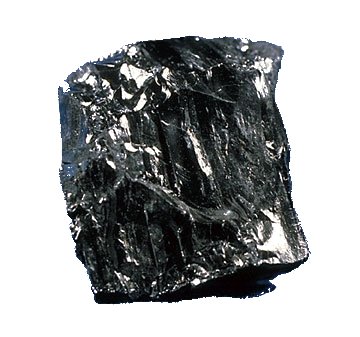
Lump of Coal Awards: nominations
1. Ancestry.com: for abandoning Family Tree Maker clients without ensuring the availability of an assured path forward.
2. Findmypast: for releasing the 1939 National Registration for England and Wales on a pay per view basis rather than as part of the subscription package.
3. The General Records Office (England and Wales): for a long-standing record of gouging for birth. marriage and death records, and continuing to do so despite findings that a restrictive policy is unnecessary.
4. The Ottawa Public Library: for neglect of the Ottawa Room and failing to give it a meaningful virtual presence.
5. Canada's Anglo-Celtic Connections: for inability to proof-read, spell and grammar check.
Your nominations are welcome.
17 December 2015
20,000 pages being added to Almonte Gazette online
Earlier this week the MVTM was awarded $23,019 from the Documentary Heritage Communities Program (DHCP) for "Digitizing the Almonte Gazette and Creating a Documentary on Former Workers."
Matthew, who returns to the museum for this project, informs me the funding will primarily cover the digitization of the final years of the Almonte Gazette that could not be competed the first time around. This would include years 1990 to 2007 (when the Almonte Gazette closed). The newspapers will again be converted into searchable PDF files. This will make an additional 20,000 pages available for online research.
The MVTM Board of Directors has made it a 2016 goal to improve the website overall and the Almonte Gazette resource will be a part of that. Improvements to the existing database will be explored and, funding and other priorities permitting, updating the Almonte Gazette facility to take advantage of developments since the project was initiated.
OPL Presentation: Exploring Your Family Roots Using DNA
Exploring Your Family Roots Using DNA
The DNA you inherit from your biological parents can give insight into your origins before recorded history, resolve uncertainties in your recorded family history (break down those brick walls!) and help in a search to unravel mysteries hidden by adoption. Learn how in this introduction to genetic genealogy.
The session is free but you need to register to attend. Log with your OPL account and register at https://biblioottawalibrary.ca/en/exploring-your-family-roots-using-dna.
16 December 2015
What's to be achieved with Documentary Heritage Communities Program Funding?
Here are descriptions of the objectives of two of the 65 DHCP projects funded across Canada.
Online Digital Expansion of the Arnprior & McNab/Braeside Archives: $63,655
The Arnprior & McNab/Braeside Archives (AMBA) is expanding their online capabilities of making their holdings accessible. As its first phase, this project will update, improve, and modernize the current search portion of the website, as well as migrating the existing website contents to a new site. As part of this project, a select number of documents will be added to the search function. The new software will allow searching across both the documents and the descriptions of our holdings, as well as having them easily found on online search engines and viewable on the various platforms. Online analytics and statistics to monitor the traffic to the site will be started. As well, the software will reduce the manual workload by automating the upload of the in-house description holdings and resizing and watermarking images.
At the end of this project, the AMBA will be positioned for the future with a robust, modern, online platform. Subsequent phases will see AMBA digitizing their valuable newspaper collection and other documents and making them searchable and available to the public.
British Columbia Genealogical Society Pedigree Chart Project: $4,609
Since our beginnings in 1971, British Columbia Genealogical Society members and others have contributed their family history research to the Society to ensure both its preservation and access to all interested researchers.
The oldest parts of this unique collection, known as the BCGS Pedigree Chart collection, consists of pedigree charts, trees and family information sheets which are held in the BCGS Library. Many of the documents were handwritten in pen or pencil; various sizes and types of paper were used; some are now fading or otherwise deteriorating. Interestingly, the worst are often those printed on early computer printers.
These charts have never been copied, although volunteers have indexed all the family names on the documents.
With this DHCP grant to the BC Genealogical Society these documents are being scanned professionally. The original documents then will be stored for preservation purposes, and the scans will be available to researchers at the BCGS Library and on the BCGS website.
Thanks for this information to:
- Laurie Dougherty, Archivist at the Arnprior & McNab/Braeside Archives
- M. Diane Rogers of the BCGS who mentions the society has more projects ready to go while hoping other genealogical societies will also apply. Find out about the program criteria and how to apply at http://www.bac-lac.gc.ca/eng/services/documentary-heritage-communities-program/Pages/documentary-heritage-communities-program.aspx
OGS Ottawa Branch December Meeting
I'm unsure if it's too late to participate in Saturday 19 December's OGS Ottawa Branch meeting.
"The December meeting will be a little different! It will be late-lunch potluck and everyone will be encouraged to share their favourite book or resource they have used in their personal genealogy research. In order to eliminate the possibility of everyone bringing something similar, please contact Heather Oakley at ottawavolunteer1@ogs.on.ca with your food contribution. We'll all share food, information and some Christmas cheer!"Also scheduled at 10:30 am is a Genealogy Back to Basics session with Mike More on "7 Common Genealogy Research Mistakes to Avoid" and the regular computer group meeting at 3:15 pm (+/-) following the main event.
More at ogsottawa.on.ca/
John Grenham lauds irishgenealogynews.com
"If you’re interested in new online record releases, public talks, new publications, special offers from subscription sites, changes to repository opening time – in fact anything at all that connects to Irish genealogy anywhere in the world – Claire’s site is indispensable."
That's how John Grenham's latest Irish Roots column characterizes Claire Santry's Irish genealogy news site. Claire gives her reaction here. I need add nothing else – irishgenealogynews.com.
15 December 2015
LAC Service Files Digitization: December Update
The latest box digitized is #3789 (#3121) and the surname Greenaway (Fitzpatrick).
At the recent accelerated rate digitization would be complete in 2 years and 4 months -- April 1918.
If you missed it read my reflections on visiting the digitization team at "Impressed by LAC's scanning of CEF Service Files."
Documentary Heritage Communities Program (DHCP) Funding Announcement
In making the announcement at 395 Wellington the Minister of Canadian Heritage, Mélanie Joly commented on the importance of digitization in making Canada's documentary heritage available across the country. Librarian and Archivist of Canada, Dr. Guy Berthiaume, mentioned that the initial $1.5-million funding cycle is only the beginning, the call for proposals for the second round is already underway.
It is noteworthy that this is not "new" money but a reallocation from within LAC resources.
Projects were funded in every province and territory, except PEI. The largest grant was to the Inuit Broadcasting Corporation which received $100,000 for Inuit Film and Video Archives – Archiving Activities. The least amount awarded, $3,125 is for a Copyright for Archives Workshop to the Association of Newfoundland and Labrador Archives
Two awards went to genealogical organizations: $4,609 to the British Columbia Genealogical Society for a pedigree chart project; $8,943 for Preserving Your Roots Through Digital Storytelling to the Saskatchewan Genealogical Society Inc.
Here are the projects receiving more than $40,000.
Canadian Research Knowledge Network
Canadian National Heritage Digitization Index
$71,683
Dr. James Naismith Basketball Foundation
The Brothers of the Wind Documentary Heritage Project
$69,946
Arnprior and McNab Braeside Archives
Online Digital Expansion of the Arnprior & McNab/Braeside Archives
$63,655
Nunavut Bilingual Education Society
Iqqaumajuakkuvik Project: Digital Audio Archive of Inuit Oral History
$56,750
Qalipu Mi'kmaq First Nation Band
ATK/TUS Database Creation
$46,608
La Société historique de Saint-Boniface
Digitization of 28 architectural projects by Étienne Gaboury
$44,192
Eastern Townships Resource Centre
Creation of a Regional Online Database for the Eastern Townships
$43,828
Saskatchewan Council for Archives and Archivists
SCAA – "Lives and Letters" Short Video Episode
$40,800
Les Amis des Jardins de Métis
Digitization, Classification and Indexing of the Jardins de Métis Archives
$40,017
Quite a few of the projects will be helpful for the family historian.
Review the complete list at http://www.bac-lac.gc.ca/eng/services/documentary-heritage-communities-program/Pages/funding-history-2015-2016.aspx
After the announcement the Minister took questions and proved adept at avoiding giving any new information regarding the fate of the Victims of Communism monument, a possible new symbol for the Canada 2017 celebrations and a new try for a National Portrait Gallery.
(Sorry about the quality of the image, the subjects are both a lot sharper than in the photo.)
A Green Christmas?
These days stores are concerned about a Green Christmas and that people aren't in the Christmas spirit to go out and buy. In times past that's not something our Ottawa ancestors worried about.
Google Ngram shows an increase in use of the term "Green Christmas" starting in about 1940, dwarfed by use of "White Christmas" -- Bing Crosby first crooned the song at that time.
Use increased from the 1940s onward. On 24 December 1942 there was mention of it being the greenest Christmas in Ottawa's recent history. In 1949 the paper reported "it's going to be a Green Christmas" on the 24th, the previous year on the 23rd "it sure looks like a Green Christmas for Ottawa", a previous item that year had looked back to the Green Christmas of 1923. The term was not found in that year although the warmth was remarked on. The Journal reported that 1964 was the first green Christmas in 20 years.
Since 1961 records of the depth of snow on the ground day by day have been kept in Ottawa. The average snow depth has been 14 cm on 25 December. The graph shows that generally the more snow on the 15th, the more on the 25th. In that 54 year period there have been 7 years (13%) with a trace or no snow on the ground on the 25th (2006, 2003, 1999, 1996, 1979, 1967 and 1964) and 12 years (22%) with a trace or less of snow on the ground on the 15th. Four of those 7 Green Christmases had snow on the ground on the 15th.
14 December 2015
OGS Conference 2016 Program Announced
From the pre-conference activities on Thursday 2 June, through workshop sessions on Friday and a first class lineup of presentations on Saturday and |Sunday with lots of choice, I'm glad I already decided to go. Check out the program starting here.
Secrets of the Irish Landscape
Learn more and view the three episodes online at http://tvo.org/programs/secrets-of-the-irish-landscape
Thanks to Jim Lumsden for the tip.
Photo credit: M. Bertulat via VisualHunt.com / CC BY-ND
Anglo-Celtic Roots: Winter 2015
Part two of Jane Down's description of how she discovered the Devon roots of her Down family includes the story of exploring Shop Farm and family homestead, also the subject of a memorable presentation Jane gave to BIFHSGO many years ago. Although now submerged beneath a reservoir Jane describes how being inaccessible has propelled her to know Shop Farm more intimately than if she'd been able to drive by.
My Ancestors Were Ag Labs — or Were They? sees Christine Jackson exploring the origins of he maternal grandmother's Durrant/Dudman family by attacking her Sussex 17th century brick wall from both sides. If the connection across the brickwall is correct it means she has a 16 generation line back to her original immigrant to England.
As usual with the winter issue of ACR there's a photo-rich article about last September's conference as well as the regular columns. The deadline for the Cream of the Crop column came in time for inclusion of information on the 1939 National Registration for England and Wales which had just been released. It was too late for me to remove the description of the additional exploration of the dataset possible with the advanced search using the TNA reference — deleted from the information provided free a few days after release.
13 December 2015
Fire Insurance Plans
LAC has placed online on Flickr 23 high quality Goad fire insurance maps for: Brandon, 1910; Winnipeg, 1906; Calgary, 1911; Lethbridge, 1910; Wakefield, 1897; Vancouver, 1897; Ottawa, 1895; Guelph, 1897; Montreal, 1881; Halifax, 1889; Winchester, 1900.
12 December 2015
Findmypast adds Devon, Plymouth Plague Rate 1626-1629
The index was created from original records across three wards of Plymouth: Looe Street, Venners and Vintry held by the Plymouth & West Devon Record Office.
Findmypast adds Portsmouth Electoral Registers 1835-1873
The map image is via Wikipedia.
Findmypast adds North Leicestershire parish record transcripts
The following transcript additions have been made by Findmypast.co.uk.
Leicestershire Baptisms containing over 2,000 transcripts of original parish baptism registers. The records cover four parishes; Breedon on the Hill (1752-1758); Long Whatton (1743-1769); Sileby (1683-1727); Walton on the Wolds (1752-1768); Wymeswold (1752-1802).
Leicestershire Burials containing over 3,000 transcripts for seven Leicestershire parishes; Breedon on the Hill (1752-1763); Cossington (1752-1837); Long Whatton (1752-1818); Prestwold (1752-1835); Quorndon (1752-1756); Walton on the Wolds (1752-1816); Wymeswold (1724-1806).
11 December 2015
Mission Accomplished LAC
The 2014 Fall Report of the Auditor General of Canada examined whether Library and Archives Canada has fulfilled its responsibilities for acquiring and preserving government documentary heritage from federal institutions, and for facilitating access to these records for current and future generations. LAC agreed there was a deficiency and accepted the Auditor General’s recommendations. In the fall of 2014, LAC approved a plan to eliminate a backlog of 98,000 containers of Government of Canada documentary heritage by December 2015.
According to a tweet from Guy Berthiaume "the contents of the 98,000 boxes mentioned have now been fully registered."
It's not clear what's meant by "fully registered". Are materials now listed in the LAC Archives Search? There were surely surprises and gems found while clearing the backlog which would be a good topic for a post on the LAC blog.
Home Children: LAC Guide to Sending Organizations and Receiving Homes
The following is LAC's introduction to this helpful guide.
This guide consists of individual pages listing the organizations that sent children to Canada and the Homes where they were first received before placement. It also includes organizations that recruited older girls and boys for domestic employment and farm training; however, although they were juvenile immigrants, they were not Home Children.
Each page in the guide includes background information about the organization and the following sections on available resources:
- Research at Library and Archives Canada
- Research in Other Institutions
- Research Online
- Research in Published Sources
How many Canadian Cousins, does AncestryDNA know?
This is mostly marketing hype based on an interpretation of data from 4,800 Canadian customers in the AncestryDNA database that statistically 1 in 2,200 Canadians are cousins.
Read down to the footnotes in the news release and cousins is defined as the total number of 4th cousin relationships and closer. However that's qualified if you delve further into an AncestryDNA match for 4th cousin you read it's "Possible range: 4th - 6th cousins."
Within that range there will be many more people who aren't exact 4th cousins. In January 2010 this blog had a chart showing the number of relatives for the THREE family, where all ancestors came from a family with three children in all branches of the tree. For that artificial case you would have 2,592 4th cousins, more than four times that number of 4th cousins once removed and nearly six times that number of fifth cousins.
To delve more deeply take a look at Blaine Bettinger's statistics showing the range found in the amount of shared DNA at a given relationship. Unfortunately it doesn't go out to 4th cousin but notice there are cases of no shared DNA at the 3rd cousin level.
Nice infographic. I'm dubious about the statistics but have a query in to Ancestry hoping they'll be willing to clarify.
10 December 2015
The Global Genealogy Top Ten for 2015
CD - Dictionary of Scottish Emigrants to Canada Before Confederation (pre-1867) Vol. 1, 2, 3 & 4
By: Donald Whyte.
BOOK - Loyalist Refugees, Non-Military Refugees in Quebec 1776-1784
By Gavin K. Watt
BOOK - A Short Service History and Master Roll of James Rogers' 2nd Battalion, King's Rangers
By Gavin K. Watt
BOOK - Guide to Genealogical Writing, How to Write and Publish Your Family History
By Penelope L. Stratton and Henry B. Hoff, CG, FASG
BOOK - The Lanark Society Settlers
By Carol Bennett
BOOK - Down and Out in Scotland: Researching Ancestral Crisis
By Chris Paton.
Book - Irish Family History Resources Online
By Chris Paton
BOOK - The Parish Registers of Births, Marriages, Deaths of St. Regis Roman Catholic Mission (Early Jesuit) 1784-1879 [Hogansburg , New York]
Compiled by Duncan MacDonald.
BOOKS - St. Raphael's Roman Catholic Parish Registers 1805-1904 - Baptisms, Births, Marriages, Deaths, Burials & Converts (Glengarry County, Ontario)
Compiled by Duncan MacDonald.
BOOK - From Ulster to Canada: The Life and Times of Wilson Benson 1821-1911
By Cecil J Houston, William J Smyth
Sandra tells me the Scottish Emigrants to Canada CD is their best-seller of all time. Gavin Watts' books come right behind.
The most popular Vital Records books are the St. Raphaels and St. Regis Roman Catholic Record sets.
Two of Chris Paton's books are also on the list.
Rick and Sandra will be bringing copies of these and other items for sale at the BIFHSGO meeting on Saturday for those looking for presents, for others or themselves. If there's anything else on the company catalog you'd like to purchase, and will be at Saturday's meeting, call at 613 257 7878 or as always our 1-800 361 5168 number and they'll bring you a copy -- and save the shipping.
BIFHSGO 12 December Meeting: Great Moments
Esther's Lost Surname
By Ken McKinlay
Many times the maiden surname of the women on our family trees are the hardest things to discover. They are often called "my wife," "my spouse," "et ux," or just referred to by their first name on the civil and church documents. Finding Ken McKinlay’s fifth great-grandmother's maiden surname was a long-time search undertaken by several researchers over the past 30+ years. Through a bit of luck and a leaf on Ancestry, it was finally uncovered for future generations to remember.
My Sea-faring Ancestors
By John McConkey
John McConkey knows of four men on his father's side of the family tree who had naval careers and strangely enough they were all named "Henry." In this talk, he will cover highlights of the lives of the two most notable Henrys. One of them lived in Northern Ireland, the other in New York.
Bumping into WC Leitch — or How to Succeed at Research Without Trying
By Gillian Leitch
William Christopher Leitch was a contractor in Montreal in the early twentieth-century. Some basic research on him and his life has been done, the majority of the information on him has come in serendipitous ways — Gillian Leitch seems to bump into him in the oddest moment, usually when she is researching something else entirely. Without really trying that hard, a picture of WC Leitch and his company Laurin & Leitch has been built up. It has become a series of great genealogical moments.
Elizabeth Ann Foster — Where did you come from? Where did you go?
By Duncan Monkhouse
This Great Moments will explore Duncan Monkhouse’s search for Elizabeth Ann Foster, both before her marriage and after the birth of her and Henry's last child in Southampton in 1887. This story is about a desire to learn more about a mystery lady, called Elizabeth Ann Foster. She was married to Henry Charles Thorn in South Africa on April 4, 1874. The couple had three children in South Africa, one of whom was my great grandfather. The family returned to England in 1881 or 1882 where three more children were born in Southampton, Hampshire. No record could be located concerning Elizabeth before the marriage in 1874 or after the birth of her last child in Southampton in 1887. Elizabeth is missing in the 1891 census.
The Before BIFHSGO Education Talk, on the value and types of parish records when researching family histories, will be given by Gloria Tubman.
There will also be a selection of discovery tables including Global Genealogy with a supply of materials for seasonal gifts or your own collection. Don Cummer, author of a new series of novels for young readers about the War of 1812, will be on hand with a supply of books that make ideal stocking stuffers to kindle an interest in Canadian history. Jane Down will host a table on the English county of Devon.
The venue is The Chamber, Ben Franklin Place, 101 Centrepointe Drive, Ottawa, Ontario. Lots of free parking. Further information at www.bifhsgo.ca
Note: As of 10 December the sun starts setting later in Ottawa.
09 December 2015
Deceased Online adds Honor Oak Crematorium records
Deceased Online completes their data collection for the London Borough of Southwark with the addition of records for Honor Oak Crematorium. There are 150,000 names and records dating from 1939. As cremation has become the dominant way of disposal of human remains cremation records take on increased significance for the genealogist.
Based on a sample of 500 about half the records post-date 1971 with the latest from 2012.
Genetic Genealogy Ireland: Surfing the SNP tsunami
The latest is Surfing the SNP tsunami: NGS for Genetic Genealogists, As a university lecturer John Cleary knows how to get the point across. What I took away is that if you rely solely of Y-chromosome STRs you may get led astray by changes that occur independent in different people, but that if you are able to root your DNA tree in SNPs you will likely to be able to sort these out. However, SNP testing is costly and many of the SNPs will have occurred well before the time period of interest for genealogy, say 1300.
Maurice Gleeson previously posted his own presentation Building a Family Tree with SNPs, STRs, & Named People. More are expected.
These and videos from previous years will presentations from the genetic genealogist at all levels are compiled at https://www.youtube.com/channel/UCHnW2NAfPIA2KUipZ_PlUlw
QFHS 12 December Meeting
Saturday, March 12, 2016
Canadians in the American Civil War, 1861-1865
10:30 am
Briarwood Presbyterian Church Hall, 70 Beaconsfield Blvd, Beaconsfield
Speaker: Robert McLachlan of the Greys and Blues of Montreal re-enactment group
Approximately 40,000 of our British North America (BNA) ancestors enlisted, approximately 36,000 on the Federal side and 4000 on the Confederate side, and over 5,000 were killed or seriously wounded. On the Federal side approximately 29 (9-Ontario, 8-Quebec, 6-Nova Scotia, 3-New Brunswick, 2-Prince Edward Island and 1-Newfoundland) were awarded the US Medal of Honor, equivalent to Canada’s Victoria Cross.
LAC 2015 Holiday Concert
"The Library and Archives Canada’s (LAC) Choir is pleased to invite you to its 2015 Holiday Concert on Thursday, December 10th, at noon in the lobby of 395 Wellington Street.
Musica Ebraïca will also be part of the programme for what will be an exciting choral and community event. Dr. Guy Berthiaume, Librarian and Archivist of Canada, will say a few words prior to the concert.
The hour-long programme will consist of two 20 minutes programmes, one for each participating choir, and a third joint programme with Musica Ebraïca. The programme will consist of:
The Huron Carol (English and French words)There will also be two audience carols.
Jesu, Joy of Man’s Desiring (English words)
Carol of the bells (English words)
Cher enfant qui vient de naître (French words)
The little drummer boy (English words)
The final pieces sung by both choirs will be three Halleluias:
Alleluia! - Gordon Young
Hallelujah - Leonard Cohen
Hallelujah - Chorus G.F. Handel
This year’s event will also be a fundraiser for the Government of Canada Workplace Charitable Campaign.
We hope that many of you will be able to join us. Do not hesitate to bring family and friends."
Public domain image of Sculpture by Lea Vivot named 'The Secret Bench of Knowledge' - in front of 395 Wellington.
08 December 2015
FTM discontinued at end of month
You've likely received an email from Ancestry announcing that as of the end of December stand-alone genealogy software Family Tree Maker will no longer be sold. Support will be continued for at least a year. If you didn't get it the announcement is on the company blog.
We have a year to decide how to adapt. No doubt there will be plenty of advice from those more knowledgeable than I am, and some less knowledgeable.
The last version of Family Tree Maker issued was in 2012 and very little has been done with it since. The writing was on the wall.
Why is this happening? It's in the announcement, "the declining desktop software market", "subscription business and website (which) continue to grow."
Ancestry is making business decisions in the interests of their shareholders and judging that not enough people will be upset to end their subscriptions. I think they're right.
Stand alone software in general is on the decline. PAF was no longer supported long ago. The Master Genealogist went out of business a year ago. Now there's FTM and I'd be surprised if the trend didn't continue.
By moving clients to the cloud companies expect you will stay with them, it's the easy option, and continue to pay subscription fees. On the upside upgrades can be pushed out more frequently to keep up with bugs and security breaches. When was the last time you got an upgrade that wasn't delivered online?
As with those other programs FTM will continue to work as long as it's compatible with the operating system.
There is nothing permanent except change.
Heraclitus (544 BC - 483 BC)
Impressed by LAC's Scanning of CEF Service Files
On taking on the role of Librarian and Archivist of Canada Guy Berthiaume set four aims for the institution. One was for LAC to be "a leader in archival and library science, records management and new technologies, so that the experience, imagination and expertise of our employees enable Canadians to better connect with our holdings"
On Monday I had the opportunity to see that in action on a visit to the facility at the Library and Archives Canada Preservation Centre where the behind the scenes work necessary to make the First World War Canadian Expeditionary Force service files available online is happening.
As you can see from the blur in the photo, the documents move rapidly along the track from the sheet feeder. Scanning is done on both sides at once at 300dpi to 24 bit tiff files. Images are automatically cropped with ample margins to avoid losing information. The scanner underwent a considerable period of refinement working with the manufacturer before becoming operational to ensure problems with the feed did not damage the documents.
Scanned images, 15,000 to 18,000 per day, are sent for quality control at eight workstations to ensure best possible quality given the condition of the original. Documents sent for special handling are integrated into the individual's file using the information from the barcode sheet. Finally high quality pdf files are assembled, one for each service file so that the user online can scroll through all the individual's documents rather than download each image separately.
Scanning got underway at LAC in August 2014 after trial of a system at Matane proved not so satisfactory. It would also have meant risk of loss and stress on the documents in transit. October 2015 set the record for monthly number of images processed all while resolving technical issues that crop up from time to time. Director General Sylvain Bélanger told me he is confident the project will be complete before the end of 2018, and it's being done within the regular LAC budget.
When complete clients will benefit from free and near instant access to all the service files from the CEF from anywhere there's web access, New files are added at least monthly as scanning progresses. LAC will benefit from eliminating a large number of requests for service where the price charged did not generally meet the cost of service and also by reducing wear and tear on the original documents.
Boxes of the original documents are returned for long-term conservation. Tape storage files of the tiff images are kept at the LAC Preservation Centre which also houses the servers with the pdfs. Consideration is being given to keeping a remote backup copy of the scanned files, perhaps in Winnipeg.
A team of about 35 works on the project. Asked about their background I was told many are graduates of the Algonquin College Archives and Records Management program.
I asked what project would follow and was told nothing had been decided but there are lots of Second World War service files.
My visit was a memorable experience. I'd like to thank Librarian and Archivist of Canada Guy Berthiaume for authorizing my visit and to Julie Boucher from LAC Communications for coordination. This post might contribute in a small way to one of the Librarian and Archivist's other aims "greater public visibility, thereby highlighting the value of our holdings and our services." Behind the monthly statistics of number of files processed there's a story of cutting edge achievement to be told.
Sylvain Bélanger (Director General, Operations) and Roxane Lafrenière (Director, Imaging Services Division) conducted my tour and answered questions. Bruce, Carla, and Jason as well as others whose names I did not catch showed me the operation in detail. Thanks to them all.
Should you switch to Windows 10?
More and more of my friends and acquaintances are switching to Windows 10, something I'm resisting as I'm quite happy with Windows 7 and don't need the trial of another learning curve at present.
42% of the last 500 visitors to this blog were using Windows 7, while 9.8% had transitioned to Windows 10.
That's fairly comparable with the statistics from NewMarketShare where, just for desktops and laptops, 56% are running Windows 7, 11.1% Windows 8.1, 10.6% Windows XP, and 9% Windows 10.
Microsoft promises Windows 7 and later users have until June to "upgrade" at no financial cost. While I will eventually switch I'm not looking forward to it.
If you've switched what was your experience? Is there a capability with Windows 10 you find especially valuable?
07 December 2015
University of Guelph Scottish Studies Collections
No matter how obscure a collection mentioned here often someone finds it of interest. Hopefully that will be the case with this collection of 406 volumes digitized and online at the Internet Archive.
As modestly described on the website:
The University of Guelph’s Scottish collection is one of the finest in the world. Interest in building Scottish and Scottish-Canadian holdings began after 1965 when the University of Guelph was established. Over the years, the Library has established rare book, manuscript, and archival resources which have gained national recognition. Among the monographic holdings there are numerous guidebooks and travel accounts and local histories relating to all areas of Scotland that contain fascinating pictorial records.58 of the volumes are given a genealogy tag.
Chilliwack Progress online
Adding to digitized and searchable online Canadian newspapers is The Chilliwack Progress, available from 16 April 1891- 31 December 2007 on Newspaper.com outside of their paywall. Go directly to http://theprogress.newspapers.com/ to search the 219,713 page images.The paper published as a weekly until switching to biweekly in January 1981 and triweekly in February 1998.
Chilliwack is about 100 Km southeast of Vancouver on the Fraser River.
Upcoming events at the British Library
- Shakespeare in Ten Acts, an exhibition commemorating the 400th anniversary of Shakespeare’s death revealing ten performances that have made Shakespeare the cultural icon he is today
- A major exhibition exploring the tumultuous history of the 20th century through maps
- An exhibition celebrating the 40th anniversary of Punk
06 December 2015
Unique occupations in 1871 in England and Wales
The Online Historical Population Reports (OHPR) collection at www.histpop.org/ provides online access to the complete British population reports for Britain and Ireland from 1801 to 1937.
Searching for information on occupations in the 1870s in England and Wales I chanced across a report on the census of 1871 where in appendix A in Table 99, there's a list of "England and Wales occupations of the people arranged in alphabetical order" which includes numbers of people so employed.
Starting with Her Majesty the Queen, a unique occupation, the list, takes up 8 pages closely spaced, from accountant to Zinc manufacturer.
What is the first word in the second item in the image? There's just one woman who followed that occupation.
Other unique occupations were:
Designer of Fashions, Director of Nurses (Miss Nightingale's), Lithographic Stone Importer, Razor Strop Paste Maker, Steeple Jack, Vegetable Ornament Cutter.
Occupations, such as the mystery one above and the Steeple Jack entry are printed in italics indicating secondary occupations.
On pseudo-profound bullshit
“One of the most salient features of our culture is that there is so much bullshit. Everyone knows this. Each of us contributes his share.”
No kidding. I guess I contribute mine!
On the reception and detection of pseudo-profound bullshit is the title of an article by University of Waterloo psychologists Gordon Pennycook (PhD candidate), James Allan Cheyne, Nathaniel Barr, Derek J. Koehler, and Jonathan A. Fugelsang, based on research funded by the Natural Sciences and Engineering Research Council of Canada. It's published in volume 10 of the journal Judgment and Decision Making.
The paper defines pseudo-profound bullshit (PPB) as seemingly impressive assertions that are presented as true and meaningful but are actually vacuous. The article cites numerous examples from Deepak Chopra.
The studies find that "Those more receptive to bullshit are less reflective, lower in cognitive ability (i.e., verbal and fluid intelligence, numeracy), are more prone to ontological confusions and conspiratorial ideation, are more likely to hold religious and paranormal beliefs, and are more likely to endorse complementary and alternative medicine."
Can you think of any genealogical examples of PPB?
05 December 2015
Findmypast adds Staffordshire, Dioceses Of Lichfield and Coventry Wills and Probate 1521-1860
There are 470,624 results, transcriptions and images of this 330 year collection of probate documents. Mostly they're index entries. Some early records appear to have more detail but are a challenge to decipher.
Findmypast adds British Army Muster Rolls
Two British Army databases have been added at Findmypast
British Army Muster Rolls, 84th Foot 1808-1818, 3,956 results
British Army Muster Rolls, 60th Foot 1879-1882, 1,804 results
These are transcription giving name, rank, regiment and battalion and usually other information which will help identify where and when the man served.
Read detail about the contents here.
Interactivity and LAC
Last month's post What's LAC Talking about in 2015? had an analysis of 11 speeches Librarian and Archivist Guy Berthiaume has given in 2015. Leaving out stop words, the most frequently used words in his speeches were: LAC - 255 mentions, digital - 207, Canada - 180. Now there's a 12th, Digital Humanities, delivered on 26 November, 2015 at the Colloque numérique Midi-Pyrénées in Toulouse, France. It's hardly surprising that "digital" is again high the list of most frequently used words.
In that talk Guy Berthiaume cites examples of successful modern archive and library projects: LAC's Project Naming; the history of the world through 100 objects from the BBC and British Museum and; the Digital Public Library of America. The common thread, says Berthiaume, is interactivity.
Every day there are tens of thousands of interactions with LAC and its partner databases, largely by people researching their family history. That's not interaction in the sense that it builds LAC's knowledge base in the same way as Project Naming, or that authors have long done in donating copies of their genealogical publications to LAC's collection.
LAC is seeking to develop further interactivity in the digital space, Berthiaume has publicly mused about a Canadian equivalent or component to the Digital Public Library of America.
Another approach would be through linking between databases. Automated Genealogy has attempted this -- unfortunately a lot of those links now seem to be broken.
Canadian family trees have been developed through sites like Ancestry and FamilySearch and would surely have been established using LAC databases. Some of those will cite the source. Perhaps that information could feed back and be captured by LAC for the benefit of their clients?
04 December 2015
Genetic Genealogy Education
Professionals are notoriously conservative when it come to change. That's why we're being told it will take so long to switch to a renewable energy system.
In a Board for Certification of Genealogists blog post Judy Kellar Fox writes "We can’t stick our heads in the sand any more when it comes to learning about using DNA testing in genealogical research."
Professional genealogists are no exception. Now with more than one million people having taken DNA tests they are a tool genealogy professions must embrace.
The main part of the blog post is a list of educational resources under the headings
Genetic Genealogy Self-Education
Genetic Genealogy Educational Courses and Institutes
Highly recommended for anyone serious about understanding and using DNA test results.
Ancestry adds Norfolk, England, Bishop's Transcripts, 1685-1941
There are more than 2.7 million birth, marriage & death entries, linked to images of the original, from the Archdeaconries of Norfolk and of Norwich. Some parishes across the the county boundary may also be found.
This is the largest collection of records unique to Norfolk on Ancestry. Others are
Findmypast has additional transcribed records from the Mid-Norfolk Family History Society.
03 December 2015
Where's your Brickwall: Results
127 people responded to the survey which asked:
Working back from yourself along all your ancestral lines, at which generation do you first encounter someone for whom you can't identify both biological parents by first and last names?The results are:
| Response Percent | ||
Self
| 0.0% | |
1st generation - parents
| 0.79% | |
2nd generation - grandparents
| 3.94% | |
3rd generation - great-grandparents
| 20.47% | |
4th generation - 2 time great-grandparents
| 46.46% | |
5th generation - 3 time great-grandparents
| 20.47% | |
6th generation and more distant
| 7.87% | |
Thanks to all who responded, and congratulations to the majority who have successfully researched further back than I have.
Building Communities Through Arts and Heritage
Building Communities Through Arts and Heritage is a federal program with the objective of encourag(ing) Canadians of all ages to get involved in local cultural, heritage and commemorative events, specifically to:
Engage citizens in their communities through festivals, events, and activities that promote performing and visual arts, as well as through the expression, celebration, and preservation of local historical heritage``
02 December 2015
December Backup Nag
I promise, this is the last time I'll remind . . . until next year. If you haven't done a backup of your computer's hard disk drive in the past month, and you neglected the first of the month reminders, do it now.
LAC marginalized in Canadian Heritage Ministerial Briefing Books
With the new government's policy on openness we can read not only the mandate letter sent by the Prime Minister to each Minister, but also the briefing books prepared by the departments for their incoming ministers.
The material provided to the new Minister of Canadian Heritage Mélanie Joly isn't quite as open as the mandate letter. To read it you have to request a password by emailing pch.documents-documents.pch@canada.ca. That provides access to four zipped files, English and French versions, one for Sport Canada, one for Canadian Heritage. The latter, much larger, is a zipped file of 93,2MB with 44 documents including 20 PowerPoint files.
Here's the table of contents which forms the first Canadian Heritage file
A. Departmental Overview
1. Canadian Heritage Overview
2. Senior Management Biographies
B. Grants and Contributions
1. An Introduction to Grants and Contributions at Canadian Heritage
2. Grants and Contributions Modernization Action Plan
C. Cultural Affairs Sector
1. Overview
2. Key Responsibilities
a. Arts Policy and Programs
b. Cultural Industries
c. Broadcasting and Digital Communications
d. Copyright Policy
e. Cultural and Trade Negotiations
f. Administration of Investment Canada Act
3. Key Files
a. Let’s Talk TV
b. Court Cases Against the Department Involving the Administration of the Canadian Film or Video Production Tax Credit Program
4. Stakeholders
D. Citizenship, Heritage and Regions Sector
1. Overview
2. Key Responsibilities
a. Aboriginal Peoples Program
b. Official Languages
c. Youth and Engagement
d. History and Heritage
3. Stakeholders
01 December 2015
OGS Conference 2016 should be fabulous
The line adapted from Shakespeare is what came to mind when I saw the parade of speakers coming to the OGS conference in Toronto, 3 to 5 June 2016? I'm impressed, and that doesn't happen too often.
Read the bios here.
Only trouble is, gee whiz (where did I hear that line before), it will be a tough act to follow here in Ottawa in 2017.
John Grenham on prospects for valuation maps
Floundering with valuation maps, the latest Irish Roots column from John Grenham, looks forward to the time when an ordered set of working revision map to Griffith’s Valuation will be available. Read his column at www.irishtimes.com/blogs/irishroots/2015/11/30/floundering-with-valuation-maps/.
Benchmarks Update for November
There were 19 gainers, 11 losers in Alexa rank of key genealogy websites this past month. The colour coding indicates in green those that have gained in rank, becoming more popular; in red are those that have declined.
The top ten Alexa rankings remain as last month with shopping site Taobao.com replacing Google.co.in in 10th position: Google.com, Facebook.com, Youtube.com, Baidu.com, Yahoo.com Amazon.com, Wikipedia.org, qq.com, Twitter.com, Taobao.com.