The next Scottish Genealogy Group meeting will be this Saturday, November 17th at 10:00 AM in Room 226 of the Ottawa City Archives, 100 Tallwood Drive. There will be a Silent Auction of Scottish books.
15 November 2012
Ottawa Scottish genealogy group

Ancestry adds Nova Scotia, Canada, Land Petitions, 1765-1800
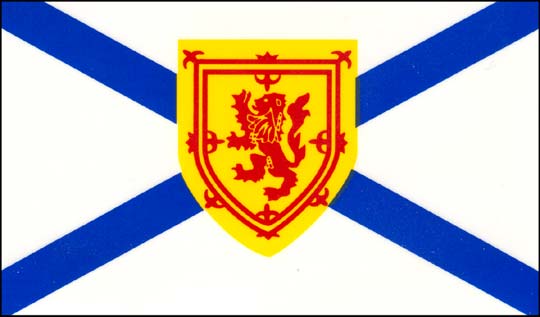
These 11,359 records, also available directly from the provincial archives website, comprise extracted information on: name; place of land record; record year details and; names on land record. Images of the petitions themselves are available at the Nova Scotia Archives website
At the time Nova Scotia included much of present New Brunswick.
14 November 2012
New and updated British electoral registers at Ancestry
Ancestry has made another major addition to its collection of voters lists with England, Midlands Electoral Registers, 1832-1955. It has more than 6.2 million entries for Birmingham and North Warwickshire.
The indexing was done by an automated process. It's not to be trusted except to point you to an original image to examine.
In particular don't trust addresses. I found the classically inclined Plato Jenkins, who lived on Springfield Road from 1920 to 1955 indexed as on Tennis Court in 1920, St Agnes Road in 1925, Hannah--J in 1927, Annie in 1935, Tenby in 1945, School House in 1950 and Tolwyn Street in 1955. All the time the family never moving from Springfield Road.
I also found addresses indexed as names.
Such errors are inevitable with automated indexing. Errors are always inevitable; I'd rather have these than nothing at all.
Ancestry have also updated their electoral register collection for London 1832-1965 originally posted in January. I found entries for my family for later years than previously. There's also an update to the electoral register collection for Dorset 1839-1922.
North Lanark Historical Society genealogy workshop
The North Lanark Historical Society will be hosting a genealogy workshop on: Wed, Thurs & Fri, Nov 21, 22 & 23, 2012 from 2 to 4 pm at the Museum in Appleton.
The workshop is intended for people who wish to begin building a family tree, or who wish to take advantage of the sources and services on the internet.
For people who have considerable experience already, the workshop will provide a refresher, a discussion of current on-line resources, and some research assistance.
There will be a review of alternative approaches so that participants can be confident they will not be faced with the need to repeat any work later.
The format of the workshop will be as follows.
Wed Nov 21. 2 to 4 pm Overview of Genealogy by Bob Butler and Brian Tackaberry
The overview will include:
- Different Reasons to work on your family tree, and how that effects your approach.
- The Pros and Cons of building your family tree on the internet.
- Alternate Internet Genealogy Services - To search for info and to build on line trees.
- The Need for Documentation - A Loyalist Example
- Major sources of information
- Demonstrations with Ancestry and Family Tree Maker
Thurs & Fri, Nov 22 & 23, 2 to 4 pm Getting Started On Your Own Family Tree
Demonstration of starting a new tree, using data from workshop participants if available.
Workshop participants who bring their own computer with WiFi capability will be able connect to Ancestry and start their own tree.
You will be also be able to work on your own tree at home for the duration of the workshop.
If you will be using your own computer, we recommend you purchase a copy of Family Tree Maker 2012 with synchronization capability. (Available from Global Genealogy for $39.95 + taxes & shipping)
Two computers will be provided by the Museum to be shared among the attendees.
Bob & Brian will be available to provide individual assistance sources or computer techniques.
Both instructors have been working steadily on Genealogy for many years, starting during the "bad old days" when microfilms etc were a primary source of info.
Brian is a member of the OGS (Ontario Genealogical Society), the president of the Bay of Quinte Branch of the United Empire Loyalists, and a member of the Association of Professional Genealogists.
Bob has particated in the OGS CSIG (Computer Special Interest Group) for several years and provided research room support at Ottawa OGS and BIFHSGO conferences. (British Isles Family History Society of Greater Ottawa). You can review some of his work on his web site: R.E. Butler - Genealogy
$10 per person for each day attended. $25 for all 3 days.
Please register with Sarah at the North Lanark Regional Museum 613-257-8503
Or email: Appletonmuseum@hotmail.com with your name, phone number, and dates you plan to attend.
If there is sufficient interest, other workshops will be held in the future, possibly in the evening.
LAC 2012-13 Report on Plans and Priorities: first look

This Wordle gives an overview of the 2012-13 RPP for Library and Archives Canada. In comparing it to that for last year at http://goo.gl/f5zft there is less emphasis on modernization and institutions, more on digital.

The department defines six program activities, two of which, 'Collaboration in the management of government records", and "Internal Services", see large reductions in 2012-13. There is a smaller drop for "Exploration of Documentary Resources". The program activity "Documentation of the Canadian Experience" sees a continuing increase, and "Preservation of Continuing Memory" a large one-time increase for 2012-13 then declining below the previous level.
What accountability measures are there for the organization?
For strategic outcome "Canada's continuing memory is documented and made accessible to current and future generations", a performance indicator of "Percentage of the collection used by clients" is selected but will be of little value for the near future as a baseline figure is to be set in 2012–2013, and it will only be measured every 2-3 years.
For the program activity "LAC's collection is relevant to and representative of the Canadian society" the performance indicator is "Percentage of users who consider that LAC's collection represents Canadian experience", but again the target is "Next Survey will be conducted in 2013–14".
A specific target mentioned for 2012–2013 is to migrate more than 40,000 hours of audiovisual recordings in 2012–2013 to digital file formats to ensure their continued accessibility. Will LAC report on the extent to which this is achieved?
A program activity of most user interest is "Canadians have access to Canada's documentary heritage". There are two performance indicators.
First, "Level of client satisfaction with modernized services across channels" has the targets "By March 2013: In-Person: 80%; Telephone: baseline; Mail: 80%; Online: 75%; At exhibitions: baseline".
Second, "Percentage of clients who report being able to find what they are looking for by channel" with targets "Online: 60%; In-Person: 60%. Baselines by March 2012 for telephone and mail channels."
Comment
60% is a very modest target for user satisfaction in finding what they're looking for, more like aiming to achieve mediocre performance.
As so much emphasis is placed on digitization it's reasonable to ask why there is no more commitment to it evident than for the conversion of audiovisual recording. There was a time when LAC released lists of its digitization priorities. Why no longer?
Awe inspiring, or awful
Does your society have trouble getting volunteers? Maybe it needs to inspire more awe.
According to research reported in Awe is good for you… posted on Deric Bownd's Mindblog, "Participants who experienced awe also were more willing to volunteer their time to help other people."
13 November 2012
Book Launch- Give Me Shelter: The Failure of Canada’s Cold War Civil Defence
This is rather last minute. Andrew Burtch will launch his new book at the Diefenbunker on Thursday. Details at www.diefenbunker.ca/en_index.shtml
Please RSVP to interpretation@diefenbunker.ca by November 13th.
South African (Boer) War resources
Here are two websites with information of interest to those researching those who served with British forces, including many Canadians, in South Africa.
http://angloboerwar.com/
http://www.britishmedals.us/kevin/intro.html
Thanks for the tip to Glenn Wright
Family Tree DNA upgrade sale
If you've already had a DNA test with Family Tree DNA and are thinking of upgrading, here are the year-end sale prices:
| ||||||||||||||||||||||||||||||||||||
| To order this special offer, log in to your personal page and click on the Order An Upgrade button in the upper right corner. A link to the login page is provided below. ALL ORDERS MUST BE PLACED AND PAID FOR BY MONDAY, DECEMBER 31, 2012 11:59:00 PM CST TO RECEIVE THE SALE PRICES. |
Folks sometimes wonder how many Y-DNA markers they should test. These days 37 markers is considered the minimum for genealogy. You might consider a larger number if you have a common surname. At the sale prices the cost of a 37 marker test plus an upgrade to 67 markers is no more than the price if you'd selected 67 markers initially.
I've not upgraded to 111 markers and would not suggest it unless there's a compelling reason.
The story of Tithe Applotment
John Grenham's new Irish Roots column is a five paragraph article giving background to these Irish records from the 1820s and 30s, now freely available at: titheapplotmentbooks.nationalarchives.ie.
Claie Santry in her excellent Irish Genealogy News blog has some further clarifications at: http://irish-genealogy-news.blogspot.ie/2012/11/tabs-missing-parishes-and-corrections.html
Ancestry adds Edmonton, Alberta, Canada, Index to Cemeteries, 1890-1987
You can now get direct access to 64,077 index entries for cemetery records of Edmonton, Alberta, through an Ancestry search. The index entry returned gives name, burial date and cemetery. Then follow the link to the external City of Edmonton site for further information.
12 November 2012
FamilyTreeDNA year end sale
Wow! Significant price reductions on genetic genealogy tests from FamilyTreeDNA until the end of the year.
Family Finder (for everyone, autosomal test), regular $289, sale price $199
Y-DNA (for men only) 37 marker, regular $169, sale price $119
Y-DNA (for men only) 67 marker, regular $268, sale price $199
mtDNAPlus HVR 1 and 2 (for everyone_, regular 4169, sale price $139
mtFullSequence (for everyone), regular $299, sale price $199
Understand what you're buying first. Explore the FTDNA educational resources.
Farmer's Magazine
Of interest for those with Canadian farm ancestors, the Internet Archive now has available copies of the monthly (Canadian) Farmer's Magazine from October 1910 to April 1913, 1914, 1919 and 1920. What was on the farmer's mind in the years leading up to and after The Great War? Find out by browsing through these issues at http://goo.gl/Vv0au
LAC's archival future
On Tuesday 6 November 2012 Daniel Caron appeared before the House of Commons Standing Committee on Official Languages studying linguistic duality during the 150th anniversary celebrations of Canadian Confederation in 2017.
His opening statement is available at http://www.bac-lac.gc.ca/eng/news/speeches/Pages/150-anniversary-linguistic-duality.aspx
MP Yvon Godin opened a round of questions with several to Caron, the answers in parenthesis. This is my summary of the initial exchange based on the simultaneous translation.
LAC has had a major budget cut (we contributed 10% to the Economic Plan.), 215 positions have been cut (Yes), 21 of those relate to non-governmental records (I'd have to check the exact number, that's likely) and a 50% reduction in personnel in digitization and circulation (to clarify, there is no reduction in digitization, the reduction is in circulation. Digitization is carried out both internally and externally); and you cut all funding to the National Archival Development Program. (Yes).
Godin went on to raise a recent instance where LAC could not provide service in French, and asked why there was no mention of official languages in the LAC Report on Plans and Priorities just tabled in Parliament. Caron responded that he was surprised to hear of an instance where service in French could not be provided; official languages are part and parcel of the LAC culture, and in all the work done, all business practices and documents reflect Canadian society -- it's only natural.
In ending his questioning Godin commented that he feared that in 2017 there won't be much left considering what's happening to the precious regional and community library institutions. People don't want to libraries and archives to disappear.
In response Caron acknowledged the LAC had a decrease in budget but explained that LAC is dealing with it by taking advantage of technology. Paraphrasing somewhat:
"I'll give you an example to answer your question. I think it's important people understand what's happening in our field. We used to have to describe the material all ourselves, everything had to be done manually. Today this is something that can be done directly, digitally. The editors put in all the information on the computer so we don't have to redo the work, that represents a great deal of work – I can't tell you exactly how many people were dealing with this particular job but we don't need to do it anymore so this type of work becomes less necessary including the description of archival material. Now we get (material) in digital format, the research has already been done. (What we used to do) for the analog side of things we will continue to do that work. All institutions throughout the world, I would say they're even lagging behind us because now the material is produced for the most part in electronic format and will perhaps never be printed. Thank you."Comment: It appears that LAC will be ingesting born digital material with a minimum of cataloging and no finding aids. It's as if everything will be lumped together with little differentiation and search used to provide access. A brave new archival world!
11 November 2012
Pan-Canadian Documentary Heritage Forum
On 5-6 November Library and Archives Canada convened the third in a series of meetings termed the Pan-Canadian Documentary Heritage Forum with representatives from library and archival organizations. I previously posted an outline of the agenda for the meeting.
An opening address by Daniel Caron has now been posted at http://www.bac-lac.gc.ca/eng/news/speeches/Pages/pan-canadian-documentary-heritage-forum.aspx
The themes of the speech were familiar to anyone who follows developments at the institution that is LAC.
What was not addressed, the elephant in the room, is how LAC can again be trusted as a partner having unilaterally withdrawn all support for the National Archival Development Program, and unilaterally eliminated its role as a lender for inter-library loan.
The speech again stressed the importance of digitization:
"We are also devoting considerable effort to digitizing our material. On this critical front, this is only the beginning, but our digitization choices are based on criteria to ensure that we start with material that is of the absolute highest interest to Canadians."LAC has been talking about digitization for years, more so recently in connection with the elimination of its major inter-library loan role. Detail is lacking. To be credible the organization needs to be up front with its plans, what will it deliver, and when?
Unfortunately I've been unable to find any comment on the meeting proceedings from any other organization involved but would be pleased to publish any report or comments, or a link, so that the interested broader community is not kept in the dark.
Toronto For King and Country database updated
Thanks to Gwyneth Pearce for timely news.
The Toronto Branch of the Ontario Genealogical Society has added 3,000 more names and ten more schools to its on-line database of school memorials commemorating Toronto students and staff who volunteered for active service in the two World Wars and other military conflicts.
The newest schools in the For King and Country database are Brock Avenue, Hodgson, Jesse Ketchum, King George, Lambton Park, Long Branch Continuation, Oriole Park, Plains Road, R.H. McGregor and Sackville Street. The latest additions bring the total number of names in the database to just under 30,000. But that’s not all – the database also includes transcriptions and photographs of school war memorials, as well as information about the history of the schools themselves and links to other useful school and community websites.
As we all pause to mark Remembrance Day, take a few moments to explore this growing collection at www.torontofamilyhistory.org/kingandcountry/.
To find out more about the For King and Country project, and how you can help, contact co-ordinator Martha Jackson at kingandcountry@torontofamilyhistory.org.
About London
A pleasant diversion on London and the City of London, in two parts
Thanks to Debbie Kennett for the tweets.
Library and Archives Canada exhibitions
On Thursday the government tabled a reply in the Commons to a question from Scott Simms MP:
"With regard to Library and Archives Canada, what are the particulars of each use of the exhibition space on the main floor since January 1, 2006, including (i) the purpose, (ii) date, (iv) duration, (v) organization using the space?"
The response showed that LAC mounted an average of 5 exhibitions per year from 2006 to 2009. There were 712 exhibition days in the building in 2006, 1239 in 2007, 709 in 2008, 982 in 2009, then falling to 6 days in 2010 and 0 in 2011. Clearly the organization made a decision not to mount exhibitions in the building after 2009. The emphasis was shifted to travelling and outdoor exhibits.
The response also lists other events staged in the building, from book launches to workshops and conferences. For 2011 the response lists 1 workshop for 2 days and 43 other events of 4 hours each. Using 8 hour days that's 23.5 days.
But the list is far from complete and gives a false impression of the use of the facility. Not one genealogy event is listed in 2011 even though BIFHSGO and OGS Ottawa Branch held annual conferences using exhibition space. It's unclear whether the question meant to include use of other space on the first floor at 395 Wellington such as the auditorium and room 156. If so use would be significantly greater.
It's unfortunate that prime space at 395 Wellington in downtown Ottawa is not being well used. I support the decision to emphasize exhibits across Canada rather than in the building, but its gone too far. There should be one permanent exhibition of significant national documents and gems from the LAC collection, with some slow rotation of the items displayed.
A continuing memorial

The “We Are The Dead” project, sponsored by the Ottawa Citizen, begins a second year of honouring Canada’s fallen through social media, helping make remembrance a solemn constant that stretches beyond a single day in November.
You can follow "We Are The Dead" at twitter.com/wearethedead
The above information is reproduced from an Ottawa Citizen article by Glen McGregor
Unfortunately those who died fighting for their country in the 1885 Northwest Rebellion are omitted.
10 November 2012
Ancestry updates Liverpool Catholic record collection
Ancestry's database of Catholic church records for Liverpool, Lancashire, has been updated.
Baptisms, 1802-1906, 475,547 records
Confirmations, 1813-1920, 80,889 records
Marriages, 1754-1921, 132,996 records
Burials, 1813-1988, 619,201 records.
This is a database of particular interest to those of Irish origin given the numbers who fled to Liverpool in the late 1840s.
Over the famine period the number of baptisms and marriages recorded rose fairly steadily from 4,253/644 in 1844 to 7,755/1,760 in 1854 as the population increased. The number of burials reached a peak of 2,570 in 1847 then decreased to 1,191 in 1850 as if the famine had advanced the death for the most vulnerable. Burials rose again to exceed the 1847 peak in 1852 and thereafter.
Subscribe to:
Posts (Atom)


