Shannon's Research Services has very welcome news for Alberta researchers. The Provincial Archives of Alberta has digitized vital statistics indexes and or registers.
Don't expect to be able to enter a name in a search box, click and find all hits. These are basically images of the original indexes divided by year, or name, or whatever system the government choose. It will take a little time to understand and more to browse for your entry of interest. Maybe some organization will use the information to provide a searchable index.
The indexes are now available online for births (1870-1897), marriages (1870-1942), and deaths (1870-1967).
21 March 2017
Alberta Civil Registration Indexes online

Ancestry's Genetic Communities
On Friday, St Patrick's Day, I received an email from AncestryDNA
From 28 March, your AncestryDNA results will be updated with Genetic Communities. The new feature will map where your family may have lived across 19 different Irish areas, from Derry to Cork. But you're probably not 100% Irish - so we'll also identify the communities that you belong to around Britain and the rest of the world.I'm looking forward to seeing my results and finding out where specifically they think the 30% Irish DNA their test shows to be in my genes comes from.
For those wanting to dig deeper Ancestry have made available a white paper which goes into some detail on the technique used. Find it at www.ancestry.com/cs/dna-help/communities/whitepaper
The technique uses not only the DNA results but combines them with surname, birthplace, ancestor's birthplaces and general information on community migration patterns using powerful statistical approaches. I'd be interested to know just how much value there is in that additional information beyond that from DNA, and how much could be estimated without the DNA results.
If the technique proves credible how will the champions of the genealogical proof standard react when faced with an additional example of statistically-based evidence?
YouTube: Manuscript Collections of the Genealogical Office of Ireland
Ancestry from the Irish nobility? This will be of especial interest.
A 30 minute talk by Ciara Kerrigan, Assistant Keeper, Genealogy and Heraldry, National Library of Ireland to the Genealogical Society of Ireland.
20 March 2017
Ancestry Updates Wigan and West Yorkshire BMD Collections
Here are the latest English record updates from Ancestry
Wigan, England, Church of England Marriages, 1754-1926, 261,782 records
Wigan, England, Church of England Baptisms, 1813-1911, 658,125 records
Wigan, England, Church of England Baptisms, Marriages and Burials, 1580-1812, 269,180 records
Wigan, England, Church of England Burials, 1813-1979, 133,28 5 records
West Yorkshire, England, Church of England Confirmations, 1859-1875, 1901-1915, 503 records
West Yorkshire, England, Church of England Deaths and Burials, 1813-1985, 1,331,307 records
West Yorkshire, England, Church of England Marriages and Banns, 1813-1935, 4,130,806 records
West Yorkshire, England, Church of England Births and Baptisms, 1813-1910, 6,264,569 records
West Yorkshire, England, Church of England Baptisms, Marriages and Burials, 1512-1812, 4,965,100 records
Library and Archives Canada: Departmental Plan 2017–18
"Steady as she goes" is the message of the plan set out in this new document, part of the annual parliamentary budget process. When Guy Berthiaume stepped in to the role of Librarian and Archivist of Canada he set a direction which, 30 months later, is well underway.

As a client and genealogist I'll focus here on the Access to Documentary Heritage component of the plan. That's not to downplay the vital "behind the curtains" parts of the mandate that are essential if there is to be something to access now and for the future.
Access is the focus of the Minister's opening message:
"LAC will continue its digitization activities and will unite all of its partners around the National Heritage Digitization Strategy to increase the online presence of our documentary heritage. In addition, because nothing can replace the emotion of being in the presence of original documents, LAC will showcase the treasures from its collection by displaying them in its own facilities as well as those of other institutions across the country."Key activities planned for 2017–18 are:
- Contribute to celebrations marking the 150th anniversary of Confederation through thematic exhibitions and online content
- Enhance the visibility of the collection by offering dynamic public programming and by loaning items to other organizations for display
- Establish partnerships to provide access to original documents to a broader public
- Increase the amount of content accessible online by continuing digitization initiatives
- Digitize the Canadian Expeditionary Force service files
- Respond to Access to Information requests
- Contribute to Canada's Action Plan on Open Government by making federal government documents available
- Continue to disseminate content on social networks, to reach as many clients as possible and to make the collection more visible
- Continue the Supporting the Documentary Heritage Communities Program, intended to enable private documentary heritage organizations to preserve and showcase their collections
Comment
- While there is one mention of genealogy (genealogists) there is no mention of newspapers or newspaper digitization. Why the neglect?
- Projected funding for access to documentary heritage increases marginally, 0.45%, over the period to 2019–20. There are six mentions of the National Heritage Digital Strategy but no significant additional funding.
- One of the performance benchmarks is Amount of digital material downloaded by clients on LAC's website. In 2015-16 it was 11 million files, for 2017-18 it is 10 million files. A decrease!
Anther performance benchmark is Percentage of Documentary Heritage Communities Program recipients that have met their objectives. There is no current measure of this performance; for 2017-18 the target is 85%. However, there is no indication of the criteria that will be used to make the assessment. Will the claims made in final reports will be audited?
- It is not apparent how a commitment to Move forward with the renewal of the AMICUS database, a catalogue that contains the information resources of hundreds of libraries across Canada squares with negotiations that were supposed to be concluded by the end of 2016-17 with OCLC/WorldCat.
- Has LAC abandoned any attempt at comprehensive Canadian website archiving, or even just for the federal government? There is a commitment that Federal government websites will be archived so that Canadians have sustainable access to information on the commemoration of Canada's 150th anniversary of Confederation.
- Two access initiatives are highlighted:
Implementing a digitization lab at 395 Wellington Street in Ottawa to enable visitors to make their own digital copies of collection content that interests them;
I hope to have the opportunity to trial this in the near future. Watch for a blog post.
Developing a web platform for citizen participation so the public can help to transcribe and describe LAC's collection.
A trial last fall was considered very successful as it was completed well ahead of schedule. Many other organizations harness citizen participation. Why has LAC has dithered?
- LAC has an agreement with the City of Ottawa regarding a shared facility at a new city central library. It is contingent on federal funding which is not secured so does not appear in this plan.
19 March 2017
OPL Event: Forensic Genealogy and Adoption

In Forensic Genealogy and Adoption: Tracking Down Your Living Limbs you will learn the specialized research techniques, both traditional and DNA-based, including social media searches, newspapers, courthouse sources, and genealogy programs.
Carlingwood Library, Monday March 20, 2017 at 6:30pm
More information at https://biblioottawalibrary.ca/en/event/forensic-genealogy-and-adoption-tracking-down-your-living-limbs
Wikipedia: William Pittman Lett
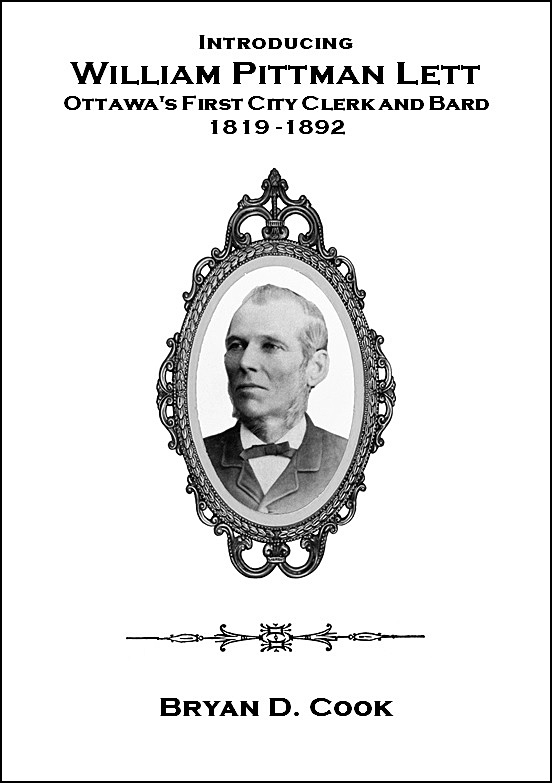
It's a welcome step in Bryan's campaign to wrestle Lett's contributions to the development of Ottawa out of relative obscurity. A recent Ottawa Citizen article helped.
What next? An entry in the Dictionary of Canadian Biography?
Breakfast with Family History Webinars from TNA
The (UK) National Archives in London (TNA) is running a week of free of charge introductory family history webinars. They will run from 1pm to 2pm (UK time), that's 8 am EDT if both countries have made the switch to summer time, on the dates listed below. Pre booked via the eventbrite website. The programme is as follows:
Using census records, 3 April
Discover how to use the census and overcome the challenge of difficult to find ancestors, exploring the census and what it can offer the family historian, bridging the gap between birth, marriage and death records.
Using the Discovery catalogue, 4 April
Learn how to use TNA's Discovery catalogue, using both simple and advanced searches to find material both at TNA and in 2,500 other archive repositories around the UK.
Tracing criminal ancestors, 5 April
How to use 19th and 20th century criminal records, including records of trials, incarcerations and executions. Passenger lists, passports and assisted passages are also included.
Emigration records, 6 April
Find out how to trace ancestors who emigrated overseas.
First World War ancestors, 7 April
Finding out more about ancestors who served in the Great War, including how to trace wartime ancestors using online resources.
18 March 2017
Ancestry adds Swansea area records
Three interesting new databases for Swansea and the surrounding areas of Wales sourced from the West Glamorgan Archive Service are now on Ancestry.
Electoral Registers, 1839-1966 has 5,779,593 records
These annual electoral registers for 10 sub-areas within Swansea typically provide a name and place of abode. Older registers may include a description of property and qualifications to vote. Registers were compiled at a local level, with names appearing alphabetically within wards/districts. Many of the registers in this database have been indexed electronically from the printed registers, which allows you to search them by name. The street address can be searched in the Location field.
Poor Law Union Records, 1836-1916 has 148,073 records
The types of records found in this collection include
Creed registersThese records are for the Gower, Neath, Portardawe and Swansea Poor Law Unions and can be browsed and searched.
Admission and discharge registers
Registers of births
Registers of deaths
List of paupers and abstract of accounts
Master's report and journal
Registers of young persons
School attendance books
Workhouse punishment book
Lunatic registers
Gaol Records, 1877-1922 has 102,110 records
Each record image has typically eight cases per page and will include the following information:
Prisoner's name (and aliases used)The collection also includes Nominal Gaol Registers for the years 1877-1922 for Swansea, Brecon and Carmarthen prisons, as well as a handful of photo albums of prisoners.
Age
Trade
Offence
Date that the sentence commenced or the date that the prisoner was received into custody
Verdict
Sentence
Names of the Officials involved
National Heritage Digitization Strategy Update
The following is especially for the attention of directors of genealogical/family history societies across Canada.
On 16 March an update was posted by Sandra Singh, Chair, on behalf of the NHDS Steering Committee.
The strategy was launched at a foundation assembly last October. The steering committee has produced a draft action plan now open for comment.
The update includes "we appreciate the patience demonstrated by our colleagues across the country" which suggests stakeholders are anxious for something beyond organizational process.
A reminder, from the strategy document, that the following goals could be achievable over the next ten years.
90% of all published heritage before 1917 and 50% of all monographs published before 1940;
Focusing on published heritage leverages the roles of generations of editors and cataloguers. It allows for efficient collection management practices such as last copy approaches. Most works published over a century ago are in the public domain; this allows their dissemination through union catalogues or simple web portals. A broad and collective approach to works published prior to 1953 would also help secure the social objectives of legal deposit before it was created in Canada. These objectives also build on past investments made by the library community through Canadiana and its parent institutions.
All scientific journals published by and theses accepted by Canadian universities before 2000;
Preservation and access to collections of scientific publications and scholarly journals is broadly distributed in Canada. This objective would consolidate them and respond to growing demand as the knowledge-based economy expands.
All microfilm from memory institutions;
Microfilm and microfiche digitization maximizes digital output and minimizes costs by leveraging access and preservation investments made over the past 60 years. This will also free up dedicated reading room space, shift printing costs, and reduce consultation equipment.
Selected audio and audio-visual recordings;
A significant portion of our audio and audio-visual recordings are on obsolete analog carriers. Digitizing the most significant ones will reduce the amount of material at risk.
Aboriginal oral histories recorded on analog audio carriers are particularly at risk of disappearing.
Selected archival fonds and finding aids;
Digitization of high-interest archival fonds that are split between various institutions, as well as finding aids, will help plan and/or reduce travel expenses for researchers.
All historical maps;
Historical maps are among the most fragile, precious and significant holdings. Digitizing them is as much a preservation measure as an access one.
All archival material of genealogical interest.
Genealogical resources are the most popular holdings and, therefore, the most likely to interest a private partner.
Directors of genealogical societies, as well as individuals, can help ensure materials of genealogical interest are given appropriate priority by providing comment on the draft action plan as requested by the Steering Committee.
17 March 2017
Findmypast celebrates St Patrick's Day

Ireland, Legal Administration contains over 1,600 records that will allow you to discover about those put on trial or who worked in Ireland's court system. Explore publications related to the law and courts including prison studies, Assizes records, lists of judges and a guide book for Civil Service clerks produced by Bram Stoker.
Ireland Memorial Inscriptions contains over 1,400 records. The collection consist of explore eight publications of indexes to memorial inscriptions found in 58 cemeteries across Dublin, Meath, Louth, and Wicklow.
Ireland Surnames & Family Histories is supplemented with over 800 records, It is described as a rich and varied collection consisting of 10 historic family and local history publications with over 7,000 pdf images of assorted documents.
Ireland, Histories & References has over 14,000 records added. Four 19th century Irish histories and reference guides; the Album of Ireland, A Little Tour of Ireland, Ireland in Pictures and The Tourist's Picturesque Guide to Ireland.
Ireland, Society of Friends (Quaker) births has over 302,000 new birth records from all over Ireland with date, place of birth and parents' names.
Ireland, Society of Friends (Quaker) marriages has 20,000 additions. Discover when, where and to whom was married as well as occupation, parents' names and who attended the ceremony.
Ireland, Society of Friends (Quaker) deaths adds over 24,000 dating back to 1654. Discover when they died, where they were buried and the names of those they left behind.
Ireland, Society of Friends (Quaker) congregational records has an additional 250,000 Irish congregational records with details of the meetings attended and the activities engaged in.
Ireland, Society of Friends (Quaker) school records has over 9,000 new records added to the collection which now contains over 53,000 records and covers six different schools.
OGS Kingston Branch March Meeting
Dynamic duo Lesley Anderson and Glenn Wright will give a talk about Creating Ontario: Immigration to Upper Canada and Canada West, 1791-1867 on 18 March, 2017.
The meeting is at the Seniors Centre, 56 Francis Street, Kingston beginning at 10:00 a.m with a one hour social period before.
16 March 2017
OGS Conference Speaker named Mover and Shaker Educator

At the OGS conference Josh will give a Friday workshop, presentations and the Saturday evening banquet talk Family History in Prime Time.
Read more about Josh and the award at http://lj.libraryjournal.com/2017/03/people/movers-shakers-2017/d-joshua-taylor-movers-shakers-2017-educators/
GRO Pilot 3: PDF copies of non-digitised records
Now underway until at 4pm on 12 April, or when 40,000 PDF's have been ordered, the (UK) General Register Office is trialling a service to provide PDF copies of non-digitised records. Records will be emailed as a PDF. They will not be immediately viewable.
England and Wales records which are available as PDF's in pilot 3 include:
Births: 1935-2006
Deaths: 1958-2006
Marriages: 1837-2010
Applications for each PDF which cost £8, must be made online and include a GRO index reference.
Note: A PDF is not a certificate and has no value for services where a certificate is required e.g. a Passport or Driving Licence application, or Notice of Marriage
Order from https://www.gro.gov.uk/gro/content/certificates/default.asp
NYPL 708,450, OPL 0
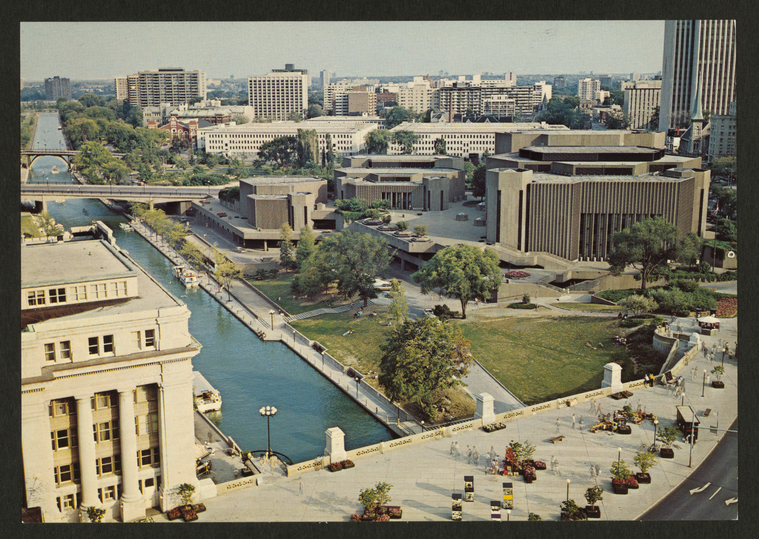
Compare that to the number of items digitized by the Ottawa Public Library. None. Why so much of a laggard?
Ancestry Updates Surrey Records
Surrey parish records were first added to Ancestry in May 2013. An update as of 14 March is in the card catalog. Here are the details, check it out if you looked before and didn't find something you'd hoped for.
Surrey, England, Church of England Marriages, 1754-1937, 1,128,310 records
Surrey, England, Church of England Burials, 1813-1987, 519,990 records
Surrey, England, Church of England Baptisms, 1813-1912, 2,262,611 records
Surrey, England, Church of England Baptisms, Marriages and Burials, 1538-1812, 1,864,596 records
An Invitation to Share Your Living DNA Results

 For the Ottawa DNA group in May I'm giving a presentation on the Living DNA service to Compiling a table of results from the Family Ancestry part of the test is part of the preparation. So far I have 11 results collected from web posts and local people. The partial spreadsheet image below is an extract. I'd like to get results from 30 or more tests, people with more than half their ancestry from the British Isles.
One objective is to find out if there are areas that are over or under predicted. At present results for Cornwall look suspicious, but the sample is small.
If you can help please send results, along with the expected sub-regions from which ancestry is expected, to johndreid at gmail dot com. Anonymous results welcome.
Living DNA is a major sponsor for the Ontario Genealogical Society conference in Ottawa this June.
15 March 2017
CEF Service Files Digitization: March Update

The latest digitized is from Box 7059 (6831 last month) and last name McLelland (McGee). Library and Archives Canada is digitizing the service files systematically, from box 1 to box 10686, which roughly corresponds to alphabetical order.
12,585 (16,454) files were digitized in the last month. At that rate the project would be complete by August 2018.
Ancestry adds Ireland, City and Regional Directories, 1850-1946
You can search a total of 6,171,447 records and browse Ancestry`s collection of Thom`s Directories starting with the seventh annual edition in 1850.
Up until 1922 the directory is for the United Kingdom and Ireland with a focus on Dublin. It doubled in size up to 1922, then drops to its original size with the UK omitted, growing back to the 1922 size by the end of the series.
The focus is on the great, the good, businesses and almanac type information. Nevertheless, it may be useful in lieu of census records prior to 1901 and after 1911.
Missing are the volumes for 1860-62, 1873, 1895, 1900, 1905, 1920, 1923, and 1927.
Findmypast has volumes from 1844 to 1900.
OGS Quinte Branch March Meeting

The video in the Legacy Family Tree Webinar series was presented to a live webinar audience on June 29, 2016.
Everyone welcome, bring a friend. Quinte West Public Library, 1-3 pm.
Visit www.roostweb.ancestry.com/~canqbogs
Diahan Southard is the featured speaker at the Alberta Genealogical Society conference , Ye Olde Genealogy Faire, this April.
Subscribe to:
Posts (Atom)


