09 February 2018

DNA: tracing your ancestors and your genealogy

In a rapidly evolving field a book with its typical extended publication process risks becoming dated before publication. Yet many people like to have a publication in hardcopy to hand. 

Moorshead Magazines have recognized the potential of this market hitting the sweet spot with a series of magazine-style publications that can be updated and reissued retailing at an affordable $9.95. A second edition of Google for genealogy in the series by Lisa Alzo is a recent example.

The latest in the series, dealing with genetic genealogy, is written by Maurice Gleeson. Maurice was voted a top Rockstar Genealogist again in 2017-- a recognition of his dedication to advancing the field by sharing his own experience through skilled presentations and mentoring.

The chapters are:
Background
Some Basic Science
Y-DNA - Tracing Your Direct Male Line
Mitochondrial DNA - Tracing Your Direct Female Line
Autosomal DNA - Some More Basic Science
Autosomal DNA - connecting with Genetic Cousins
Using DNA to help Adoptees.

Susan Courage, who convenes the Ottawa DNA Group points to Maurice’s 4 step process on Analyzing Autosomal DNA Matches as a highlight.

One thing I liked about DNA: tracing your ancestors and your genealogy is that it starts with a background chapter, suitable for the complete genetic genealogy novice. If there's someone you might want to persuade to test this chapter gives the need to know information. You can draw on it to formulate how you present things or just gift a copy.

Subsequent chapters gradually build the knowledge base right up to the more challenging topics like triangulation and adoption. You can stop where you feel you know enough for your purposes, yet appreciate you have the option go further later.

If you need additional information, perhaps in more depth than presented, there are references to videos, blog posts and web resources, notably the ISOGG wiki, by Maurice and other respected genetic genealogists

The presentation carries Maurice's style over to print with straightforward advice on topics like "what test should I take".

As mentioned, this is a rapidly evolving field. More people are being  tested so understanding of DNA's contribution to our genealogy is being refined. Reference databases for "ethnicity", or whatever your preferred term is, are improving with better resolution. The human Y-DNA tree continues to grow with Y-SNP testing becoming more popular.

Tools and tactics are also changing. Ways to examine autosomal DNA segment matches are being added to or improved.

Hopefully Maurice will be updating the publication to cover these developments.

The bottom line is, as Susan sees it, "This magazine is a great resource for anyone with an interest in mastering genetic genealogy."

Order from history-store-cda.myshopify.com/collections/tracing-your-ancestors-series

Outside Canada try https://your-genealogy-history-store-usa.myshopify.com/collections/tracing-your-ancestors-series

If these don't work go to http://yourgenealogytoday.com
follow the Canada or US link, click for the drop-down menu and choose Tracing Your Ancestors Series.

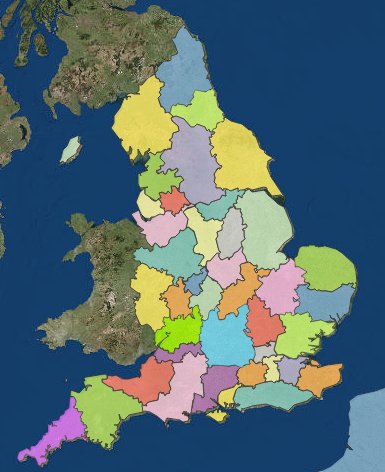
Church of England Modern Parish Maps and Information

The Research and Statistics unit of the Church of England has produced an interactive Church of England parish map, with summary deprivation and census statistics mapped onto parish boundaries.
These will not necessarily be exactly the same as the parish your ancestor inhabited but will be a guide.
The statistic of deprivation is particularly interesting as it rarely changes dramatically.
The map is for England, not for other parts of the UK nor the Anglican community elsewhere.
The drop in adherents to the Church of England is dramatically shown in a Statistics of Mission report also produced by the Research and Statistics Unit.

08 February 2018

Digital reconstruction of Irish Public Record Office

The folks at Trinity College Dublin will be bound for sainthood if they can achieve every expectation held out by this item ... digitally recreate the building and contents of the Public Record Office of Ireland, which were destroyed by an explosion and fire at Dublin's Four Courts in 1922.

BIFHSGO February Meeting

I'm sorry to be missing the  Saturday, 10 February BIFHSGO meeting where the main presentation is The Book Creators’ Journey.

Have you ever wanted to write and publish a book about your ancestors? If so, you’ll want to attend a presentation by Tracey Arial, Barb Angus, and Claire Lindell, three of the nine genealogists/authors who recently released the book, Beads in a Necklace, Family Stories from Genealogy Ensemble.
In this presentation, Tracey, Barb, and Claire will outline the book creators’ journey, using readings from their recent compilation. They’ll give tips about turning genealogy research into compelling narratives without crossing the line into fiction. They’ll describe how they made decisions about sources, technology, properly presenting two languages, photo captions and layout. They’ll also detail their launch party plans, and how they handle distribution, publicity and sales.  You’ll leave with a four-step process to writing a short story, a list of questions that will inspire you to write up your genealogical research, and lots of ideas about how you can get your own book underway. 
Read about the speakers at here where you'll also find information on the 9 am shorter presentation Bailing Out: Avoiding and Responding to Water Damage and Floods in Archival Collection by Kyla Ubbink.

The meeting is in The Chamber, Ben Franklin Place, 101 Centrepointe Drive, Ottawa, Ontario.


07 February 2018

Seven Million AncestryDNA Customers

On 2 November http://anglo-celtic-connections.blogspot.ie/2017/11/six-million-ancestrydna-customers.html marked Ancestry reaching 6 million DNA clients. 
Now it's seven million according to the company corporate website at https://www.ancestry.com/corporate/about-ancestry/our-story/. 
That matches the pace of the previous two million client additions.

On the Road in Ireland

I'm away for a few days without a laptop. Expect a reduced frequency of posting on the blog while I enjoy cold, rain, and occasional snow in Ireland -- that's the forecast. Perhaps the weather will improve by the time of Back to the Past in Belfast, 16-17 February.

Findmypast adds two Durham Diocese browse collections

As of last Friday two Durham Diocese browse collections are added to Findmypast, sourced from FamilySearch. They are:
Durham Diocese Bishop's Transcripts 1639-1919 Image Browse (over 300 volumes).
If you can find transcript information from, say the IGI, knowing the parish and year will minimize the number of pages you need to scroll through to find the image you seek.
Durham Diocese, Calendar Of Marriage Bonds & Allegations 1594-1815 Image Browse (16 volumes). There is an index to men's names.

06 February 2018

Votes for Women

On 6 February 2018, 100 years ago today, the Representation of the People Act was passed in the UK. All men over 21 and women over the age of 30 who met certain requirement acquired the right to vote.
Votes for women was the culmination of a campaign, which can be traced back at least as far as a petition presented to the UK House of Commons on 4 June 1866.
To mark the occasion Findmypast added the Suffragette Collection, some searchable, with over 3,000 records recording the details of the women and men who supported women's suffrage in the early 20th century. It includes arrest records, parliamentary papers, watch list of over 1,300 suffragettes, personal statements, reports of force-feeding, and transcripts of speeches from The (UK) National Archives series AR1, CRIM9, HO144, HO45, HO140, MEPO2, and MEPO3.
Also check out TNA's Sufferage 100 web portal.

What is PERSI and How Can You Use it to Improve Your Genealogy Research?

In yesterday's post about Sunny Morton's Legacy Family Tree webinar it was mentioned that Findmypast is the exclusive online source for PERSI, the Periodical Source Index from the Allen Country Public Library.
Find out more about PERSI in a recent short podcast from AncestralFindings.com. The YouTube version has just the title slide, no distracting images, with clear audio presentation.

Home Child Bonuses

Thanks to Dianne Nolin for a comment to a previous post pointing to a list of philanthropic organization emigrating children and youth receiving bonuses at $2 a head—Sessional Papers of Canada 1910:
Dr. Barnardo’s Home, $2,170;
Catholic Emigration Association, $266;
Children's Emigration Homes, Birmingham, $212;
Church of England Waifs and Strays Society, London, $170;
Geo. Greenway, Toronto, $144;
Hurst House Training Home, South Croydon, $26;
Miss Mac-Pherson’s House of Industry, London, $168;
Manchester and Salford Boys and Girls Refuges, Manchester, $104;
National Children’s Home and Orphanage, London, $148;
Orphan Homes of Scotland, $316;
Self Help Emigration Society, $78;
Sheltering Home, Liverpool, $278.

The government of Sir Wilfrid Laurier, prime minister from 1896 to 1911, was keen to stimulate development. It also paid bonuses to other types of agencies listed in the same sessional paper to build Canada's population.
Payment of incentives continued under governments of various stripes.
Maybe I should declare a conflict of interest here!
When I emigrated during the Pearson years, an interest free government loan paid my passage. Paid back within a year, the interest foregone was certainly greater than $2; and Canadian Pacific benefited from the extra passenger.
The charge has been made that some philanthropic organizations only migrated to Canada owing to the profit generated from Government of Canada bonuses.

According to the book Memoirs of the late Dr. Barnardo the cost to feed, clothe, and educate a healthy child for one year was £16 ($80)*.
At the time of his death in 1905 his organization had received a total of 3.25 million UK pounds in donations for his charitable work with children, much of it in small donations.
The government bonuses received, if $2 for each of the 15,687 migrated to Canada at the time of his death, amounted to less than one-tenth of one per cent of the total. Helpful, but a prime motivator for conducting a migration program?

*There's a chart of historic exchange rates in Appendix C at https://www.bankofcanada.ca/wp-content/uploads/2010/07/dollar_book.pdf

05 February 2018

"Comparing the Genealogy Giants: Ancestry, FamilySearch, Findmypast and MyHeritage”

One of the most often asked questions is which genealogy site to subscribe to. The answer is—it depends. In my own case that means strength in British records and DNA.
This is a shutout for the recording of the Legacy Family Tree webinar "Comparing the Genealogy Giants: Ancestry, FamilySearch, Findmypast and MyHeritage” by Sunny Morton. It's available to view at www.FamilyTreeWebinars.com for free for a limited time.
Sunny Morton gives a well reasoned presentation. I agree with almost everything thing she has to say comparing historical records, online trees, DNA tools, access options and the strengths of each site.

Where to find Cornwall Parish Records Online

On Friday FamilySearch updated its collection England, Cornwall Parish Registers, 1538-2010 to 840,334 entries. It comprises 228 parishes, a few in the adjacent county of Devon. Baptisms are to 1910, marriages to 1935, and burials to present.

The Cornwall Online Parish Clerk has transcription records for 1,362,614 baptisms, 514,445 banns and marriages and 1,140,537 burials for a total of 3,017,596 records.

The above are free. What's available at the commercial sites?

Ancestry has Cornwall, England, Parish Registers, 1538-2010 with 339,301 entries for 228 parishes sourced from FamilySearch.

Findmypast includes 1,084,155 baptisms, 489,952 marriages and 280,580 burials. There are also 313,323 Cornwall memorial inscriptions. A total of 310 parishes are listed.

TheGenealogist has records for 236 Cornwall parishes, mostly baptisms and marriages. I couldn't find information on the number of records.

MyHeritage does not include Cornwall parish records.

in addition Society of Genealogists members have access to records for five Cornwall parishes.

If you know the parish of interest check it out GENUKI Cornwall for other possible resources.

Did I miss anything? If so please post a comment.

04 February 2018

No.1 Canadian Casualty Clearing Station Transcriptions and Biographies

40 more biographies have been added BIFHSGO’s centenary project to honour the 800+ soldiers who died at No. 1 Canadian Casualty Clearing Station in the First World War.
There are now over 400 stories, and they're not just about Canadians. I spotted Australian, British, French, German, Irish, New Zealand and Serb.
Start at https://bifhsgo.ca/cstm_cdnCasClrStn.php where you'll find a description and alphabetic list.

Were Canada's Home Children Orphans?

I was surprised to read the following in a speech in the House of Commons on home children on Thursday, 1 February by Linda Duncan (Edmonton Strathcona).

Canadians were falsely led to believe these children were orphans who had been living on the streets of British cities, but in truth only 2% were. Most of the children came from intact families that had fallen on hard times. 
Where did that information come from?

Of the 39 cases in British Home Children: Their Stories 14 are situations where both parents were deceased prior to the emigration. That's over one-third.

In many of the other cases one parent had died and for whatever reason the single parent was unable to cope. A broken home, alcoholism, father dead and mother a prostitute, illegitimacy where the father was not know, and remarriage where the child was not accepted by the step-parent are among the causes. While some situations are unclear and cases where "intact families that had fallen on hard times" are documented it is not "most."

Statistics for 1910-12 from English Life Tables No. 15 (pdf)from the UK Office of National Statistics indicate that 11 per cent of men and 9 per cent of women at age 25 would be dead by the time a child born at that time was age 15. That's for the whole of England and Wales—the expectation of life was shorter for earlier periods and for those living in the deprived areas of the cities where many of the young immigrants were raised.

With only the workhouse system for support it's unsurprising many turned to charitable agencies for the chance of a better life for their children or wards in Canada than they could realistically expect in Britain.

The bright side of the picture is the young immigrants who, judging by the admittedly small but unbiased sample in British Home Children: Their Stories, went on to lead a long and fulfilled life as contributing members of society. They overcame prejudice toward them, just as it existed toward other minorities—Asians, Irish, Indigenous, and today Jews and Muslims.


03 February 2018

Voilà – Canada’s new National Union Library Catalogue

Library and Archives Canada (LAC) has launched Voilà, Canada’s new national union library catalogue, hosted on the OCLC website.
OCLC stands for Online Computer Library Center, Incorporated, a US-based nonprofit cooperative organization operating in over 100 countries.
Entries from AMICUS, the old national union catalogue, from hundreds of libraries across Canada that subscribe to OCLC are now available through Voilà.
According to the LAC press release "LAC will start enriching Voilà to provide public access to its own holdings later this year." I was curious—how much LAC content is now available?
A Voilà search finds the 32 English language (sic) books with subject genealogy published in 2017 listed below. The titles of the nine in the Library and Archives Canada database are shown in red.

Gabriel Faugas dit Raymond et ses descendants, 1725-2017
by Jean-Louis Bussières, Lise Le Comte, Ginette Raymond, Association des familles Raymond (Faugas)

TRACING YOUR PRE-VICTORIAN ANCESTORS : a guide to research methods for family historians.
by JOHN. WINTRIP

Finding Oprah's roots : finding your own
by Henry Louis Gates Jr.,

The journey : a Reinson family history
by Donna J Reinson Koper

The Family Tree Italian genealogy guide : how to trace your family tree in Italy
by Melanie D. Holtz, Family Tree Books

Mastering genealogical documentation
by Thomas W. Jones

Al-Maqrīzī's al-Ḫabar Ê»an al-bašar vol. V, section 4: Persia and its kings, part I
by Aḥmad ibn Ê»Alī Maqrīzī, Jaakko. Hameen-Anttila

Jayewardene, Udunuwara Urulawatte Perera, Corea, Samarasinghe, Goonetilleke, Perera Wijegoonewardena, and other inter-related family genealogy : including Bandaranaike, De Alwis, Thudugala, & Jayetilleke Hulugalle lineages
by Anne-Marie. Samarasinghe

Famille Chatigny
by Charles G. Clermont

German genealogy research in Pomerania : with specific examples of Kreis Schlawe research
by Donna Schilling

Birth, marriage and death notices from the Carleton Place herald
by D. M. Allen, Joan McKay, John Charles Patton, Ontario Genealogical Society. Ottawa Branch,

RESEARCHER'S GUIDE TO AMERICAN GENEALOGY. 4TH EDITION.
by VAL D. GREENWOOD

Electric city : the Stehelins of New France
by Paul H. Stehelin

Genealogies and Conceptual Belonging : Zones of Interference between Gender and Diversity.
by Eike. Marten

Early descendants of James Cole of Plymouth, Massachusetts
by Susan E Roser

Tracing villains and their victims : a guide to criminal ancestors for family historians
by Jonathan Oates

The Family Tree Irish genealogy guide : how to trace your ancestors in Ireland
by Claire. Santry

The Family Tree cemetery field guide : how to find, record, & preserve your ancestors' graves
by Joy Neighbors, Family Tree Books

Tracing your nonconformist ancestors : a guide for family and local historians
by Stuart A. Raymond

Chinese Pioneer Family
by Johanna Margarete Menzel. Meskill

Mullet family history & genealogy: Emanuel J. Mullet
by LaVina Miller Weaver

Genealogy
by Matthew Helm, April Leigh Helm

International Vital Records Handbook
by Thomas Jay Kemp

Ancestors : who we are and where we come from
by David Hertzel

A dictionary of family history : the genealogists' ABC
by Jonathan Scott (Freelance writer),

The MacLeods of Prince Edward Island
by Harold S. MacLeod

The Haldanes of Gleneagles : a Scottish history from the twelfth century to the present day
by Neil Stacy

Genealogy For Dummies
by Matthew Helm, April Leigh Helm

Tracing your ancestors' lives : a guide to social history for family historians
by Barbara J. Starmans

Dauphinee family chronicles : ancestry, arrival, aspirations and achievements in Shelburne
by WD Dauphinee, Shelburne County Archives & Genealogical Society


Tracing your Irish and Scots-Irish Ancestors

A reminder that registration for the Saturday 10 March Ottawa session of the Ulster Historical Foundation 2018 North America tour mentioned previously is now available to all.
Registration is online only, and closes on 7 March. Optionally you can also order a box lunch.
Find out more and register here.
BIFHSGO members get a discount by logging on to the member only area.

02 February 2018

MyHeritage DNA Advances

I'm impressed. My Heritage is moving fast in the fast changing world of genetic genealogy.
Earlier this week FamilyTreeWebinars, now part of MyHeritage, aired a webinar on MyHeritage's DNA Matching Technology which explains everything you need to know about using the service, including that you can upload autosomal DNA test data from other companies to them for free.
Watch at https://familytreewebinars.com/download.php?webinar_id=801/.
The major new announcement in the webinar was the soon to be released chromosome browser enabling comparison of up to seven matches.

Since the webinar a feature in beta has been added giving a perspective on the MyHeritage DNA dataset.
Here's the list of the top five ethnicities, by per cent, in Australia, Canada, Great Britain, Ireland, New Zealand and the USA according to MyHeritage DNA users' data.
EthnicityAustCanGBIreNZUSA
English47.038.850.015.253.539.9
Scandinavian30.329.630.411.635.535.1
North and West European29.631.528.18.327.835.1
Irish, Scottish, and Welsh21.622.233.284.722.515.7
Iberian13.522.214.210.212.720.3

I've ordered these in the table by median across the set. You'll notice that the sum for any country is more than 100%; we all have a diverse ancestry. The dataset is not reflective of the ancestry for the country as a whole, just those with DNA data in the MyHeritage collection.
Also since the webinar it's announced that contacting DNA Matches is now free to all MyHeritage DNA users — both managers of MyHeritage DNA kits and uploaders of DNA data from other companies. With one million DNA clients on the site everyone who has taken a test should seriously consider transferring data. I found a new match to an identifiable cousin when I did.

Twice as many Home Children were in Good placements as Poor.

Treatment of young immigrants, orphaned or abused in Britain, in their placements in Canada is a matter of sometimes heated debate. What's the reality?
In 2010 the British Isles Family History Society of Greater Ottawa published British Home Children: Their Stories. It includes information on 39 young immigrants who arrived in Canada from the UK between 1873 and 1938. Their average year of birth was 1893, age on arrival 12 years with a range of 4 to 17.
I reviewed these stories trying to discern their situation in their Canadian placement. In many instances there were two or more placements with an indication the earlier were not satisfactory, although it may also be that the first host's circumstances changed—including death.
Two of the stories omitted any mention of the treatment in the placement. The rest I categorized as either poor, fair or good splitting the assignment 50/50 where the situation in more than one placement was given.
Eight placements (21%) I judged to be poor; 12.5 (32%) fair and 16.5 (42%) good.
While acknowledging that this is  just a handful of the 100,000 or so young immigrants, for this sample twice as many were in good placements as poor.
Even a good placement often involved hard work and long hours—the nature of farm life—and the legacy of unfortunate childhood experience in the UK.
It's well to remember that a large percentage of the young immigrants were beyond school leaving age and considered as workers, not children. For much of the period childhood was regarded as preparation for working life which started as early as possible.
Times change. Those who think it's appropriate to judge actions in the past by today's standards should expect to be judged themselves by tomorrow's standards.


01 February 2018

Ancestry adds Wiltshire, England, Wills and Probate, 1530-1858

Until 1858 probate was handled by the Established Church of England, with the responsible ecclesiastical court depending on how broadly assets of the deceased were scattered. For those of modest means the matter would usually be handled by a local deanery or archdeanery.
If that doesn't seem too complicated the devil is in the detail.
Wiltshire, England, Wills and Probate, 1530-1858 now online, sourced from the Wiltshire and Swindon History Centre, with 102,570 entries combines the holdings of no less than 30 such local courts.
A search will return name, probate year (which could be well after the death), probate place, record type and a link leading to an image of the original document.

Internet Genealogy Feb/Mar 2018

Here's the line-up in the latest issue of Internet Genealogy from Moorshead Magazines.

In the first article At Your Service: The Generous Genealogist, Washington DC-based Sue Lisk offers five ways to consider assisting other family historians in their research quests. The first, mentoring, is accompanied by a list of ten skills of effective mentors — for most of us aspirational.

In Bringing Ancestor Stories to Life with Animoto frequent contributor Lisa A. Alzo reviews this online video service to help you create and share family stories based on your own photos. The description is clear, especially as there's a link to an example Lisa produced. In common with most reviews in IG it would benefit from mention of alternatives — can you produce much the same product with Powerpoint?

That’s Entertainment! a longer article, has well-known US speaker and podcaster George G. Morgan looking at American ancestors’ amusements in the first half of the 20th century. We can spice-up any family history with content about an ancestor's times — much of which for Canadians permeated across the border from the US.

Gena Philibert-Ortega writes about 10 Databases You Didn’t Know Were on Ancestry.com, a site focus means the databases refer to US records.

Calgary-based travel writer Jill Browne uses the Irish port of Cobh, previously known as Queenstown from where many emigrants set sail and the last post of call of the Titanic, as the subject of her article Do You Have Lost Irish Ancestors? While the odds of finding any records there are slim the writing is interesting enough to tempt me to make it a stop during my forthcoming trip.

With a title Tampa Florida Moves Into The Future I was half-expecting to read about the hazard of sea level rise caused by climate change and how to ensure records survive inundation. In a way it is as Leslie Michele Derrough, apparently a charter member of the George G. Morgan admiration society, interviews him about the importance of preserving genealogical records at the local level through digitization.

Another IG regular David A. Norris looks at Zeppelin Passenger Lists and US Navy Airship Records in Airships and Family History.

In Digital Library on American Slavery… and More! Diane L. Richard discusses the growing body of online resources that might be helpful in researching pre-1870 slavery records.

The issue concludes with the regular NetNotes column by Diane L. Richard and Back Page by Dave Obee.

The back cover of the magazine mentions the scope of coverage, including DNA. While there's nothing on genetic genealogy in this particular issue it does remind me to mention Moorshead's volume, DNA & Your Genealogy authored by Maurice Gleeson now available.