All good things must come to an end. OGS Conference 2018 is over.
Congratulations to the organizers and helpers. No matter how much you feel gratified about a conference's success it's always a bit of an anticlimax knowing that everything you worked toward for so long is now history.
The next lap for OGS conferences is announced as 21-23 June, 2019, at the London Convention Centre, London, Ontario with the theme"Breaking Down Genealogical Barriers".
04 June 2018
So long Guelph, hello London

Ireland Illustrated, 1680-1860

The online database, a work in progress, is hosted by NUI Galway’s Moore Institute with the support of libraries in Ireland and abroad, in particular that of the National Library of Ireland and the James Hardiman Library at NUI Galway.
Find out more in this article from Galway Daily.
via http://documentary-heritage-news.blogspot.com/
Alberta Genealogical Society Conferences

More immediately, the AGS Medicine Hat & District Branch will celebrate 40-years of genealogical research from 12-14 October 2018 with a fall conference featuring DNA specialist Diahan Southard and blogger Gena Philibert-Ortega. They were both speakers as the 2017 AGS conference in Edmonton, and Diahan is coming to the BIFHSGO conference.
Co-Lab Progress

As of Friday, 1 June there have been 1,450 transcription contributions, 40 translation contributions, 9,181 tags and 197 description contributions entered.
191 images have been enabled for Co-Lab contributions directly from the Collection SearchBETA interface 74 of which have active contributions. Many are simple tags and description. Topics of interest include Louis Riel, Vimy, The William L Mackenzie King diaries, a page from a diary of a FWW soldier travelling east by train, the Cape Bear Lighthouse on PEI and more—a eclectic mix.
Thanks to project manager Alexandra Haggert for the information.
03 June 2018
OGS Conference YouTube Videos
 The opening session and Saturday morning plenary presentation by Jonathan Vance from OGS Conference 2018 are now archived and available on YouTube.
"Nation Builders You’ve Never Heard Of" , the opening session presentation, was watched by about a dozen people live online, 47 had watched as of 10 am on Saturday. If you just want to hear the presentation skip the ado of the opening 9 minutes and 30 seconds.
https://youtu.be/f9HCrDRir_4.
The Saturday morning plenary "Who was the Canadian Soldier of the First World War?" was watched by half a dozen live online and 28 had viewed as of 10 am on Saturday.
https://youtu.be/JSqGxK-HRzI
Vance was an excellent choice for this audience—substantive content well presented. While in both videos the audio is distorted the ear become accustomed after a while. Also several slides which are copies of original documents are not visible in the second presentation.
02 June 2018
Database of Canada’s Early Women Writers
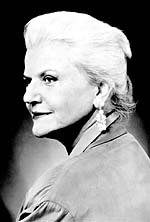
As Carole Gerson writes in a short article on the database "Most Canadians know surprisingly little of their country’s literary past, even though many of their great-grandmothers or great-aunts were active participants in Canada’s print culture as poets, journalists, novelists, travel writers and biographers."
Searchable by title, name, place and publisher it's a rich and growing resource. A search for place Ottawa, ON found 18 writers born there, 42 who died, and 120 residents.
Perhaps the best known wrote:
The Immigration Problem for Canada, 1924
Social Work at the League of Nations, 1936
Social Work and the People's Health: An Expansion of an Address Given at the Annual Meeting of District 8, Registered Association of Ontario, 1936
God's Good Tide, 1941
Canadian Women in the War Effort, 1942
The Dawn of Ampler Life: Some Aids to Social Security, 1943
A Hundred Years a-Fellin': Some Passage from the Timber Saga of Ottawa in the Century in which the Gillies Have Been Cutting in the Valley, 1842-1942, 1943
Baby Bonuses: Dollars or Sense?, 1945
The Commons, 1950
By Command of the Queen, 1953
Who was she? Hint: It's not her photo above—that would make it too easy!
Ontario Genealogical Society Finances

At the end of 2017 OGS had total assets of $1,711,219 ($1,771,728, $1,730,483, $ 2,398,885 for 2016 back to 2014) and current liabilities of $226,778 ($252,635, $220,434, $253,590).
Total revenue was $702,238 ($701,406, $ 694,265, $557,053). The society had an unusually successful annual conference in Ottawa ($68K surplus).
Total expenditures were $744,150 ($709,792, $ 711,897, $626,736).
The initiative of a 50% reduction in membership dues for those bringing in a new member at the same reduced price must be counted as a success as there was only a 0.47% overall reduction in membership dues revenue.
A narrowing deficit for two years increased again in 2017. While large increases in some elements of expenditures demand the attention of the new OGS Board the large asset based means there is scope to continue to pursue investments to revitalize the society.
01 June 2018
OGS Conference Live Streaming
Opening Event on Friday 6/1 @ 7 pm EST
https://youtu.be/f9HCrDRir_4 (archived)
Saturday Morning Plenary on Saturday 6/2 at 8:30 am EST
https://www.youtube.com/watch?v=JSqGxK-HRzI
There's more information here.
Findmypast adds Irish School and Scottish MI records
While the major additions to Findmypast this Friday were Catholic parish records for Chicago additions to two other collections may be of interest.
Ireland National School Registers sees 43,772 additions for County Mayo for a total of 186,116. The period covered is from 1860 to 1922. Find out where and when the person went to school, their attendance, parents’ occupation, the classes they attended, exam results and more.
Scotland Monumental Inscriptions Index adds 33,916 new records for a total of 293,113 records for 14 Scottish counties including the Isle of Skye. The index entries usually include name, birth year, death year, burial ground and sometimes additional notes.
1926 Census of the Prairie Provinces

From 1901 to 1926 the three provinces were growing rapidly, the increase in population was more than 393 per cent since 1901. Statistics from the census are in this publication (pdf).
The information on the LAC website is that "Due to the extent of the work involved in preparing the data, we do not yet have a date for when it will be made available to the public."
Look for an update soon (I hope).
Internet Genealogy, June/July 2018

Inklings, Hunches, and Sneaking Suspicions
Sue Lisk shows you how to deal with those strange notions that present themselves during your online family history research
Comment: Another well written article by Sue Lisk inspired me to think differently about an upcoming presentation.
Crowdsourcing
Diane L. Richard looks at why crowdsourcing has become such a valuable benefit to the genealogy community
Comment: A four page tabulation of crowdsourcing transcription (mainly) projects, both current and completed. It's acknowledged to be incomplete and there are Canadian projects not included that immediately come to mind—Project Naming and Co-Lab from Library and Archives Canada and TONI from the Ontario Genealogical Society.
Who Were Those Brave Young Men?
Constance R. Cherba highlights online sources used to research the lives of five WWII soldiers who sacrificed all for their country
Did a Meteorite Land Near Your Ancestor’s House?
David A. Norris examines how meteors may have played a part in your family history
Comment: An example of David Norris' knack of writing articles on offbeat genealogical topics.
Scottish Tax Rolls
David A. Norris looks at a comprehensive substitute for census rolls when researching Scottish ancestors
Lineal Links
Joe Grandinetti investigates Ireland’s Virtual Record Treasury: Beyond 2022
Comment: Can they put Humpty Dumpty together again?
Topsy-Turvy To-Dos
Sue Lisk offers five quick tasks to do when you need a break from the more challenging aspects of research
Comment: Save on pain killer, and pain, by stopping banging your head on the brick wall.
REVIEW: Scrivener 3
Lisa A. Alzo reviews the new and improved features of Scrivener 3 for Mac
NetNotes
Diane L. Richard looks at websites and related news that are sure to be of interest
REVIEW: TSOLife!
Tony Bandy reviews an online service that allows users to upload media, write stories and share them easily
Comment: Free basic level service. Check out TSOLife on YouTube for inspiration.
A Look at Genlighten
Diane L. Richard looks at a unique and affordable family history service
Comment: One source for finding independent research professionals. Very limited outside the US—you're probably better off searching lists of professional society members in the country of interest.
Back Page
Dave Obee looks at getting the most from online newspapers
31 May 2018
British Newspaper Archive additions for May

The 64 papers (57 last month) with new pages online this month include 25 (22) new to the collection.
Papers with more than 10,000 pages added are:
Bournemouth Graphic, 1902-1920, 1931-1937
Buckingham Express, 1865-1868, 1870-1895, 1898-1912
Cheltenham Examiner, 1839-1913
Cheltenham Journal and Gloucestershire Fashionable Weekly Gazette, 1825, 1827-1868
County Advertiser & Herald for Staffordshire and Worcestershire, 1856-1907
Croydon's Weekly Standard, 1873-1911
English Lakes Visitor, 1877-1888, 1890-1892, 1894-1895, 1897-1908, 1910
Lakes Chronicle and Reporter, 1876-1895, 1898-1910
Liverpool Daily Post, 1875-1876, 1882, 1887, 1905-1906
Liverpool Mercury, 1874-1875, 1889, 1893, 1900
Luton Reporter, 1874-1924
Music Hall and Theatre Review, 1889, 1891-1895, 1897-1899, 1901, 1904-1907
Newcastle Journal, 1875, 1878, 1882, 1884-1885, 1889, 1893, 1898, 1910-1911, 1964-1979
Penrith Observer, 1860-1878, 1880-1902, 1907-1958
Stroud Journal, 1854-1889, 1893-1894
Stroud News and Gloucestershire Advertiser, 1867-1880, 1883-1910
The Referee, 1877-1911
The Tewkesbury Register, and Agricultural Gazette, 1858-1967
Worthing Gazette, 1889-1897, 1899-1958
Ancestry updates Somerset (BMB) and Wiltshire (Wills)
Ancestry post that their parish record collections for Somerset have been updated, as follows:
| Collection | Entries |
|---|---|
| Somerset, England, Church of England Baptisms, Marriages, and Burials, 1531-1812 | 4,459,402 |
| Somerset, England, Church of England Baptisms, 1813-1914 | 2,943,017 |
| Somerset, England, Marriage Registers, Bonds and Allegations, 1754-1914 | 1,521,727 |
| Somerset, England, Church of England Burials, 1813-1914 | 585,287 |
Also their collection of 102,570 Wiltshire, England, Wills and Probate, 1530-1858 is updated.
Doors Open Ottawa

Over 140 unique buildings are open to visit ... all free.
Some of the most popular require reservations, a few are fully booked. There's enough of a selection for all tastes.
Yes, there's a smartphone app for that too.
30 May 2018
Two South Dublin Cemetery Registers Online

According to a post by Claire Santry headstone photos and mapped locations are available for some, but certainly not all, of the individual graves.
Deansgrange's records date back to 1865. The cemetery, in Blackrock, covers an area of 65 acres and its records hold details of more than 140,000 people. Search its register here.
The first burial in Shanganagh (Shankill) took place in 1984 and there have been nearly 16,500 burials in the Cemetery. Search its register here.
Wondering exactly where the cemeteries are? See the map here.
Book Review: Surviving Mother Nature's Tests

The heart of the book is two major chapters delving into specific examples of how climate and other natural phenomena have impacted society which comprise more than half of Surviving Mother Nature's Tests text. The focus is on the British Isles and especially England.
"Slowly Developing Events" are described as affecting wide areas and thousands of people, often for periods extending over many years and to which "people almost always adapt well."
"Rapidly-Developing Incidents" of storms and floods, earthquakes and epidemics are more localized in space and time, and more likely to hit the headlines.
It's a rough division by time. Was the multi-year localized Irish Potato Famine of the mid-19th century really something people adapted to? How about the global 1918-19 influenza pandemic in the same rapidly developing incident category as a local lightening strike and tornado? Nature doesn't rigidly respect these categorizations set up to aid understanding.
Wherever in the British Isles your ancestry is from you'll likely find new information about conditions in your region, county or even town. I was delighted to find my home town of Great Yarmouth included with five entries in the index.
The earlier chapters set the stage. The introduction explains the book's ambition for the family historian, that readers "gain knowledge about how such processes (natural events) significantly affected individuals and communities during the past several centuries." Although the emphasis is on climate change mention is also made of earthquakes and landslides.
There follows a chapter on "The Parameters of Climate Change"—the most technical with diagrams, graphs and even an equation covering how we know about past climate and the factors that influence it. There's good information on Ice Ages and the Milankovitch Theory and other natural phenomena that have influenced climate epochs over the millennia.
There is one problem with the chapter, the statement, referencing a study nearly 20 years old, that "high CO2 levels actually lag temperature increases, by from 400 to 1,000 years, indicating that high concentration of the gas is a consequence of temperature change not a cause." While the first part of the statement is correct based on Antarctic ice cores the conclusion is not.
Through epochs and millennia atmospheric CO2 concentrations changed in response to its natural exchange between the oceans, biosphere and atmosphere. A warm ocean can hold less CO2 so warming due to other causes means CO2 release from the oceans, with a lag, with the resulting increased greenhouse effect reinforcing the warming. Emissions of CO2 from fossil fuel carbon combustion, a third to a half of which is absorbed by the oceans, lead directly to enhanced greenhouse warming.
In a 1963 speech to the US National Academy of Sciences US President Kennedy noted that we can now “irrevocably alter our physical and biological environment on a global scale.” Sadly fifty years later we still see denial of human influence.
The book's author Wayne Shepheard, a professional geologist who serves as an online parish clerk, was previously editor for two family history society journals, and who blogs at https://discovergenealogy.blogspot.com, has done a considerable service by drawing his interests together in this book. It will open eyes and add perspective on the many ways changes in the natural environment may have affected our ancestor's lives. The thorough table of contents, references and index are hallmarks of the care with which the book was prepared.
This review is based on a copy provided by the publisher.
Surviving Mother Nature’s Tests: The Effects Climate Change and Other Natural Phenomena have had on the Lives of our Ancestors
Author: W. Shepheard
Year: 2018
Publisher: Unlock the Past
182 pages
ISBN: 9781925781465
$45.21 (paperback, outside Australia)
webpage
29 May 2018
WDYTYA and DNA testing

I agree. A surprise finding may set you off in an entirely unanticipated direction and save following false leads. And the more people test the more links will likely be found—true even if there's no family tree attached.
So far this season the DNA results are dismissed after the first couple of minutes with mention of the admixture results. Let's hope at least one episode will take it further showing how the test can reveal connections to previously unsuspected relatives and break through barriers to understanding ancestry unresolved by traditional paper-based genealogy.
Webinars for this week
One of two of the blog regular readers may be interested in this week's Legacy Family Tree Webinar:
The Palatine Immigrants: Tracing and Locating 18th Century German Immigrants Online, to be presented by Luana Darby
Discover how to track your Palatine ancestors who traveled from Germany to the colonies in the 1700s, using techniques that will assist you in determining their place of origin. Use migration patterns of their family and friends to help you in your research. Learn more about online sources of original records for this area that you can research from home.If that's outside your field of interest, consider reviewing some of the archived presentations from Rootstech, those of British and Irish interest are linked:
Thursday
RootsTech General Session Sponsor 2018: MyHeritage
Source Citations: The Good, the Bad, and the Ugly: Diana Elder
Reconstruct Your Ancestor’s World with Google: Lisa Louise Cooke
Day One: Capture Life as You Live It: Adam Daly
RootsTech General Session 2018: Brandon Stanton
Unlocking Roman Catholic Records: Brian Donovan
Choosing Details: The Secret to Compelling Stories: Laura Hedgecock
MyHeritage DNA 101: From Test to Results: Yaniv Erlich
A Gift of Life: Who's Writing Your Story?: Deborah Abbott
Google Photos: Collect, Organize, Preserve and Share: Michelle Goodrum
Friday
RootsTech General Session Sponsor 2018: findmypast
How Not to Leave Your Genealogy Behind: Amy Johnson Crow and Curt Witcher
Search All the Jurisdictions and Find More Records: Laurie Castillo
findmypast’s British and Irish Hidden Gems: Myko Clelland
Hidden Treasures in the Library of Congress: Byron Holdiman
Finding Elusive Records at FamilySearch: Robert Kehrer
Online Genealogy for Beginners and Beyond: Lisa Alzo
Finding the Right DNA Test for You: Jim Brewster
RootsTech General Session 2018: Scott Hamilton
Saturday
RootsTech General Session 2018: Natalia Lafourcade
RootsTech General Session Sponsor 2018: Ancestry
Pain in the Access: More Web for Your Genealogy: Curt Witcher
RootsTech General Session 2018: Dr. Henry Louis Gates Jr.
Civil Registration Indexes of England and Wales: Audrey Collins
Online Does Not Equal Free: Copyright Issues for Genealogy: Janice Sellers
You CAN Take It With You: Mobile Genealogy: Judy Muhn
Use FaceBook and FREE Apps to Engage Family: Jamie Wade and Kelli Shipp
Advancing Your Genealogy Research with DNA: Anna Swayne
Virtual Genealogical Society: Call for Presentation Proposals
 A month ago, here, I posted about the formation of the Virtual Genealogical Society.
Now they've opened a call for presentation proposals, a great opportunity for those with fresh ideas, and evergreen advice, to reach a global audience online and get paid for it.
Deadline for proposals is 31 August.
Thanks to Christine Woodcock for the tip.
Subscribe to:
Posts (Atom)


