Proceedings of the Statistical Society of London, Vol. 2, No. 12 (1837—1838) contains the following items:
A report, drawn up by Mr. Langton, "Upon the Number of inhabited Courts and Cellars, occupied as Dwellings in Liverpool in 1835-6" was then read.
The number of the former was 2,271; of the latter 7,493, which are mostly dark, damp, confined, ill-ventilated, and dirty. Thus, not less than one-seventh of the population of Liverpool dwell in cellars; for, supposing each cellar to contain one family, averaging four persons, there will be about 30,000 persons inhabiting cellars out of a population of 280,000.
These statements, exaggerated as they might appear, were confirmed on the following day by a Liverpool gentleman, who reported that, feeling doubtful of their accuracy, be had procured a similar report from the police, in which the numbers exceeded those stated by Mr. Langton.
Mr. Walmsley, of Liverpool, read a Paper “ On the State of Crime” in that town; which confirmed a previous Report upon the same subject. It was stated that the number of criminals in Liverpool consisted of 4,200 female thieves and prostitutes, and 4,520 males; of the latter 2,270 were professional, and the remainder occasional thieves. The annual amount of their profits and plunder was estimated at £700,000; and Mr. Walmsley, who is the chief of the police at Liverpool, assured the Section that, upon a second examination, the calculation appeared by no means exaggerated.
09 December 2019
Poverty and Crime in 1830s Liverpool

Genealogists' Magazine: December 2019

In case this detailed description of transgressions leads to the belief that BMDs are significantly deficient Wilkie quotes from a July 1839 report by the Statistical Society of London.
Important and obvious as are the applications of the registered facts, the measure had to encounter considerable opposition. Its advantages were scarcely perceived at first by the multitude; and some of the clergy of the Established Church thew obstacles in its way, under an erroneous apprehension that the registration of births might interfere with the administration of baptisms. By taking active steps to make known in every way the nature, advantages, and obligations of the Act, and by firm, but conciliatory conduct, the Registrar-General appears to have exceeded beyond the most sanguine expectations, in obtaining, during the first year of its operation, an almost complete register of deaths and marriages. The register of births is less complete; but this is owing to the want of a clause in the Act to render the information on births imperative.Shorter items in the issue are:
Further Observations on the Form of the Bride's Signature in Marriage Registers 1754-1837, by John Wintrip
Improving indexes to sources over time, by Barney Tyrwitt-Drake
Leutnant J N Meiser - follow-up, by Karen J Douglas and Dr Colin R Chapman FSG
RootsTech London 2019, by Emmy Jolly and Else Churchill
08 December 2019
The Mystique of Money: Tax Culture and ‘Race’ in Two Centuries”
The Ottawa Historical Association's next presentation of its 2019-20 Speaker Series is at the Ottawa Art Gallery (50 Mackenzie King Bridge) on Tuesday, 10 December:
“The Mystique of Money: Tax Culture and ‘Race’ in Two Centuries”
A public lecture by Shirley Tillotson
The mystique of money is about its power both to hide and to reveal. Using examples from her recent book, Give and Take: The Citizen-Taxpayer and the Rise of Canadian Democracy (UBC Press, 2017), and from the Dalhousie University inquiry about its connections to race and slavery in the 1810s, Tillotson will explore both sides of the mystique of money and especially its relationship to systems of racial power.
Shirley Tillotson is Professor Emeritus in the Department of History at Dalhousie University.
This presentation is sponsored by the Canadian Historical Association, which named Give and Take as the 2019 Best Scholarly Book in Canadian History. Copies of Give and Take will be available for purchase at the presentation, courtesy of Perfect Books.
The presentation will begin at 7:15 p.m.
Parking is available at the nearby Rideau Centre.
All are welcome!
Sunday Sundries
Miscellaneous items I found of interest during the week.
The Genealogical Society Observer
While researching for an article I was directed to this monthly publication of the Genealogical Society of Utah. Written for employees and volunteers, it contains news about the Society with a leavening of humour. The item below is from volume 5, no. 1 (Jan. 1969).

If you want to know the real purpose of the LDS genealogical endeavours check out the editorial on page 3 of the issue. It's no secret but rarely so plainly stated.

Vernon Ontario Directories
There are now 473 directories advertised as in the collection of Ontario directories, up from 465 when mentioned on the blog on 26 November.
19th-Century London’s Extreme Wealth and Poverty, Mapped
A review of a new edition of the always fascinating Charles Booth’s London Poverty Maps.
Remove car lanes, restrict vehicles and improve transit to reduce traffic congestion
Although promoted as the best option in one of the sources cited the article does not mention congestion pricing. That source is also cautious about enthusiasm for public transit —"there is such an enormous latent demand for road space ... that whenever a driver shifts onto public transportation, another one quickly grabs the open lane.
Why Don’t We Know More About the Subway Cost Disease?
If better research could cut construction costs by 1%, it would be worth spending tens of millions on that research. It might be true for Ontario's rapid transit systems too.
How can we actually create happy societies?
Creating a happy society does not just depend on creating the right conditions. It also depends on creating the right institutions and processes for discovering those conditions.
07 December 2019
LAC Quarterly Progress Report
LAC recently posted 2019-2022 Three-Year Plan Progess Report: Second Quarter 2019-2020
At the half-year mark LAC is on-target to meet or exceed 6 of 8 indicators reported.
I'm impressed that LAC is more than half-way to the annual target of 3,500,000 images digitized from LAC’s collection. It would be interesting to know what record sets are involved and the format of the original.
Co-Lab and DigiLab activities that require input by non-LAC personnel, be they individual volunteers or staff of other organizations using these LAC facilities, are falling short of the target.
OGS Ottawa Branch Golden Anniversary Family History Project

To help celebrate the 50 years of Ottawa Branch, we would like members to donate a copy of their family history to our Branch library. Every family history sent in during 2020 will be noted in the library catalogue as a Golden Anniversary and will be marked on the spine or cover (to make them easier to identify on the shelves) with a small gold coloured symbol.
If you have already donated a family history, consider updating it with any new information. These family histories will join the over 800 family histories now in our library, ensuring that the stories are never lost.
As well, the Branch is indexing all the library’s family histories in TONI, the Ontario Name Index. To speed this task, we would ask you to send us an electronic version of either the whole family history or the index if you have one. These files will be used only to add the names to TONI. Please send the files to toni@ogs.on.ca with the name of your family history in the subject line.
I wondered what constituted a suitable donation. Here's a reply:
We normally accept only properly formatted genealogical information (paper or electronic format); electronic files must be readable by a web-browser on a Windows machine (e.g., pdf or html). We may accept useful items that can be catalogued and placed on the shelves, even if in a three-ring binder and never published. All materials proposed for donation will be reviewed prior to accepting it since everything must be put through a triage process before it comes into the building. Ideally, family histories should be indexed for easier research access.
06 December 2019
Interview with Charlotte Gray
Following the publication of Murdered Midas, I had the good fortune to chat with author Charlotte Gray about the book, her background and writing.
To keep the length to 20 minutes, much too short, I had to leave some segments I enjoyed on the cutting-room floor.
I particularly regret having to cut part of Charlotte's answer to my final question about authors she's enjoyed. The author omitted is Stacy Schiff, and especially her book on Cleopatra — check out YouTube videos where Schiff is interviewed.
After I recorded this TVO aired an interview with Charlotte that focuses almost exclusively on the story told in the book. View it here.
Last minute notice: DNA Workshop
The following is information about a meeting organized by Ottawa Branch, OGS on Saturday, 7 December⋅13:00 – 17:00 at the City of Ottawa Archives, 100 Tallwood Drive (Room 228).
Jason Porteous will again help you to use Genome Mate Pro (GMP). You need not have prior knowledge of the program. Jason will get you through uploading your match info into a database. After that it's fairly easy to learn through playing around with the various tools inside.
Bring your laptop. The GMP database is set up to work from it. Download your match information. This can be done for FTDNA (csv match file on main matches list at bottom, and csv segment list from Chromosome viewer page), for MyHeritage it is a somewhat complicated process that I can cover. For 23andMe it is also complicated but doable using third party site DNAGedcom, and for Ancestry it can't be done directly but is doable indirectly by matching others from Ancestry or any company who have transferred to the third party site GEDmatch . I recommend everyone, regardless where originally testing, transfers to GEDmatch to allow across company comparisons and to generate the largest match list of genetic cousins possible. Please read their terms of service closely.
We will not be providing refreshments but you are welcome to bring your own coffee/tea and water bottles can be filled at the water stations in the City Archives. We will be upstairs in Room 228.
Jason may also go over the new tools from Borland Genetics which allow you to partially/fully phase your DNA test results (ie. separate your maternal from paternal chromosome to create a "mono" DNA kit that on GEDmatch will only return matches to one parent while also greatly reducing false matches). He's also open to discussing chromosome mapping as well.
Findmypast adds modern UK records
United Kingdom Deaths 2007-2017
Over 2.7 million additions from across England, Scotland, Wales, Northern Ireland, and Isle of Man have been added to the collection. These transcripts, provided by Wilmington Millennium, provide the individual’s name, date and location of death.
UK Electoral Registers & Companies House Directors 2002-2019
Over 981,000 new additions are now available to search. This collection enables you to search registers of UK directors whose companies are registered with Companies House along with the UK’s electoral registers beginning from 2002. There are more than 115 million records available.
Cornwall Burials
Over 76,000 additions covering 57 assorted parishes across the county. This collection now has over 280,000 records covering more than two hundred parishes. Each transcript will reveal a combination of birth year, death year, burial date and burial place. Some records may also include relative’s names.
Also added this week, as well as further digitized Scottish newspaper pages, is a browse collection of New York, Marriage Index Cards (Force-Vorce Family) published in partnership with the New York Genealogical & Biographical Society. It's in BETA and undergoing evaluation and testing. The marriage index includes names, event dates and generation numbers.
Saints by Sea

The Saints by Sea website complements the Mormon Pioneer Overland Trail Database, which covers crossing the plains.
05 December 2019
No Sweat Tech: Using YouTube to Learn More about Your Family History
An article from the Saturday Evening Post by the estimable Tara Calishain on using Spotify and YouTube ("an incredible wealth of video that stretches back into the 19th century") to prompt recollections from her grandmother.
Where did they walk? Online Database of British and Irish Hills

For the latter check out the Hill Bagging database. It has information on 19,507 British hills and 1,451 for Ireland.
Find out what's available by clicking on Mountain Search from the left-hand menu, scroll in and click "Show all hills within map bounds" from the text beside the map.
Two entries are for hills I climbed to as a teen near the village where my grandmother lived in North Yorkshire, Captain Cook's monument on Easby Moor and Roseberry Topping. This YouTube video makes the point on the opportunity for enjoyment of the countryside for the urban dweller.
04 December 2019
OGS 2020 Webinars Announced
Although the last OGS webinar of 2019 is not yet presented — Linda Corupe will speak on “Upper Canadian Justice“ on Thursday 5 December at 7pm (register here) — the webinar program for the first half of 2020 is now announced.
| Date | Presenter | Topic |
|---|---|---|
| 2 January | Thomas MacEntee | Smarter Search Strategies |
| 6 February | Mags Gaulden | DNA Databases |
| 5 March | Ute Brandenberg | Hidden Gems in German and Polish Archives |
| 2 April | Blythe Kareen | Tracing Family History Using the Archives of Ontario |
| 7 May | Beverley MacCulloch | Using Ontario's Township Papers |
| 4 June | Jenny Lemay | Research Indigenous Ancestors in Northern Ontario |
Registration for the 2020 webinars will open shortly.
Lisgar Collegiate Institute Yearbooks
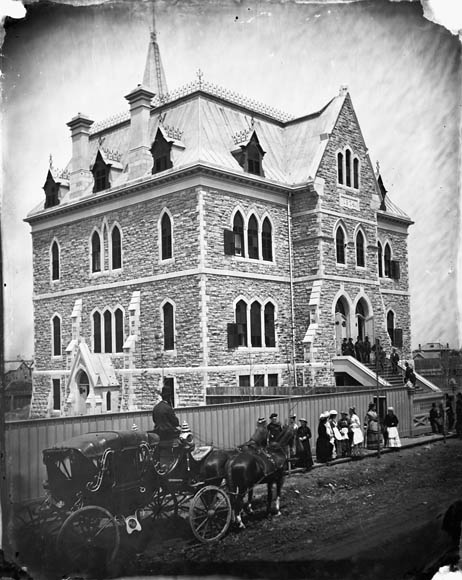
The first few years are handwritten. Printed editions appear to be OCRd and searchable one-by-one.
Find many photos of students and staff, individually or in groups.
The 1919 issue includes the names of former students who died in the Great War including the years they were at the Institute.
03 December 2019
Advance Notice: Family History Down Under
If you've always wanted to visit Australia and would like to do so in conjunction with "A Major World Class Genealogy Conference," consider adding 23-26 March 2021 to your trip plan.
Unlock the Past is organizing the event on Queensland's Sunshine Coast, a bit over an hour outside Brisbane.
Two of the headline speakers are Blaine Bettinger and Paul Milner. Five more headliners will be announced.
Find out more here (pdf).
New time for 4 Dec Getting Started in Genealogy
Monday's post originally had this event starting at 2 pm. That is now changed to 1 pm.
FamilySearch adds Lincolnshire, Parish Registers, 1538-1990
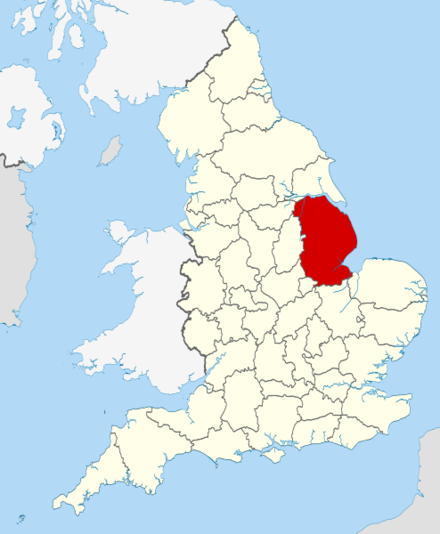
There are more, as noted in a post on 11 May 2019, from Findmypast which has Lincolnshire entries for 2,037,145 baptisms, 130,601 banns, 976,293 marriages and 1,809,363 burials.
The records are not available at Ancestry or MyHeritage.
NPE Rates
A recently published study of extra-pair paternity (EPP), often called NPEs, in the Netherlands and Belgium shows that historical rates were low overall (∼1%) but higher for urban populations than rural and for those with low socioeconomic status. Combining the two the rate was ∼5.9% among urban families with low socioeconomic status.
That means for the 15 couplings back to your great-great-grandparents there would be a 14% chance of at least one NPE at the overall average 1%, but a 60% chance for urban families with low socioeconomic status.
The table shows the probability a person has one or more NPEs, cumulatively back for a specified number of generations, starting with parents at one generation.
| Generations | Couplings | 1% NPE Rate | 2% NPE Rate | 6% NPE Rate |
|---|---|---|---|---|
| 1 | 1 | 1 | 2 | 6 |
| 2 | 3 | 3 | 6 | 17 |
| 3 | 7 | 7 | 13 | 35 |
| 4 | 15 | 14 | 26 | 60 |
| 5 | 31 | 27 | 47 | 85 |
| 6 | 63 | 47 | 72 | 98 |
| 7 | 127 | 72 | 92 | 100 |
| 8 | 255 | 92 | 99 | 100 |
| 9 | 511 | 99 | 100 | 100 |
| 10 | 1023 | 100 | 100 | 100 |
02 December 2019
Northern Ireland's Tithe Applotment Books go online
Claire Santry posted on Friday that PRONI has released its newly digitized collection of Tithe Applotment Books from 1820 to 1840 online. They can be searched at the townland level within each parish pdf but are not indexed by the householder's name. Go to her post for the detail.
Claire also has news of other releases from PRONI.
This Experienced Amateur Family Historian Gets it Wrong
In a single sentence I blew it while interviewing Charlotte Gray.
You were born in Sheffield in Yorkshire. A little genealogy research says your father was John Gray, your mother Kathleen Beckett and their marriage was registered in Norwich, in my birth county of Norfolk.Immediately after I named each of her parents Charlotte cried "Wrong."
How did I end up with egg all over my face?
Charlotte's Wikipedia page gives her birth date as 3 January 1948. Using FreeBMD I found a birth registration in the index with her mother's maiden name.

I didn't know if there were siblings so went looking for them in Sheffield. There was only one, Nicholas R Gray with birth registered in the last quarter of 1946.
So I looked for the marriage of a Gray to a Beckett. From 1940 onward there were none in Sheffield but there was a marriage of John A. Gray to Kathleen M Beckett in the 1st quarter of 1945, a respectable period before the birth of Nicholas. It was in Norwich, but then lots of marriages occurred in places where servicemen met their match while posted away from home during the war.
Had I had time, which I didn't, I could have ordered her birth certificate which would give the parents names.
Is there any other way using readily available documents online I could have avoided this blunder?
My interview with Charlotte, whose latest book is Murdered Midas: A Millionaire, His Gold Mine, and a Strange Death on an Island Paradise, will be posted shortly.


