29 May 2016

User Priorities, Impressions and Ideas for Library and Archives Canada

Back last summer, just before the election, I was one of 28 people consulted by Nanos Research for Library and Archives Canada, 19 in focus groups, 9 by telephone consultation. Genealogists accounted for 11 of those involved, the others were described as walk-ins.

The purpose of the qualitative research was to gain insight from clients concerning the products and services offered by LAC, as well as clients’ impressions and recommendations, to aid in the organization’s future planning.

All involved were clients of LAC who use the facility at 395 Wellington Street in Ottawa. Another much more extensive online survey addressed the views of the larger community of users.

The bottom line, as summarized by Nanos, was:

Satisfaction – The qualitative research suggests that users were satisfied with the overall quality of their recent interactions with LAC. Regarding LAC services, the research suggests that they met or exceeded users’ expectations.

LAC’s Primary Responsibilities - Users believe that LAC’s primary responsibility should be to acquire new materials, followed by ensuring access to collections (ranked second and third place).

New Fonds Priorities - In terms of priorities for future funding to acquire and preserve new fonds to add to the collection, users believe that fonds relating to Aboriginal Peoples (ranked first and second place) are the top priority followed by fonds relating to Atlantic, Western, and Northern Canada.

Digitization Priorities - Finding aids were users top priority when it comes to future digitization efforts by LAC, followed by military information, and genealogical information.


In addition Nanos choose to highlight the following individual comments:
“I am very satisfied; however, there is some work to be done in terms of teaching individuals outside of Ottawa about LAC. Given the current funding of the services offered, I think it is normal to have the quality of services we have.”
 “The LAC charges the same to a multimillion dollar company as it does for civilians. I know the LAC is all about access; however publishers can afford to pay more.”
and the following as top user comments

  • LAC should make digitization a top priority (4 of 22)
  • There should be better parking and access to the facility (3 of 22)
  • Awareness of LAC services, especially outside Ottawa, is a priority (3 of 22)
  • Make things simpler for researchers to quickly access materials (2 of 22)
  • Collaborate with other libraries and archives (2 of 22)
It's worth remembering that these are based on a small sample of those who use the facilities at 395 Wellington. I understand the results of the later and larger cross-Canada survey should appear soon.


Ancestral Homes

At the Ottawa Branch OGS meeting on Saturday I ran into Phil Donnelly who filled me in on progress on a heritage project titled: "These Old Walls - The Homes of Our Ottawa Valley Great-Grandparents"  (also known as the “Ancestral Homes” or “Old Walls” project).

There is now a Ancestral Homes app (AH app), a custom designed website, database, and app for android-based mobile devices to record and archive the "heritage reference" for a property of interest. The AH app has been designed and developed by four (4) teams of Algonquin College students in computer engineering & interactive media design over a period of 4 academic semesters in 2014 – 2015 under contracts for research and innovation with Philip Donnelly. The principal sponsors for the AH app were:
• DonnellyCanada (Philip Donnelly) ($2,000 contribution);
• Ottawa Branch of the Ontario Genealogical Society ($2,500 grant);
• Algonquin College Applied Research & Innovation
• The Irish Society of the NCR 

The next phase in the implementation of the Ancestral Homes/Old Walls project is to populate the database with a significant number of records of the physical remains, and the memories, of “ancestral homes” in the Ottawa Valley. The Irish Society of the NCR is considering a collaboration with a like-minded partner, such as Heritage Ottawa, for purposes of implementing that next phase.

Find out more and find a link for downloading the app at http://ancestral-homes.azurewebsites.net/

28 May 2016

Forces War Records opens some records until 31 May

Below are the collections you’ll be able to view at no cost from Forces War Records from 28-31 May

Click on any of the links to take you directly to the collection.

English dialects: there's an app for that

Got a smartphone? If so find out if your accent is regionally characteristic with the English Dialects App (free for Android and iOS). I tried it and found that, Norfolk born and bred, I have an accent characteristic of 180 Km to the south-southwest. That's what 50 years away will do for you.

Read about it and find the link at http://phys.org/news/2016-05-app-decline-regional-diversity-english.html

27 May 2016

Genealogy specials

Here are a few discounts currently on offer.

AncestryDNA has a Father's Day special at 20% off. That's $119 rather than $149 until June 19. I'm told if you purchase at the OGS conference you'll also save on shipping.

Ancestry will also offer 20% off the regular price for new and renewing subscribers at the OGS conference.

UK database TheGenealogist are currently offering 15 Months for the price of 12 on their Diamond package, along with a free Discover Your Ancestors Periodical subscription! That's a 15 month subscription for £119.45. The company announce 37,450 individuals in Worcestershire Parish Records have been added to the two million plus that are already online at TheGenealogist. As of 1 June there will be a new release of the 1907 Post Office National  (UK) Telephone Directory.

Not to be left out, but ending today 28 May, Findmypast.co.uk is offering 50% off a 1 Month World subscription using the code TREE50. They also have 20% off a 12 Month subscription with offer code TREE20.

Findmypast adds Battle of Jutland collection

To mark the centenary of the Battle of Jutland (31 May and 1st June 1916) Findmypast has compiled the names of British Royal Navy & Royal Marines who participated.
This new collection which has 38,931 records has been specially created from various service records from The National Archives. The largest part, 29,865 records, is from series ADM 188. Find details about those TNA records at http://discovery.nationalarchives.gov.uk/details/r/C1897 Other series used are ADM 159: Royal Marines, service records, ADM 196: Royal Navy officers, service records, ADM 240: Royal Naval Reserve officers, service records and, ADM 377: Royal Naval Volunteer Reserve, ratings’ service records. The collection also uses transcripts created by Naval and Military Press.

Also new this week, of Irish interest, are 5,000 additions to the Ireland, Poverty Relief Funds 1821-1874 collection, and Irish micro-credit scheme which now totals 690,724 records as well as additions to the Irish newspaper collection.


OGS Conference 2016 in perspective

A week's time will see hundreds of genealogists and family historians gathering at the International Plaza Hotel, near Toronto International Airport, for the Ontario Genealogical Society annual conference. What will they hear? I've taken the titles and summaries of all the presentation and submitted them to word and phrase analysis.

Omitting stop words here are the most frequently appearing words in the titles and in summaries, with number of mentions:

RankTitle WordsRankSummary Words
1genealogy (16)1family (56)
2new (12)2records (45)
3research (9)3research (43)
3family (9)4genealogy (43)
5dna (8)5dna (33)
6history (6)6history (29)
7records (5)7online (23)
8tools (4)8genealogists (20)
8genetic (4)9resources (17)
8digital (4)9information (17)
9genealogical (17)


Here are the most mentioned two word phrases in the titles and summaries:

RankTitle PhrasesRankSummary Phrases
1what's new (9)1family history (22)
2family history (6)2genetic genealogy (10)
3new at (5)3social media (7)
4your family (4)3autosomal dna (7)
4new in (4)

Notice the prominence of DNA and genetic genealogy, along with the word new, in keeping with the theme of genealogy at the cutting edge. The lack of the words Ontario or Canada, is surprising even though a large majority of the presenters are Canadians, including many Ontarians.

26 May 2016

ONS demeans family history

My bedtime reading last evening included the report on the proposed questions for the 2021 census of England and Wales from the Office of National Statistics. I'd seen red when I read

ONS does not intend to collect any information requested solely for genealogical purposes.

It's not as if genealogist's didn't register interest. Of 1,095 responses to the consultation 592 were identified as being from genealogists. But only 12 of 279 from genealogical organisations.

The information the genealogists wanted collected, and that was rejected, is place of birth and maiden or former name.

Why the rejection. The weighting scheme used in the evaluation places a premium on the current use of the information, so the 100 year embargo on release of individual census data places a whole segment of society as beyond the pale. Apparently the ONS believes they should do nothing, take not the smallest extra step, with a view to adding to the historical value of their products.

While I slept Peter Calver of Lost Cousins was at work issuing an extra of his newsletter that arrived in my inbox at 4:15 a.m. EDT. You can read his more detailed analysis at http://lostcousins.com/newsletters2/may16xtra.htm

New at LAC

I stopped in briefly at Library and Archives Canada on Wednesday to be greeted by quite a hubbub in the sunken lobby. The source was a large number of school-kids there to see the exhibition Alter Ego: Comics and Canadian Identity featuring reproductions of art by Canadian comic book artists and of some of Canada’s superheroes. The exhibition also features comics about Canadian history, as well as selections from Canada’s contribution to the genre of biographical and realist comics. It runs through the summer. It was certainly good to see the attention being paid and enthusiasm for the exhibit by the youngsters.

After registering I proceeded to put materials that could not be carried to an upper floor in a locker, only to find the area has been reorganised. Lockers have been moved to both sides of the area previously reserved for coats as indicated by signs.

Part of the area where lockers were previously is now used for food and drink vending machines.

Adjacent areas are set up with tables and chairs with a good view outside where one can also go to relax on a fine day. That's not quite the facility to encourage social interaction one would hope for, the fifth floor cafeteria is still missed, but certainly more pleasant than the immediately previous arrangement in an enclosed room.

Ottawa Branch OGS May Meeting

At the meeting on Saturday 28 May, 13:00 – 15:00 Robin Cushnie will speak about the Osgoode Township Museum, a repository for indigenous Native and pioneer relics, artifacts, historical documents, and other articles of historical and genealogical significance.

The usual venue, City of Ottawa Archives, 100 Tallwood Drive (Room 115), Nepean, ON and followed by a computer special interest group meeting.

You can also take advantage of a 10:30 am Genealogy: Back to Basics session, "Intro to FamilySearch & The Ottawa Family History Centre" with Shirley-Ann Pyefinch.

25 May 2016

British Home Children with no Canadian descendants

Continuing exploration of the basis of the oft quoted statistic that 10% (sometimes more) Canadians have a British home child ancestor, I've been looking for information on immigrants who did not have Canadian descendants.

John Sayers pointed me to a table published by Fegan Homes, that brought roughly 3,226 boys to Canada between 1885 and 1939.

It's a tabulation of boys Fegan brought to Canada between 1885 and 1908, a total of 1,861 boys.
Of those the organization had lost track of 856 as they were past the age when Fegan's had any further responsibility.

Of the remaining 1,005 about two-thirds were in Canada comprising those with a known address and those who had "gone of the North West" - likely using the farming skills they had developed to take up a land grant. The remaining one third had either returned to England (15%), gone to the USA (13%) or died (5%). While its possible some of the one-third may have had children who remained in Canada likely the majority did not.

If these figures are typical, and they may not be in which case I'd appreciate knowing the evidence, then the basis for calculating the number of British home child descendants in Canada could be significantly less than the 100,000 home children typically quoted.

Incidentally, if you're interested in the Fegan boys there's a database on the BIFHSGO website at www.bifhsgo.ca under Home Children.

HSO AGM and presentation on Caledonia Springs Spa

This Friday, 27 May sees the Historical Society of Ottawa Annual General Meeting, sweetened by a presentation on Caledonia Springs Spa: Eastern Ontario's Hidden Secret by Hugh Reekie.
The event starts at 1:30 pm (30 minutes later than normal) at Routhier Community Centre, 172 Guigues Street at Cumberland in Ottawa.

Family Tree DNA to change how it assigns matches

Information has been posted by genetic genealogy uber-bloggers Blaine Bettinger and Debbie Kennett on a change coming at Family Tree DNA.
The Family Finder autosomal test will use new criteria to identify matches. Blaine has a nice flow diagram explaining the new criteria, but the bottom line is "Most people will see only minor changes in their matches, mostly in the speculative range. They may lose some matches but gain others."
If you want to be on the safe side you can download your present matches in CSV or Excel spreadsheet format from the bottom of your match listing.

Accidental Infant Death?

The 1880s saw growing concern at the high and rising number of deaths of children under one year old from suffocation in bed, routinely dismissed as accidental at Coroner's inquest hearings. Nationally 134 per thousand live births in 1881 rose to 174 in 1890.
In Bethnal Green in 1887, it was reported the 5 out of 6 infant deaths investigated were found to be suffocation cases in one room home in which entire family had to sleep in one bed. These deaths were said to be the result of a sleeping parent, or much older child, rolling on top of the smallest and accidentally killing them. Press reports noted that such  incidents were more common on Friday nights and Saturday mornings and Saturday nights and Sunday mornings and that this suggested that heavy drinking was a factor in the fatality.
Was there a darker explanation? How to be rid of an unwanted infant knowing that a Coroner's jury would be highly unlikely to pass any other verdict than accidental death?
It's likely a coincidence that this is following the August 1883 eruption of Krakatoa which sent a veil of dust into the stratosphere. Although, according to Wikipedia, average Northern Hemisphere summer temperatures fell by as much as 1.2 °C (2.2 °F) records for England don't show especially cold winters.


24 May 2016

BYU Family History Library on YouTube

James Tanner, best known for his Genealogy's Star blog, is part of a team from the Brigham Young University Family History Library placing genealogy videos on YouTube.

His latest is Using the Google Goldmine for Genealogy, a gentle overview of some of the most useful resources from Google. I perhaps flatter myself thinking that I know as much as the average genealogist about the Google constellation of resources, but I had to pause the video to explore a couple of the resources James mentioned.  At just over an hour you need to set aside time to get the value from it.
Videos have been added to the BYU FHL collection for over a year. You might want to browse through the collection to see if any of the others address you genealogical concerns, or, as James mentions, search more generally on YouTube to see if you can save $300 by learning how to change the battery on your Prius.

SCGS Free Presentations Online

The Southern California Genealogical Society Jamboree is once again this year streaming live a selection of free presentations. The schedule is below:

Friday, June 3
 
FR008  German Immigrant Waves: Contrasts and Sources - James M.Beidler

FR018  Problems and Pitfalls of a "Reasonably Shallow" Search  - Elissa Scalise Powell, CG®, CGL®

FR027  Tracking Migrations and More: The Records of Old Settlers Organizations - Paula Stuart- Warren, CG®, FMGS, FUGA

FR035  Principles of Effective Evidence Analysis - George Goodloe Morgan

Saturday, June 4

SA009  Getting Started with Eastern European Research - Lisa A. Alzo, MFA

SA018  Be Your Own Digital Archivist: Preserve Your Research - Cyndi Ingle

SA022  German Names: Their Origins, Meanings, and Distribution - C. Fritz Juengling, PhD, AG®

SA032  Using Military Pension Files to Fill Gaps in Family History - J. H. Fonkert, CG®

SA037  Maximizing Your Use of Evidence - Thomas Wright Jones, PhD, CG®, CGL®, FASG, FUGA, FNGS

SA052  German Genealogy on the Internet: Beyond the Basics - Michael D. Lacopo, DVM

Sunday, June 5

SU009  The Firelands, the Connecticut Western Reserve and the Ohio Territory - Peggy Clements Lauritzen, AG®

SU010  Avoiding Shiny Penny Syndrome with Your Genealogy - Tessa Ann Keough

SU027  All Aboard: Staying on Track with Your Research - Barbara M. Randall

SU031  U. S. Passport Applications - Debbie Mieszala, CG®

They are free but you do have to register. See full details at http://goo.gl/gVAwwE

If you're at the Ontario Genealogical Society conference happening at the same time you won't be missing any UK, Irish or Canadian Jamboree presentations, there are none being streamed,


QFHS Offers Scan and Save Workshop

On Saturday, 28 May from 1:00 pm to 3:00 pm Marilyn Gillespie and Deborah Robertson are offering a Scan and Save Workshop at the Quebec Family History Society Heritage Centre and Library, 173 Cartier Avenue, Suite 102, Pointe-Claire

The hands-on workshop will cover:
What scanner should I use?
How do I use my scanner for the best results?
How do I save the files and find them later?
and much, much, more.

Participants are invited to bring a handful of photographs under 8x10 inches to scan,
a memory stick to take them home and your questions

Fees are $20.00 for QFHS members, $25.00 for non-members.
Reservations at 514-695-1502 or www.qfhs.ca

23 May 2016

The Lethbridge Census

In Canada the next census we'll see is that of the Prairie Provinces taken on 1 June 1926 and scheduled for release in 2018.

In looking for news on that I found reference in the Lethbridge Herald of 8 December 1916 to a municipal census being conducted by the Board of Trade. The article headed Another 1900 Names Go on Census Lists mentions the total of 3,800 names. Does is survive somewhere in a backroom of Lethbridge?

Meanwhile, Statistics Canada is still running TV commercials encouraging people to complete the present census. It may be part of the planned campaign, I hope so and not an indication returns are coming in slowly.

Many "British Home Children" Were Not Children

According to Library and Archives Canada "Between 1869 and the late 1930s, over 100,000 juvenile migrants were sent to Canada from the British Isles during the child emigration movement."
According to an abstract for a presentation at OGS conference 2016 "Ten percent of the current Canadian population is descended from the up to 120,000 British children sent to Canada . . ."
The figure of 10%, or thereabouts, is frequently quoted although I've never had the basis satisfactorily explained.
Those figures depend on how one defines a child. Most estimates appear to be based on names and statistics recorded for those who came to Canada under programs operated by an agency, the most notable of which was Barnardos.
A common dictionary definition defines childhood as extending from infancy to puberty. A definition in terms of age is more administratively convenient with ages 14 and later 16 being applied consistent with the school leaving age. There is confusion between the state of being a child and a minor still legally under the care of a parent or guardian.
Library and Archives Canada's Home Child Records database at  http://goo.gl/7YosQr givess surname, given name(s), age, ship and year of arrival. There are limitations on the number of results you can view for a search. To explore how many would legally be considered children under various definitions I examined  a sample of immigrants with last name Smith who arrived between 1869 and 1899. There were 769 in total with ages given for 746 of them. Results are shown in the table.

AgePercentCumulative percent
0-422
513
625
738
8514
9620
10828
111038
12745
13853
14861
15869
161079
17887
18995
19+5100

This indicates that 39% of young immigrants in the LAC database arriving in the period were over the then current school leaving age of 14.
As a group the term "young immigrants" as used by Marjorie Kohli as the sub-title to her book The Golden Bridge, is more appropriate than children.

22 May 2016

Genealogy à la carte distribution problem

My Montreal blogger friend Gail Dever writes that the normal email distribution on her Genealogy à la carte blog has not been working for a couple of days. In particular notice of her weekly crème de la crème post didn't get out, and it always contains things worth knowing about.

As always, you can find Genealogy à la carte at http://genealogyalacarte.ca/

Derbyshire Record Office Treasure 33 of 50

The Derbyshire Record Office is showcasing 50 treasures from its Archive and Local Studies collections. These are items that would never be picked for digitization by the big genealogy companies, chosen because they hold special meaning for staff and users that stir the imagination, tell the best stories, and reveal the secrets of the local history.
You can look through the collection of stories at starting with the most recent, the 33rd which has an Ottawa connection, at https://recordoffice.wordpress.com/.
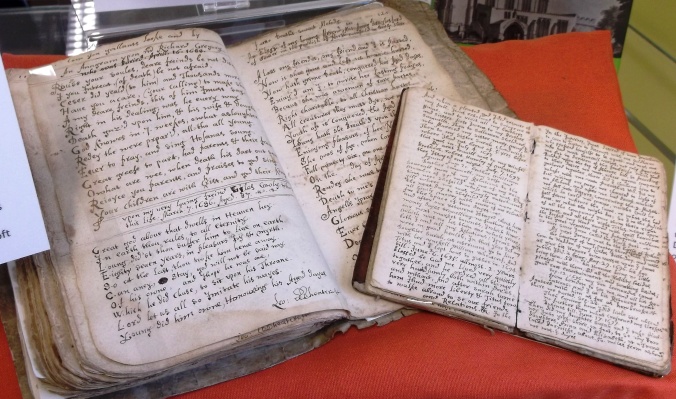
The autobiography and poems of Leonard Wheatcroft of Ashover tells the story of how a large volume contains some of Wheatcroft's poems provided evidence for Christine Jackson's genealogical investigation of the Cowley family.
The Derbyshire link is the early part of the family history. You can read the complete story, with an emphasis on the family in the Ottawa Valley, in Christine's Bytown Pamphlet FromSteamboats to the NHL: The Ottawa Valley's Cowley Family published by The Historical Society of Ottawa.

Rural electrification in the Republic of Ireland

Rural Electrification came to Ireland between 1946 to 1965. This Google map shows the year electricity came to each of 792 areas. Chick on the location for more details.


via www.irelandxo.com/ and thanks to a tip from Brenda Turner.

Alexander Rennie: Ottawa WW1 Beechwood burial

A century ago, 22 May 1916, saw the death at Kingston General Hospital from diphtheria and paralysis of the heart while on active service of Alexander Rennie of the 51st Battery, Canadian Field Artillery.
According to the Commonwealth War Graves Commission records he was age 22, the son of David Rennie, of Clark's Crossing, Sask., and the late Catherine Rennie. His father's address on the Circumstances of Casualty record is 32 Armstrong St., Ottawa and later 58 Ella St. There is no attestation paper on file at Library and Archives Canada.
According to the Saskatchewan Virtual War Memorial he was born at Leswalt, Dumfries & Galloway, Scotland and was working as a car checker when he enlisted at Ottawa four months before his death. He is remembered on the Leswalt War Memorial.
He was buried on 25 May and lies in Sec. D. Range 24. Grave 4 at Beechwood Cemetery where the CWGC gravemarker has the inscription "Where Death Divides Fond Memory Clings".

21 May 2016

Thanks OGS

A word of thanks to the Ontario Genealogical Society for mentioning my YouTube video Did DNA really prove it was Richard III's skeleton in the Leicester car park? in their weekly electronic newsletter called the OGS eWeekly Update.

The OGS eWeekly Update is available to anyone with an email address and you do not need to be an OGS member to subscribe. Just fill out the  subscription form at https://ogs.on.ca/eweekly.php

Findmypast adds Westminster parish records

A third update to Findmypast's collection of parish records from the City of Westminster Archives Centre has added:

Over 1,000 new baptismal records, 1576 - 1928
Over 272,000 new banns records, 1792 - 1901
Over 409,000 new marriages covering more than 40 Westminster parishes, 1719 - 1945
Over 517,000 new burial records, 1575 - 1948

Dates are approximate. There are transcripts and images of originals.

The collection does not include Westminster Abbey, check Burials and memorials in Westminster Abbey.


20 May 2016

Genes for nose shape found

Here is a press release from University College London

Genes that drive the shape of human noses have been identified by a UCL-led study.

The four genes mainly affect the width and ‘pointiness’ of noses which vary greatly between different populations. The new information adds to our understanding of how the human face evolved and may help contribute to forensic DNA technologies that build visual profiles based on an individual’s genetic makeup.

Read the full release at http://www.ucl.ac.uk/news/news-articles/0516/190516-nose-shape#sthash.4dhtWwdD.dpuf

via Debbie Kennett on Facebook

TNA announce National Maritime Museum and the Crew List Index Project

The following is from The (UK) National Archives.

Building on the success of the Merchant 1915 Crew List Index project, we have once again joined forces with the National Maritime Museum (NMM) and the Crew List Index Project team (CLIP) to create a new free-to-search database resource relating to all the Royal Navy officers and ratings that served in the First World War – First World War Royal Navy Lives at Sea – based principally on service records held by The National Archives, .

With the help of a team of e-volunteers from all over the world, the project will create the most significant online data resource for the study of the Royal Navy during the First World War.

This unique resource marks and commemorates the Royal Navy’s contribution to the First World War effort through the lives of those officers and ratings who served.

Our hope is that it will allow and promote a wide and diverse variety of research into the composition and operations of the Royal Navy during the war.

Read the complete TNA announcement at http://goo.gl/hjos4G

15 Fantastic Genealogy Books

Here are a few genealogy titles I never expect to see.

My Ancestor was a Slum Landlord
Fascinate Your Family with Anatafel
A Teenager's Guide to Genealogy Society Meetings
A Senior's Guide to The NextGen Genealogy Network
Overwhelmed by Volunteers?
The New Quick and Easy Method For Compiling Your Complete Family Tree With DNA
Professional Genealogy: a manual on quantifying confidence
A Professional's Guide to Enhancing Credibility of Dubious Genealogy
Extreme Source Citation for the OCD Afflicted
Trace Your Rockall Roots Online
Mastering the Art of Swapping Lederhosen for a Kilt
Endogamy: a dog's life
The 15 Habits of Highly Extravagant Genealogists
Palaeography for Genetic Genealogists
Drumpf's Presidential Guide to the Genetics and Genealogy of Small Hands

OGS Kingston Branch May Meeting

On 21 May 2016 Bob Thomas will give a talk "From Cloth to the Cloth: Archibald Stevenson, Presbyterian Missionary to Canada."
The venue is the Seniors Centre, 56 Francis Street, Kingston at 10:00 a.m.,

19 May 2016

Tulip Time in Ottawa

I took time out from family history on Wednesday to view the tulips at Dow's Lake.  Seems like a lot of visitors where there from China. Don't miss out.


Check out my Richard III YouTube Video at https://youtu.be/PZirr0FpsW0

Quinte Branch May Meeting

On Saturday 21 May, 2016 the Quinte Branch of Ontario Genealogical Society presents resources available at the "New" Community Archives of Belleville and Hastings County located in the
Belleville Public Library building, by Amanda Hill (Archivist).
The events gets underway at 1 p.m. at Quinte West City Hall Library, 7 Creswell Drive, Trenton, Ontario.
Find Quinte Branch at https://www.facebook.com/QuinteBranch.OGS 

18 May 2016

Is Ancestry's well running dry?

Sutton, Surrey, England, Water Rate Books, 1868-1911, with 132,935 entries, is the sole new British (or Irish) database added at Ancestry so far this month. There's been no new database added to the Canadian collection since March. Even the US collection has only seen two new databases this month.
Are new databases that meet Ancestry's criteria for inclusion increasingly hard to find, or is perhaps investment being diverted to DNA?

Gresham College Lecture: Five Catastrophes That Made London

If the fire of 1666 and bombing of The Blitz come to mind as catastrophes that have have had a major impact on London you may be surprised by three others that Simon Thurley posits for the city since Tudor times.

If you have any interest in London and its development Thurley in this Gresham College lecture from 11 May holds your attention irrespective of the temperature to which you set your air conditioner.

17 May 2016

Genealogy Roadshow

Tune in this Tuesday, 17 May, for the start of the new series of the PBS Genealogy Roadshow. In Ottawa it airs at 8 p.m. with a rerun at 1 a.m. Roadshow stops for hosts Kenyatta Berry, Joshua Taylor and Mary Tedesco this year are, first, Albuquerque, followed by Miami, Houston, Boston, Providence and Los Angeles.
Find out more at http://www.pbs.org/genealogy-roadshow/home/, Unfortunately the embedded videos are embargoed in Canada.

200 Years of History of Drummond/North Elmsley Townships

On Thursday, May 19, 2016 the Perth & District Historical Society will meet for a presentation

 A Tour Through 200 Years of History of Drummond/North Elmsley Townships

will be jointly hosted with the Township of Drummond/North Elmsley and its 200th Anniversary Committee, and presented in the Township Council Chambers at 310 Port Elmsley Road, Port Elmsley.

The theme - a “Tour Through 200 years of Drummond and North Elmsley Township History” - promises an entertaining evening carrying us through the municipality’s early stories from its beginning, before the Perth Military Settlement, to the present day.  Our evening presenters will include Karl Grenke, Township Planner and Staff Coordinator for the Township’s 200th Anniversary Celebrations.  Karl will introduce the background and profile, including early settlement patterns, of the founding municipalities and the heritage hamlets that comprised the area, and other interesting facts about the township’s development through the 200 years.  Irene Spence, well-known local historian and co-author of, amongst other works, ‘Forgotten Hero, Alexander Fraser’, will provide a sneak preview of the upcoming book on North Elmsley Township.  This anniversary legacy project, titled ‘Doorway to the Past’, will provide previously untold stories and memorable photographs of this important part of the united community.  

This evening will also feature a collection of stories told by area residents sharing their own anecdotes, histories and memories of living, on farm and/or lake, and growing up in the United Townships.  

Come and hear, also, about the many exciting activities coming up to mark Drummond/North Elmsley Township’s celebration of our area’s 200th Anniversary.  The Township is an integral part of Perth and District with a shared history and way of life from early days to the present.  

The meeting starts at 7:30 p.m. at the Drummond/North Elmsley Township Council Chambers,
310 Port Elmsley Road (Toonie donation).

Edward Julian: Ottawa WW1 Beechwood Burial

Edward Julian was buried at Beechwood Cemetery on 19 May 1916, two days following his death from exhaustion from mental disease - epilepsy at the Eastern Hospital (for the Insane), Brockville. He had been there since 26 November and was listed as a Private with the Canadian Ordnance Corps although no attestation paper or service file has been found.
Born in December 1886 in England, son of Naughton Julian, of West Kensington, London, he came to Canada in 1901.
He married Alice Maria Hibbard. They had two boys. Edward Charles died at age 4 months. Edward Geoffrey died at age 7 when hit by an automobile on 7 August 1919 while crossing the Driveway at Waverley. Both are also buried at Beechwood Cemetery. Alice married Charles Hyde in 1919 and lived to June 1960. She is buried in Pinecrest Cemetery.

16 May 2016

CEF Service Files Digitization by LAC: May Update

As of 15 May 2016,  286,285 (275,299 last month) of 640,000 files are available online via Library and Archives Canada's Soldiers of the First World War: 1914–1918 database.
The latest box digitized is #4810 (#4617) and the surname Jellyman (Hunt).
At the last month rate of digitization the project would be completed in 32 (42) months, by December 2018.

Diary of a somebody

Genealogists are detectives. Imagine having 148 diary notebooks as raw evidence in piecing together an ancestor's story. 
Now suppose the notebooks were written by an unknown person and recovered from a skip (dumpster). You dip into them and are fascinated. What would you do? 
The Guardian carries an article by Alexander Masters on his new book, A Life Discarded, and the surprises he encounters as he reads through the notebooks. Find the article at http://goo.gl/wydThI

via a post on Yoni Freedhoff's Weighty Matters blog.

15 May 2016

My Richard III talk at WDYTYA? Live now on YouTube

You can now view the talk I gave in Birmingham last month at the WDYTYA? Live event on YouTube. This version is slightly modified from that presentation and the one I gave to BIFHSGO last October, as it had to be rerecorded owing to excessive background noise. That means there is no audience interaction.

The talk explains the likelihood ratio technique that was used to determine whether or not the remains found in a car park in Leicester were those of Richard III, that DNA testing was not essential for the remains to be given full honours when they were reinterred in Leicester Cathedral, and how the technique can be employed to quantify confidence more generally in genealogy.

Thanks to Maurice Gleeson for organization of the event and placing the video on YouTube, to Debbie Kennett for the initial invitation to participate in the series organized for the International Society for Genetic Genealogy and to Family Tree DNA, the sponsors.

Don't overlook the other videos from this and previous WDYTYA? DNA events at www.youtube.com/channel/UC7HQSiSkiy7ujlkgQER1FYw

British Army, Navy and Air Force Lists

Saturday's presentation to the British Isles Family History Society of Greater Ottawa had Roy Thomas speaking about his career Royal Navy surgeon relative Michael Joseph Laffan.  He made reference to the British Navy Lists showing images taken from copies he'd consulted in the library at the Canadian War Museum.  There are also copies at Library and Archives Canada.

Ancestry has an indexed collection, UK, Navy Lists, 1888-1970, with Roy's relative listed in 79 issues from 1904 to 1927.

These days there are free and easy ways to find that information online for some time periods without an Ancestry subscription. The National Library of Scotland has digitized 122 volumes, from 1914 to 1945. You can also consult a collection of The Army List from 1841 to 1946 and the Air Force List from 1919-1945. All are available on the Internet Archive texts National Library of Scotland page at https://archive.org/details/nationallibraryofscotland.

There are a few earlier Navy list issues, including March 1835, December 1848 and June 1856, digitized on the Internet Archive texts from the University of Michigan library.

Records Defining Our Past

Here's key event in the Ottawa genealogy year


14 May 2016

Best BIFHSGO talk by a member

Ballots were handed out at Saturday's BIFHSGO meeting in the vote for 2015-2016 Best Talk Presented by a Member. There have been some excellent presentation, but I may be biased!
If you missed the meeting, or missed voting, it's not too late. Don't delay. Download the ballot from the Members Only section of the society website and send by 16 May to secretary@bifhsgo.ca.

FreeBMD May update

The FreeBMD Database was updated on Friday13 May 2016 to contain 254,285,771 ( 253,717,235  last month) distinct records.
Years with major updates, more than 5,000 new entries, are for births: 1963 - 64, 1966, 1974, 1976 - 78; for marriages: 1965 - 66, 1968-69, 1971 - 72, 1976 - 77; for deaths: 1974 - 79.

Your Personal Archiving Project: Where Do You Start?

Have you been contemplating piles of stuff, the accumulation of a lifetime? Some people are so organized it's scary. For the rest of us, especially if you've been settled in the same home for years or decades with basement or attic space, there's a task ahead.
A blog post, and material referenced in it, from the Library of Congress, has advice on how the professionals deal with collections they acquire. The headings are:
  • Start Simply
  • Clumps
  • Be Realistic About Work Space and Time
  • Nothing is Perfect
  • Scanning
  • Disks and Digital Storage Media
  • Digital Preservation
  • Archiving a Life Story

The Library of Congress also has pages on “Collections Care” and “Personal Digital Archiving.

via David Rajotte's amazing Documentary Heritage News

13 May 2016

Findmypast adds London resources

This week's Findmypast additions include:

London Lives, Culture & Society 1680-1817, a collection of  miscellaneous sources including criminal registers, apprentice records, coroner inquests, workhouse minutes, clerks’ papers and much more. The records are from St Botolph Aldgate, St Clements Danes, St Dionis Backchurch, St Martin in the Fields and St Luke Chelsea parishes, as well as one London guild, the Carpenters’ Company, and one royal hospital, St Thomas’ Hospital. There are transcripts and link to the image of the document provided by London Lives.
Don't have a Findmypast subscription? Don't worry. The collection is at London Lives, a fully searchable edition of 240,000 manuscripts from these eight archives and fifteen datasets, giving access to 3.35 million names.

The London Gazette, Supplements, August 1914-January 1920, includes more than 40,000 announcements of armed forces promotions, appointments of official public offices, Royal proclamations and more for the First World War era.
Don't have a Findmypast subscription? Don't worry. The collection is part of the complete London Gazette collection at https://www.thegazette.co.uk/.

Greater London Burial Index sees over 79,000 records added to the collection listing name, age, occupation, religious denomination and burial location, where available. The total collection has more than 1,5 million entries from 226 parishes in the Greater London area.

In addition the Sussex Burials dataset has additions from Hailsham Cemetery in the Wealden district of East Sussex and consist of transcripts created by the Sussex Family History Group. The collection now contains the records of 499,907 burials from the registers of 237 parishes dating back to 1530.

FamilySearch now has 2100 collections

With 204 new and updates collections (databases) since the start of the year FamilySearch has now achieved the milestone of 2100.
The US accounts for 48% of the total, the UK and Ireland 6%, Canada 5% and Australia and New Zealand 1%.
Just over 10% of the new databases are browse only, 22% do not have images associated with the indexed records and all of those are US records.

Over 47 million indexed names at the GENDEX Network

FamilySearch have updated the database from Canadian Headstones to contain 1,099,535 records. While that means a general search at FamilySearch will find those records it's not the complete Canadian Headstones database which now claims "over 1,450,000 gravestone photo records from across Canada."
And that pales in comparison to the 47,448,496 names indexed on another Canadian Headstones project I didn't know about, the GENDEX Network. So I asked some questions of project leader Jim McKane

When did the initiative/site start?
The first GenDex was created by Gene Stark in 1996. More currently Darrin Lythgoes creator of TNG (The Next Generation) Software for online familytrees operated a GenDex website which CanadianHeadstones took over.

At what rate is it growing?
Last November it was 45M and is now 47M

What's included . . .what type of record?
 A GenDex file is a text file which is created by a genealogy database program when you create the html files for a website. The GenDex file contains only the basic data about a person with the URL to the page in your website for each person. Therefore, it is a very small file which details all the information needed to index your website on GenDexNetwork.org. It ONLY contains the following: -
URL to each person on your website
First Name
Surname
Birth Date
Place of Birth
Death Date
Place of Death

Entries from a GenDex file look like this when viewed in a text editor: -
URL|SURNAME|First Name /Surname/|Birth Date|Place of Birth|Death Date|Place of Death|
I1726&tree=McKane|Mary Robena //|8 Jun 1905||27 Apr 1966||
I903&tree=McKane|ADAIR|Cecil /ADAIR/|10 Jan 1919|York, ON|22 May 1997| Grey, ON|

Not all Family Tree programs will create a GenDex file.

Why would people/organizations want their index included?
GenDex provides researchers with a quick index to ancestral names documented by the many family history websites on the Internet. We index names, birth dates, birth places, death dates and death places. Basic and Advanced search forms allow you to enter your criteria and, with the click of a button, you will be searching our database containing more than 30 million names. Those that meet your criteria are returned in a list. If you find persons of interest to you, a link will take you to their full data pages on one or more participating genealogy websites.

If you have your own family history website and want to index it with us, it could not be easier. On the GenDex home page, click on the green tab and you will find a simple form to help you upload your gendex file. No personal information is required. Your file will be imported into our database and will be among that those searched by visitors. Upload as many gendex files as you like, and refresh them whenever you wish by using the same form.

Why would they not?
Only those who want to "hide" their genealogy from fellow researchers would not wish to participate!

How is it funded now and in the future?
There is advertising via Adsense which is our only source of revenue to keep GenDexNetwork and CanadianHeadstones.com alive other than donations.

Thanks to Jim for the information. It's free so why not give it a try?


12 May 2016

A Belleville shopkeepers census of 1924 in verse

Stores on Front Street in downtown Belleville, circa 1924 lists businesses there that existed in the 1920's. Fascinating for those with a family connection. For the rest of us a bit of doggerel with reference to at least 210 businesses and other institutions on the street.

via a note from my friend Bryan Cook who aspires to better things in his own poetry.

BIFHSGO May meeting

The presentations this Saturday 14 May for the BIFHSGO meeting at Ben Franklin Place in Ottawa are:

9:00 a.m.
Before BIFHSGO Education Talk — Skimming the Surface of British Merchant Marine Records  by Barbara Tose.

10:00 a.m.
No Irish Country Doctor — Roy Thomas’ great-uncle Michael Laffan was no Irish country doctor. He spent his medical career, from 1902 to 1926, in the Royal Navy. Consulting the Navy List, Roy discovered that Surgeon Laffan served far beyond the Irish Seas in the Chinese, Australian, and South African stations, as well as the Med and waters closer to home.

Discovery Tables are: Merchant Marine Records with Barbara Tose and Archive CD Books Canada.

The meetings are free and open to all. See www.bifhsgo.ca for more details.

11 May 2016

OGS Conference ticks the boxes

Which to believe? Could they both be right?

Dick Eastman wrote 2016 NGS Conference in Ft. Lauderdale is a Success mentioning as a negative only that the distance between the exhibition area and the presentation venues was too great.

Having attended the same event Amy Johnson Crow was moved to write Are In-person Genealogy Events Dead? Amy comments that the NGS event attendance was down but points to several other genealogy events that remain successful. That leads Amy to dismiss the idea that webinars are detracting from conference attendance. Instead she  points out that:

People can’t attend events they don’t know about.
People won’t attend things they aren’t excited about.

For the Ontario Genealogical Society Conference, Toronto, 3-5 June, social media have been well used to profile an exceptional, best-ever, line-up of speakers, Canadian and international. Both those boxes have been ticked. Kudos to the organizing committee.

That said, while I enjoy the large events, like WDYTYA? Live, and the OGS conference, as the years roll by the multi-day events become physically tiring. I like in-person presentations but would rather have the presenter do the long-distance travelling to me at a smaller local one-day event with one or two speakers and less competition for one-on-one interaction.

Women's Voluntary Service Kickstarter project

Jane MacNamara emailed to let me know about a project to bring to the web stories of the Second World War Women's Voluntary Services in Britain.

"Within two years of the outbreak of the Second World War, 1-in-10 women had set aside their own lives to volunteer and help others as members of the Women's Voluntary Services (WVS). They held the country together working tirelessly on the Home Front, but now they have been forgotten. They modestly refused recognition in their own time and their voices, those of ordinary women from our shared past, have now fallen silent; but you can help us to re-tell their stories of everyday heroism."

Read about the project and how you can help here.

10 May 2016

Using SNP Testing & STRs to enhance a genetic genealogy research project - Part 2

The second part of John Cleary's rerecorded presentation from the DNA sessions at WDYTYA? Live 2016 is now posted on YouTube. It describes how to understand the results of NGS testing of the Y-chromosome, as offered in the Family Tree DNA Big Y test.
The material is clearly presented, without intrusive background noise thanks to the rerecording. But the material is not for those who struggle with probability and statistics.
If interested you may want to go back and listed to Part 1 before going on to Part II. Or you may want to wait until Part III is posted, which will look at how to integrate these test results into your genealogy, and dedicate time to viewing them all together.

09 May 2016

John Grenham finds AncestryDNA test well worth it

John Grenham took the AncestryDNA test and found the ethnicity results "telling me nothing I didn’t know." His Irish roots are deep enough he'd be a candidate to be in the Irish reference database.

On the other hand the test identified four third-cousin families, all with extended family histories new to him. More came when he uploaded the results to GedMatch.com.

Grenham finds the test well worth it, especially if your main interest is the broader extended family.

via www.johngrenham.com/blog/2016/05/09/ancestry-dna/

OPL Annual Report for 2015 shows million dollar deficit

The 2015 annual report from The Ottawa Public Library emphasizes the scope of service:

39% of Ottawa’s population own an active OPL card.
Website visits = 15,288,991
Items borrowed = 11,425,711
In-person visits = 4,800,900
Holds Placed = 3,500,000
Items in the collection = 2,325,723
Public computer sessions = 790,367
eBook downloads  = 778,760
Streaming downloads = 646,667
Wifi logins = 515,749
Music = 1,037,085
Program attendance = 235,998
Audiobooks downloads = 153,660
Magazines downloads = 128,142
Twitter followers = 5,938
Facebook page likes = 2,154

A press release puts the numbers in perspective. In-person visits stayed level with last year. Circulation rose by more than three per cent, with electronic offerings accounting for much of the increase.

The financials are not as encouraging
A $521,934 surplus in 2014 became a $1,156,194 deficit in 2015
Total income increased 1.25%, in large part to a 2.61% increase in City funding
Total expenditures increased 4.82% mostly due to an 11.47% increase in the largest expense item, salaries and benefits.
Expenditures on library materials decreased 6.64%.
Note the error where the total income for 2014 has been carried over to 2015. The deficit figure is correct.

While expenditures on physical facilities are managing to retain patron visit numbers steady patrons are taking more advantage of web-based services. Is the allocation of funds reflecting those changing service preferences?

Comics

Alter Ego: Comics and Canadian Identity, an exhibit opening on May 12 at Library and Archives Canada, set me thinking about the comics I read and traded as a kid in England.

The Beano is still going strong under the proprietorship of DC Thomson, which is the parent of Findmypast and the British Newspaper Archive.

The Dandy ceased print publication in 2012 but still appears online, again a DC Thomson property.

The Eagle had a more educational ambition, but not as much as the non-comic The Children's Newspaper. Bother are defunct.

08 May 2016

FamilySearch adds Ontario, District Marriage Registers, 1801-1858

Images for district marriage registers, most between the 1830s and 1850s, are now available on FamilySearch for browsing.
There are 2,738 images in total for the districts of Bathurst (1831-1848), Brock (1838-1858), Gore (1842-1855), Home (1816-1857), Huron (1841-1849), Johnstown (1801-1872), London (1833-1855), Newcastle (1839-1854), Ottawa (1816-1853), Prince Edward (1833-1846), Talbot  (1838-1857) and Victoria (1839-1858).
For some districts there is a typed name index.

07 May 2016

Resurrect ScotlandsPeople credits

The following items are from the latest ScotlandsPeople Newsletter.

Resurrect Credits
From 00:01 (BST) on Friday 6 May 2016 to 23.59 (BST) on Sunday 22 May 2016. you can reactivate your inactive ScotlandsPeople credits for FREE.
Do so by entering the voucher code spring2016 into the voucher code box on the Shopping Basket page here. Please note that the voucher code is case sensitive (i.e. all lower case with no spaces) and must be typed exactly as above.

Free Online Book: ‘The Surnames of Scotland’ by George F. Black
The Surnames of Scotland: Their Origin, Meaning, and History, by George Fraser Black, 1866-1948) is for anyone who wishes to discover more about Scottish surnames – especially people who live outside Scotland.
Black’s book, published in 1962, is now available for FREE on the web at the Hathi Trust Digital Library. To read the book, just go to this website page.


Findmypast adds more Yorkshire parish records

Yorkshire records are featured in an impressive collection of additions to Findmypast this week which also includes 10 million new US marriage records.

The gem for England is the collection of parish baptisms, banns, marriages and burial records with transcripts and image of the original records for Yorkshire compiled from the East Riding Archives and Local Studies Service, the Borthwick Institute for Archives (University of York), the North Yorkshire County Record Office, Teesside Archives, Sheffield Archives and Local Studies, and Doncaster Archives and Local Studies.

Over 2.2 million new baptism records are added to the collection of Yorkshire Baptisms, for 1538-1914, which now contains over 4.4 million records from parish churches right across the county.

Yorkshire banns for 1653-1930 adds 203,000 new records, now containing over 541,000 records.

The Yorkshire marriages collection is now more than doubled to contain 2,312,255 records from 1539 to 1930.

With the addition of 1.5 million records Yorkshire burials 1538-1989 now contains 3,245,487 results.

Also added are more than 34,000 assorted Yorkshire records, ranging from parish magazines to school registers and Kelly's directories sourced from Anguline Research Archives and Yorkshire Ancestors. It's a bit of a lucky dip with publications such as Owners of Land in Yorkshire, 1871, Leeds in the Great War, Poll Book of Hull, 1832 & 1835, Craven District Household Almanac 1928 & 1932 and History & Antiquities of Hemingbrough.


06 May 2016

FTDNA FF & mitochondrial test on sale for Mother's Day

As a Mother's Day special for $228US FamilyTree DNA is offering the combined Family Finder & mtFull Sequence Bundle, that's $70 off the regular price.

Family Finder is good for establishing near term relationships. With the mtFull Sequence test you could, just maybe, find if you're one of a select group related to Richard III. Don't count on it!

Government of Canada improves Access to Information

While most of us don't use Access to Information to obtain information from the federal government perhaps we should. This notice directs departments to waive all Access to Information fees apart from the $5 filing fee which may be less costly that previous service fees.

The switch to Windows 10

It's three months since I last reported on which operating system the last 500 visitors to this blog use.
On 3 February 42% used Windows 7, that's now 33%. 12% were using Windows 10 which has now grown to 22%.
I've not yet switched my old laptop to Windows 10 which I've been using on a new machine. The transition rs reasonable and I expect to make the switch before the free upgrade period ends in June.

The Scowcroft Diaries: a Lancashire resource

If you have family history from east central Lancashire, an area triangulated by Bury/Bolton, Preston and Burnley, there's a new resource coming that may well be of interest.
Amalgamated indexes of several diaries in the possession of Arthur W. Critchley and his Scowcroft relatives are being compiled and will be made available through the initiative of BIFHSGO colleague Bryan Cook.
Compiled from sources, the two major of which cover the years 1772-1884 and 1861-1910, the focus is on local events with some content from the rest of the British Isles and 19th century emigration destinations.
Stay tuned for further information on content and access.

05 May 2016

Cyndi Ingle and Dick Eastman recognition

Congratulations to Cyndi Ingle and Dick Eastman, 2016 recipients of The President's Citation of the US National Genealogical Society (NGS).
"The President's Citation is given in recognition of outstanding, continuing, or unusual contributions to the field of genealogy or the society.   
Since 1996, Cyndi Ingle has published and maintained Cyndi’s List, a free, categorized, and cross-referenced online listing of genealogical sites. Cyndi’s List quickly became an indispensable resource for genealogists worldwide.
In addition to running her website, Cyndi has also found time to volunteer. She served as a board member of the NGS for five years, and is involved in other genealogical societies, such as the Federation of Genealogical Societies (FGS), where she currently serves on the technology and awards committees. She has published three books, and is an internationally renowned speaker about genealogy and technology. Her generosity and dedication have greatly benefited the genealogical community. 
Also in 1996, Dick Eastman launched the Eastman Online Genealogy Newsletter. EOGN covers genealogy news, as well as issues of technology, privacy, digital rights, and access as they relate to genealogy. A trailblazer in the use of technology, Dick was an early promoter of the use of online forums to advance genealogical research.  Today more than 75,000 people read his newsletter and benefit from his reviews and tutorials.
Dick’s dedication to clear writing and independent opinion has made his periodical a sought-after source of information, commentary, and discussion for twenty years. Dick is also an internationally renowned speaker on the broad array of topics he covers in his newsletter."

Longest UK Placenames

Time for a diversion.

You likely know the place name even if you can’t pronounce it. Llanfairpwllgwyngyllgogerychwyrndrobwllllantysiliogogogoch in Wales has the longest name in the UK.
Did you know the longest single-word place name in England is Cottonshopeburnfoot in Northumberland? It’s just down the road from Blakehopeburnhaugh. Google maps will find them but I didn't see any signs in Street View.
In Scotland there's Coignafeuinternich.
There’s a list of odd and unusual place names, mostly in England, at www.ashton-under-lyne.com/placenames.htm/.

04 May 2016

CBC Digital Archives

Now a CBC website has video and audio clips from as far back as the second decade of the 20th century.

It includes a timely video is on the 1961 census. Interestingly objections to intrusive questions make up a large part of the item, the first suggesting that income information could be obtained from tax returns which is what is being done in 2016.

For the UK there are various programmes, including many news items, archived by the BBC at www.bbc.co.uk/archive/programme/

Mentioned before, now with 80,000 videos, is British Pathe on YouTube.


Census 2016 progress

According to a Globe and Mail article  between 1.5 million and two million census questionnaires had been completed by the end of day Tuesday. Considering the form does not have to be completed until 10 May that's an encouraging start.
Canadians appear to buy into the government message that the census is important, and that participating in it is a way for citizens to shape their community.
For me the process went smoothly. I found the letter with the 12 digit Secure Access Code in my super mailbox on Tuesday. While problems had been reported with the census site, www.census.gc.ca/, on Monday there were no such problems on Tuesday afternoon.  My return turned out to be the short form, so completing it took very little time.
I can now be assured my data will be there for posterity even if I kick the bucket before the 10th!

Jane's Walk Ottawa

Today, 4 May 2016, would be Jane Jacobs 100th birthday. Google is marking the event with this image.

This Saturday & Sunday, 7 & 8  May is the annual Jane's Walk event in Ottawa, an opportunity to find out more about our city.  The walks are given by volunteers and are free to attend.

The schedule this year is:

Saturday, 7 May

9:00 AM St. Anthony's Church and Little Italy
9:30 AM An Unauthorized History of Parliament Hill: From Indigenous Land to Headquarters of Canada's Elite
10:00 AM Stittsville Main Street: Looking towards the future
10:00 AM Montreal Road Treasures
10:00 AM Turtles at Petrie Island
10:00 AM Memories of the Village of Billings Bridge
10:30 AM Indigenous Walks: A Look at Lansdowne Park
10:30 AM Woodroffe Woods
10:30 AM Discover Deschênes' Heritage
10:30 AM Edible and Medicinal Plants of Riverrain Park
10:30 AM 'Foodies' Walk in Centretown
11:00 AM The Byward Market: Inside Stories of Heritage Conservation
11:00 AM Central Experimental Farm
1:00 PM Bridging communities: A new foot/cycle crossing
1:00 PM Building Ottawa a more Equitable Transportation System
1:00 PM Ottawa' s Building and Monument Stones
1:00 PM Discover the Ottawa Tool Library & the Seed Library
1:00 PM Wild Food in the City: Urban Foraging
1:30 PM The Civic Hospital and the Central Experimental Farm
3:00 PM UOttawa Campus Sustainability Tour
3:00 PM Workers’ History Museum Labour History Walking Tour
3:30 PM The Poets' Pathway in the Sawmill Creek Constructed Wetlands

Sunday, 8 May

10:30 AM Pinhey Sand Dune Conservation Project
11:00 AM Inside the Ottawa Valley Wild Bird Care Centre
11:00 AM Uptown Rideau: A Mainstreet Interrupted
1:00 PM A Place to Call Home: Sandy Hill's Housing Co-ops
1:00 PM Places of Significance to Homeless People
2:00 PM Ottawa’s Historic Financial District
2:00 PM Can City and Farm Co-Exist?
2:00 PM The Magnolias of the Dominion Arboretum
2:30 PM Workers’ History Museum Labour History Walking Tour
3:30 PM The Failures and Possibilities of Lansdowne Park

Details are at www.janeswalkottawa.ca/

03 May 2016

The Coollattin Canadian Connection

There's news of a project to help the descendants of emigrants from the Coollattin Estate in Co. Wicklow learn about their family history and return to the land of their forefathers. Thousands of the Estate's tenants were assisted by their landlord, Earl Fitzwilliam, in emigrating to Canada between the mid-1830s and 1850s.

via Claire Santry, Irish Genealogy News at http://goo.gl/ZmgWJM

Many settled in Eastern Ontario. See a post  including a list of settlers at www.bytown.net/wicklowemigrants.htm

Living Knowledge: the value of national libraries

Caroline Brazier, Chief Librarian of the British Library, started her 2 May Library and Archives Canada Wallot-Sylvestre Seminar presentation “Living Knowledge: the value of national libraries” with a quote from Albert Einstein
"The only thing you absolutely have to know is the location of the library"
The presentation more than lived up to the billing: "Ms. Brazier will explore the different ways in which we can look at the benefits which come from national libraries and the ways in which they are delivering their services and developing in a networked world."

A few notes:

The six core purposes of the British Library are first and foremost custodianship, and services for research, business, culture, learning, international.

A survey of visitors to the British Library at St Pancras showed the primary purpose of the visit was cultural (visiting exhibition, tour) for 32%, academic research  for 30%, personal escape (meeting friends, visiting cafe or gift shop) for 21%, individual research for 10% and work for 7%.

Economic surveys show the British Library returns about 4.5 times as much in national economic benefit as the government invests. (What would the equivalent benefit be for other government services and how much of that would find its way back to government?)

The British Library was recently voted as having the best coffee in London. No expectation of LAC receiving that accolade in Ottawa!

The British Library is a hub for The Alan Turing Institute and and a player in a network of knowledge organizations within a radius of one mile.

There are an estimated 750 million newspaper pages at the British Library Newspaper collection. (there are presently 14 million pages in the online British Newspaper Archive with a target of 30 million for the present digitization agreement. A long way to go yet!)

The British Library made a deliberate decision not to become involved in large scale digitization of its legacy book collection, although some treasures are available. That may change.

Librarian and Archivist of Canada Guy Berthiaume must surely have been envious of the potential that the British Library is able to capitalise on from its facility.

The seminar was streamed live to LAC facilities across the country. It's unfortunate there's a two or more month delay, if I understand correctly attributable to bilingualism requirements, in making the video of these presentations more generally available. For the time being see tweets with hashtag #RWSS

For an interview with Caroline Brazier and Guy Berthiaume on CBC Ottawa Morning go to National Archives and Head of British Library at http://www.cbc.ca/ottawamorning/episodes/


Epic Ireland

Curmudgeon John Grenham, at least he revels in that appearance, lets the facade fall away in his enthusiasm for a new visitor attraction in Dublin. He's excited about "the wonderful use of touch-screens, hi-definition projectors, motion-sensors ..."

What about genealogy?
"As part of EPIC Ireland’s visitor experience, The Irish Family History Centre (operated by Eneclann) will be introducing an exciting way for visitors to search for their Irish ancestors, discover their own unique family story and explore Irish heritage. Knowing who you are and where you come from is something we feel everyone should get excited about. We want you to unearth your Irish roots in the most memorable way you can."
Sounds like another reason for a first or return visit to Ireland.

Read the blog post and follow the link to Epic Ireland.

02 May 2016

Beyond Google

When a blog post from 2013 is the first featured as "Popular content" on a UK academic website it must have something going for it. That's the case for Ten search engines for researchers that go beyond Google on the Jisc* website.

Some, like WolframAlpha, you've likely heard of before. Others are only available to the UK academic community. A new one to me, openly available and claiming access to more than 90 million documents, was BASE, described as

" one of the world's most voluminous search engines especially for academic open access web resources from over 2,000 sources.
Key features: Allows you to search intellectually selected resources and their bibliographic data, including those from the so-called ‘deep web’, which are ignored by commercial search engines."
I tried it and found documents of interest for my genealogy research that Google missed. Try locations in your family history as well as names.

*Jisc  is the former Joint Information Systems Committee, "a United Kingdom non-departmental public body whose role is to support post-16 and higher education, and research, by providing relevant and useful advice, digital resources and network and technology services, while researching and developing new technologies and ways of working."

May backup nag

Same old nag. If you forgot on May Day it's past time to make a backup of your hard drive.

If you don't backup to the cloud, and are thinking about it, the most popular services are: carbonite.com (Alexa rank 17,268), backblaze.com (Alexa rank 24,202), idrive.com (Alexa rank 39,780) and crashplan.com (Alexa rank 55,325).  In reviews they vie for being top rated depending on how much emphasis is put on various capabilities and features.


01 May 2016

Recognition for Lucille Campey

Lucille Campey, author of numerous books on British, and soon to be Irish, immigration to Canada has won the  British Association for Canadian Studies Prix du Quebec 2016 as an independent scholar.
The award was presented by the Government of Quebec on Friday, April 22nd at the BACS 2016 annual conference, held at the British Library in London, UK.
BIFHSGO will once again welcome Lucille as a speaker at its conference in September with the Ottawa launch of her latest book, the first of an Irish Immigrants trilogy, that challenges the view that the Irish immigrant saga was primarily driven by dire events in Ireland.
Read more at www.dundurn.com/news/Lucille-Campey-wins-BACS-Prix-du-Quebec-2016

Genealogy Websites Benchmark Update for April

Here's a look at how your favourite genealogy sites did according to Alex ranking during March.
The biggest gainer, more than 10% and ranking above 100,000, was findmypast.com.  On the downside, no sites with rank above 100,000 declined by 10% or more.
Positive trend in the table indicates an improvement in rank.

Site30-Apr31-MarTrend (%)
familysearch.org2,4992,479-0.8
ancestry.com4564580.4
ancestry.co.uk4,5484,337-4.9
ancestry.ca15,91915,792-0.8
myHeritage.com4,2074,184-0.5
findmypast.co.uk16,16815,683-3.1
findmypast.com31,61535,97112.1
canadiana.ca787,031783,555-0.4
familytreedna.com15,45415,9182.9
23andMe.com6,7487,1996.3
isogg.org169,478177,9484.8
                                 
genealogyintime.com218,048202,126-7.9
eogn.com113,215111,396-1.6
lostcousins.com461,734486,4335.1
britishnewspaperarchive.co.uk90,41689,431-1.1
newspapers.com8,1678,9228.5
cyndislist.com77,69971,155-9.2
freebmd.org.uk67,81166,841-1.5
canadianheadstones.com558,685519,633-7.5
deceasedonline.com745,507760,5092.0
bifhsgo.ca3,090,2093,385,9938.7
ogs.on.ca485,655436,183-11.3
qfhs.ca7,169,1325,602,952-28.0
torontofamilyhistory.org5,072,7385,804,35512.6
ngsgenealogy.org327,389364,55210.2
americanancestors.org92,23396,1594.1
scgsgenealogy.com729,653805,3309.4
sog.org.uk932,4551,046,01210.9
anglo-celtic-connections693,044723,5674.2

The top rankings of all websites saw Wikipedia advance above Amazon: - Google.com, Youtube.com, Facebook.com, Baidu.com, Yahoo.com, Wikipedia.org, Amazon.com, qq.com, Google.co.in, Twitter.com.