16 December 2018

Sunday Sundries

Miscellaneous items I found of interest during the week.

The Demise of the Winnipeg  Tribune and how the library (archives) was saved.
Dona Harvey, last editor of the Winnipeg Tribune  -  https://www.youtube.com/watch?


Search the Winnipeg Tribune archive free at https://digitalcollections.lib.umanitoba.ca/islandora/object/uofm:1243378

Recovering unsaved MS Office files
http://suefrantz.com/2018/12/12/recovering-unsaved-ms-office-files/

Dreaming of a green Christmas? Here are five ways to make it more sustainable

Maud Ethel Eades (Madge Gill) : British Home Child
From Spitalfields Life, prior to a major exhibition next summer, curator Sophie Dutton tells the story of East London-born artist, Madge Gill, and appeals for anyone with a connection to this enigmatic woman to get in touch. http://spitalfieldslife.com/2018/12/16/looking-for-madge-gill/

Global Gazette Archive

Over a 22 year run, Global Genealogy published more than 5000 genealogy and history news items and articles in an online magazine, The Global Gazette. Though discontinued over a year ago, many articles are still being used by thousands of readers each month.  Some contain lists (militia lists, passenger lists, etc) and others include helpful research guidance. This week Global Genealogy began building a page where the most popular of those articles can be found.  The first 100 articles are now listed by category, with another 100 slated to be added next week.

Find the archived articles categorized geographically, plus miscellaneous at http://globalgenealogy.com/news/index.htm

15 December 2018

2021 Census of England and Wales

The 2021 Census of Population and Housing in England and Wales is planned to take place on 21 March 2021.

Some of the highlights from a press release are:

The recommendations include the proposal that, for the first time, the 2021 Census for England and Wales will be predominantly online.  The Office for National Statistics (ONS) intends to make it easy to respond online on all devices, including mobiles and tablets, with Assisted Digital face-to-face help available for those who need it. Paper questionnaires will also be available.

With every census we undertake, consideration is given to new questions which should be added to provide information which is not available from elsewhere. The 2021 Census will, for the first time, collect information on veterans of the UK armed forces. This enables monitoring of the Armed Forces Covenant – the deal between the country and those who served it.

There will be questions on gender identity (while keeping the existing question on sex) and sexual orientation for those aged 16 and over. As with the question on religious affiliation introduced in the 2001 Census, we believe these new questions should be voluntary and no individual should have to answer these questions if they prefer not to. The Government and UK Statistics Authority will now consider the appropriate mechanism to ensure this is the case.

We will continue to ask questions on key themes including carers, demography, education, ethnicity and national identity, health, housing, labour market, language, migration and citizenship, and religion. A full list of topics is available within the White Paper (page 32).

As well as adding a new Roma tick-box to the ethnic topic in recognition of the specific needs of the Roma community ONS will be making it easier for everyone to identify as they wish through the development of “search-as-you-type” capability.

Read the White Paper.

Findmypast focus on Portsmouth

There are seven separate collections in this week's release of Portsmouth records from Findmypast, all indexed and linked to the images of the original.

Hampshire, Portsmouth, Portsea Island Rate Books
Search through over a million pages of poor rate books from as early as the 1700 through to the 1921. The books recorded the amount of rates paid at each property, ownership of the property, and its location in the parishes of Portsea and Portsmouth. Discover the history of an ancestral home, today. With each record you will find a transcript of the vital facts and an image of the original rate poor.

Poor rate books were records of the amount of rates paid and by whom. Rates were levied annually and collected from both property owners and occupiers. The money was used for local poor relief. The Poor Law Act of 1598 made the parish responsible for the poor. The original records are held at the Portsmouth History Centre.

Hampshire, Portsmouth Hospital Records
Search this fascinating collection of assorted hospital records and medical journals from St James Hospital between 1878 and 1918. At that time, the hospital was known as the Portsmouth Lunatic Asylum. Each result will give you a transcript of the vital facts and an image of the original hospital document. Images may provide you with even more information including condition and treatment.

The Portsmouth Hospital Records have been digitised by Findmypast from the collection held by the Portsmouth History Centre. The collection includes a range of documents from the years St James Hospital operated as the city's lunatic asylum including civil registers, deaths, indexes to admissions and discharges, maintenance ledgers, patient notes, registers of discharge and transfers.

Patient notes recorded the individual's progress from their condition when they first entered the hospital and how or if the person improved. You will find notes such as, 'delusions of grandeur', 'excited', 'clean', or one patient was recorded as claiming she was the 'Queen of Brighton'.

Hampshire, Portsmouth Police Staff Records, 1908-1924
Discover English police heritage in this collection of police records from Portsmouth. The collection has been digitised by Findmypast from the records held at the Portsmouth History Centre. The Portsmouth Police Service was formed in January 1836. The city had its own police force from 1836 until 1967. The city's fire brigade was also a branch of the police force when it was first formed.

With every results you will find an image of the original document and a transcript of the vital facts. The transcripts may include a combination of the officer's age, birth year and birth place as well as their trade or calling, years of service and dates of appointment and discharge. Images may contain a variety of additional details including physical descriptions, photographic portraits, service histories and reasons for discharge/retirement.

Hampshire, Portsmouth Quarter Sessions Browse
Explore thousands of criminal records from these court Quarter Sessions, discover Portsmouth people caught up in a criminal activity. Findmypast's browse search allows you to search each Session register from beginning to end. As well as the accused's age, aliases and home parish, the records will provide you with a wide variety of details relating to their offence, trail and sentencing.

The courts of quarter sessions were held over a number of days in rotation at different locations at four set times each year. They dealt with serious non-capital crimes, and formed the middle tier of the court system. Quarter sessions were presided over by unpaid magistrates, also known as justices of the peace, appointed by the Lord Chancellor. At each session, two juries would be elected. The Grand Jury's job was to hear the evidence against the accused and to decide whether the case should go to trial. If they sent it forward it was the turn of the Trial or Petty Jury who would decide guilt.

Hampshire, Portsmouth Burials
Buried in Portsmouth, Hampshire? Discover burial entries in over 129,000 additional Portsmouth parish records to uncover the location of final resting place. The new additions cover Portsea, Highland Road and Kingston cemeteries between the years 1831 and 1902.

Results will provide you with transcripts and images of the original register entry. Transcripts will reveal a combination of the deceased's birth year, death year, age at death, burial date, burial location, denomination, occupation, residence and relatives names. Image may provide additional details such as the name of the minister who performed the ceremony.

England & Wales, Electoral Registers 1832-1932
Over 64,000 additional images covering the Parliamentary Borough of Portsmouth have been added to the collection. You can search the records by personal name, polling district, county and constituency, as well as by keyword search to discover the history of your family home in the nineteenth and twentieth century.

Electoral Registers are lists created annually of people who are eligible to vote and include their reason for eligibility, such as their residence or ownership of a property. Until 1918, the right to vote was closely linked to property ownership. The details in the registers may vary slightly, but in most you will find a combination of your ancestor's address, qualification to vote and occasionally a description of the residence, their occupation and age.

Hampshire, Portsmouth Trade Directories 1863-1927
Explore more than 30,000 pages of Portsmouth trade directories. Trade directories are an excellent resource for anyone researching their family history and want to understand more about their ancestor's life. They provide insights into local business owners, trades people, civil servants, church leaders, school teachers and much more.

Each record includes an original image of the trade directory that will list your company name, occupation and address.

14 December 2018

News from some English Record Offices

Many English record offices are so strapped for funds they can no longer afford to post news items on their website, except perhaps announcing curtailing operating hours over the next few weeks. Other make use of Facebook and Twitter. The following are some news or blog items I found in a trawl.

Cheshire Archives & Local Studies
Autumn/Winter News

Dorset History Centre
Archives A-Z: H is for houses

East Sussex Record Office
The Long Journey Home: Edith Cavell and the “Cavell” Van

Essex Record Office
The last forest (Hatfield Forest)

Norfolk Record Office
King’s Lynn’s Bohemian Rhapsody
The Appliance of Science: Using Science in Conservation
King’s Lynn and The War of the Spanish Succession
The Work of an Archivist

Suffolk Record Office
Suffolk County War Memorial Roll of Honour

13 December 2018

Ottawa Branch OGS December Meeting

This Saturday, 15 December 2018

10:30 Genealogy: Back to Basics - The First World War: Beyond the Western Front
13:00 Networking and refreshments followed by presentation The Tunney's Pasture Shantytown: Research and genealogical challenges, by Dave Allston

In August of 2018, the Kitchissippi Times published for the first time anywhere, the story of the shantytown that existed from the 1930s until the mid-1950s on the government-owned Tunney's Pasture property. The article was years in the making, impeded by a lack of information, photographs and most importantly, people from this important story. This presentation will discuss the shantytown itself (the families who lived there, the incredible challenges and hardships they faced, and what little the government did for them), but also the challenges in researching a story like this, and how a variety of sources helped finally bring the story together.

15:00 Computer Group Meeting

All welcome at the City of Ottawa Archives, 100 Tallwood Drive (Room 115)


12 December 2018

LAC's Aurora Shines

Library and Archives Canada (LAC) has launched Aurora, a new interface to access LAC’s published holdings. It replaces AMICUS, technologically outdated after 20 years service.

Use Aurora to explore LAC’s collection of newspapers, magazines, Canadian official publications, theses, monographs, maps, music, and more. Searching this web interface is free in Canada and internationally. Registered LAC users will be able to order materials online for consultation at 395 Wellington.

Confused with Voilà, Canada’s National Union Catalogue. Voilà is made up of bibliographic descriptions and location information for published materials held at libraries across Canada, including LAC. Use Voilà to search the combined catalogues of these Canadian libraries. Voilà covers all subject areas and formats, including printed books, computer files, sound recordings, videos, maps, microforms, newspapers, and works in large print and Braille.

From the LAC home page mouse over "Search the Collection" and select "Library Search" from the drop down. Choosing either Aurora or Voilà brings up a simple clean search box with option for an Advanced Search. Results can be filtered by criteria in a panel on the left hand side.

A search for genealogy found 142,388 results in Voilà and 25,589 results in Aurora.

In a brief trial I found the system to be very responsive, much better than AMICUS.


Archives of Ontario data sets online

The Archives of Ontario announces data sets available to view and download through the Government of Ontario Data Catalogue: https://www.ontario.ca/search/data-catalogue.

Of most interest for genealogy are:


This data set is an index to the four volumes of assisted immigration registers created by the Toronto Emigrant Office between 1865 and 1883. The registers are a chronological listing of those new immigrants who were assisted by the government to travel to different destinations across southern Ontario. Over 29,000 entries have been transcribed from the registers.


This data set is an index to the 5,184 case files that document claims made to the Second Heir and Devisee Commission.

Chris Paton reports on the PRONI Stakeholders Forum Meeting

What's new and forthcoming at the Public Records Office of Northern Ireland is reported by Chris Paton from a meeting last Friday. He mentions the Prisons Memory Archive project, Londonderry Papers, Augher Co-operative Agricultural and Dairy Society, Steeple Community Association, Cairnshill Residents Association, Northern Irish Council for Ethnic Minorities, Ulster Society of Organists and Choirmasters, church records digitisation project, and Absentee Voters Lists among others.

See his blog post at http://britishgenes.blogspot.com/2018/12/latest-news-from-pronis-stakeholder.html


Financial Health of Canadian Genealogical Societies - Update

Below is an update to the post on 4 October  to cover the remaining three societies without 2017 information available at that time.

In total of those examined there were seven societies with annual surpluses. Five had annual deficits.

The mean annual membership fee was $54.09, the median $50, the maximum $75 and minimum $39.

Alberta Genealogical Society
For the reporting period ending 2017-12-31. Total assets of $624,963 ($612,912, $595,845, $558,845, $606,312, $540,282), and liabilities of  $225,753 ($229,017, $251,116, $213,134, $257,883, $200,592). The total revenue was $291,747, ($264,331, $294,466, $208,033, $229,344, $254,380). Expenditures totaled $276,432, ($225,165, $295,448, $210,752, $250,276, $218,231). The individual annual membership fee remains at $50 for digital journal subscription, $60 for paper.

New Brunswick Genealogical Society 
For the reporting period ending 2017-12-31. Total assets of $182,646 ($186,437, $ 180,604, $177,857, $182,016, $194,048) and liabilities of $14,159 ($16,428, $14,045, $13,844, $13,224, $21,542). Total revenue was $38,412 ($35,424, $ 40,102  $37,517, $33,846, $37,121). Expenditures totaled $41,331 ($33,639, $46,629, $43,588 $39,396, $36,974). The individual annual membership fee is $40.

Saskatchewan Genealogical Society
For the reporting period ending 2017-12-31. Total assets of $159,582 ($141,278, $114,170, $86,875, $106,334, $46,921). Liabilities totaled $123,268 ($123,279, $135,921, $127,116, $125,662, $65,054). Total revenue was $235,969 ($280,227, $237,391, $239,577, $256,667, $261,767). Expenditures were $217,654 ($244,704, $252,436, $260,490, $268,140, $262,316), Basic annual membership is increased to $70.

11 December 2018

Ontario Genealogical Society Early Bird Prize Winners

Congratulations to these OGS members:

OGS $50 gift card - Richard K.
OGS Fee Rebate - Tanya J., Susan S. and Laura G.
OGS MyHeritage Library Edition - Anastatia G. and Christina F.
Ancestry DNA Kit - Sharon M. and Mike N.
MyHeritage DNA Kit - Veralyn H.
FTM CD Software - Linda M. and Patricia F.
Ancestry Subscription - Gerald C. and Nancy M.
FMP Subscription - Grant M. and Doug M.
MyHeritage Subscription - Pat B.

OGS will be in touch with the winners via email.

No, I don't see my name there either 😢

Recovering the memory of the Tuam Mother and Baby Home children

This week's post on John Grenham's blog Catherine Corless starts:

A few days ago I heard a full half-hour radio interview with Catherine Corless, the local historian responsible for tracking down the 796 death certificates of young children in the Tuam Mother and Baby Home between 1925 and 1961.  It was riveting.
He ends by voicing the issue of the desirability of giving each child a proper burial against the possibly invasion of privacy of now elderly mothers as well as the cost.

The article and comments, the first from Maurice Gleeson, make worthwhile reading.

Advance Notice: Kingston UELAC Meeting

Kingston & District Branch, United Empire Loyalists' Association of Canada will meet on Saturday, January 26, 2019, 1:00 p.m. at St. Paul’s Anglican Church Hall, 137 Queen Street at Montreal Street.

Speaker Leigh Smith will present “Pack Up Your House and Sail!” - the story of the Loyalists from Castine, Maine, who founded Saint Andrews, New Brunswick.

All visitors always welcome.

See http://www.uelac.org/Kingston-Branch/ for further details.

National Library of Scotland (NLS) Digitizes and Makes First Edition of ‘Encyclopaedia Britannica’ Available Online (Free)

A news release from the National Library of Scotland.

An online copy of the first edition of ‘Encyclopaedia Britannica’ is published today by the National Library of Scotland.

It was exactly 250 years ago that the first pages of ‘Britannica’ were published in Edinburgh.

With a distinctly Scottish viewpoint, the first edition emphasised two themes — modern science and Scottish identity.

Explicit engravings relating to midwifery scandalised subscribers, and were torn out of every copy on the orders of the Crown. Fortunately the Library has a complete copy in its collections, which is available free to view online thanks to a fundraising campaign for its digitisation.

‘Britannica’ was conceived by printer Colin Macfarquhar, engraver Andrew Bell, and William Smellie, who edited the first edition. Originally issued in 100 weekly parts, it took three years to produce and consisted of three volumes when it was completed in 1771.

Subsequent editions expanded during the 19th century, often featuring content written by experts in their field. By the 20th century ‘Encyclopaedia Britannica’ was a household name throughout the English-speaking world.

The spelling is of the time including the long s that looks like an f.

Record Societies in England

The most recent edition of Malcolm Noble's Talk Genealogy Podcast, Episode #33 is on Record Societies in England.

Most counties or regions in England have record societies, some dating back over 100 years, that have published books of local historical interest. There are transcriptions of old documents, court rolls, churchwardens accounts, wills and inventories, diaries and more. He singles out the Suffolk Record Society as one of the leading examples.

A good starting point to find what societies exist, and thence to their publications catalogue, is online courtesy of the Royal Historical Society at https://royalhistsoc.org/publications/national-regional-history/. They're not just for England.


10 December 2018

Overlooked Canadian Memory Institutions

Last Wednesday afternoon I attended a session entitled “Memory Institutions in the Digital Age” at Library and Archives Canada jointly sponsored by LAC, The Royal Society of Canada (RSC), the Social Sciences and Humanities Research Council of Canada (SSHRC) and the Council of Canadian Academies (CCA). It built on two reports, an RSC Expert Panel Report entitled The Future Now, published in late 2015 and the complementary assessment Leading in the Digital World, published by the CCA in early 2016.

The speakers reviewed progress, opportunities and outstanding challenges for libraries, archives, museums and other memory institutions in the digital age. Librarian and Archivist of Canada Guy Berthiaume's transcript is here.  Unfortunately having started late the session ran long and there was no time for questions. Had there been I'd have commented on the lack of recognition of science data archives.

Look through the reports and mention of science is scant, most often "library science", "archival science" or "federal science libraries". The numerous organizations that archive scientific data are apparently beyond the pale as memory institutions. C. P. Snow's Two Solitudes are still firmly in place.

Are science data archives valued? They could be. Disposal of government records from government custody is permitted only with the permission of the Librarian and Archivist of Canada. Section 12 (1) of the Library and Archives Canada Act that provides:

No government or ministerial record, whether or not it is surplus property of a government institution, shall be disposed of, including by being destroyed, without the written consent of the Librarian and Archivist or of a person to whom the Librarian and Archivist has, in writing, delegated the power to give such consents.
However,  does the Librarian and Archivist know whether the procedure is being followed? Are departments practicing "shoot, shovel and shut-up?" There are no penalties specified in the Act if permission is not sought. Unlike in the UK in Canada there is no inventory of places where such federal data records are housed. The holdings of data-rich science-based departments and agencies are too valuable a national asset for them not to be deliberated along with humanities holdings.

Canada's Meteorological Service is an example of an agency that holds important records. It has a huge amount of data on historic weather since 1840. Weather is part of our heritage - ice storms and tornadoes - and weather data is fundamental to understanding climate change. While it would seem that those records are well managed, find them online at http://climate.weather.gc.ca/index_e.html, is that the case for the many other federal science-based departments and agencies with legacy data holdings? Who knows?

Under the UK Public Records Act approved Places of Deposit are designated committed to looking after certain data “in perpetuity” and making it available for future research. There's a list of those places here.

If in Canada there is no inventory of such data archives how can we have any confidence they are being appropriately preserved and managed? Bringing them into the community presently dominated by the humanities would be a step forward, maybe the humanities would benefit too.


Heritage Ottawa Presentation: Tempting Values for Early Shoppers: The Birth of Ottawa's Department Stores

The department store was the product of an increasingly leisured middle class, a new consumer economy, and architectural innovations like plate glass windows, electric lights and passenger elevators. In comparison to the great metropolitan centres, Ottawa’s fondly remembered versions of these emporia of wonders were smaller in scale, but equally ambitious and great objects of civic pride.

To warm your holiday gift buying experience, visit stores like A.E. Rea and Co., R.J. Devlin Co., Bryson Graham Ltd., Murphy-Gamble Co., Charles Ogilvy Ltd., and A.J. Freiman’s.

Speaker: Robert Smythe is a contributor to the recently published book, From Walk-Up to High-Rise: Ottawa’s Historic Apartment Buildings and is the author of the architectural history blog Urbsite.

This seasonal event will be held at the special venue of Dominion-Chalmers United Church.

We invite you to join us for refreshments. The book will be available for purchase at the lecture.

Wednesday, December 12, 2018 - 19:00 to 21:00

The lecture is free and there is no need to pre-register.


09 December 2018

Genealogy Drop-in

Drop in anywhere from 2-4 to work on your family tree, share research strategies, & discover what resources are available for your research. Specialists from OPL & the Ontario Genealogical Society will be there to answer questions & help you get the most from library resources.  Bring your laptop, or tablet too! 
All Welcome.
Local History & Genealogy Reference Department Second Floor
 Nepean Centrepointe
 Tuesday 11 December, 2018 at 2:00pm

Sunday Sundries

Miscellaneous items I found of interest during the week.

MyHeritage LIVE 2018 presentations free online
Recordings of all 24 classes from the MyHeritage event in Oslo are now available online for free. Delivered by MyHeritage staff and internationally renowned genealogists, the sessions covered genealogy, DNA, and the intersection between the two.

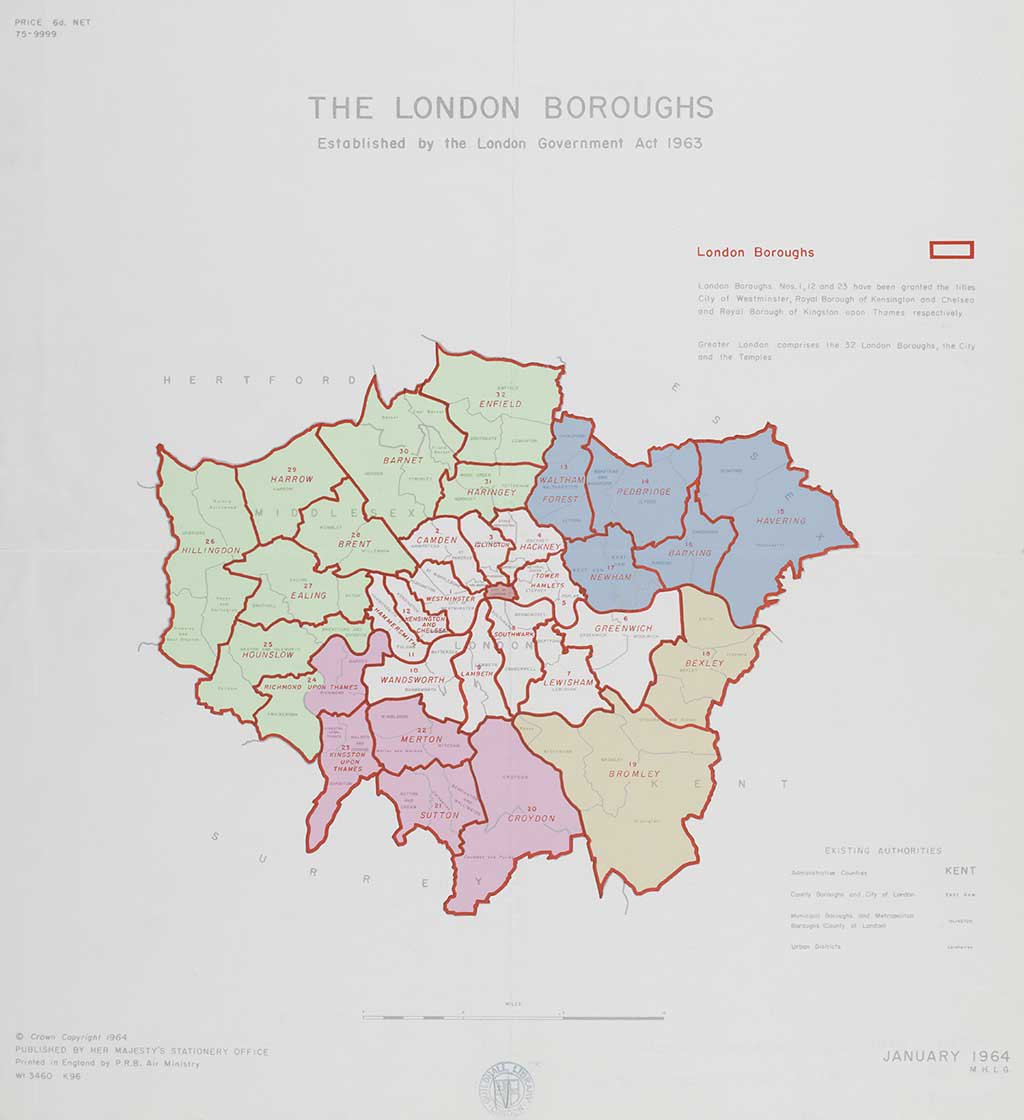
London Boroughs in 1964 (map)

Remains of Anglo-Saxon cemetery discovered in Lincolnshire
No mention in the article of DNA testing!

Retail decline, in maps: England and Wales lose 43m square metres of shop space
“Bricks to clicks” means more consumers are shopping online rather than in store meaning less tax revenue for local authorities.

Help the poor: Stop donating canned goods to food banks.
Last Saturday I walked past a parked bus and into the grocery store to be met by the offer of a paper bag for food donations. I ignored it. Such donations are a problem as they require sorting and may not be the items most in demand. Cash goes much further. Hand over $20, and the food bank will be able to buy $100 worth of most needed food, they’ll save on administrative costs and at income tax time you'll get back up to $6.

Nova Scotia Information and Privacy Commissioner - Naughty List
With gift suggestions.

And finally ...

08 December 2018

New from Findmypast

Cheshire is the focus of records added this week.

Cheshire Diocese of Chester Parish Baptisms 1538-1911
Over 35,000 new records covering the Widnes and Warrington areas have been added to the collection. These new additions cover the following parishes:
• Culcheth, New Church -1599 to 1928
• Hargrave, St Peter - 1883 to 1928
• Kelsall, St Philip - 1868 to 1928
• Warrington, All Saints - 1887 to 1896
• Warrington, St Barnabas - 1902 to 1923
• Warrington, St Paul - 1907 to 1920
• Widnes, St Mary - 1818 to 1917
• Widnes, St Paul - 1884 to 1928

Each record contains an image and a transcript of the original Church of England parish registers. The information listed will vary, but most records will list a combination of baptism date, birth date,place of birth, parish, parent's names and father's occupation.

Cheshire Diocese of Chester Parish Marriages 1538-1910
Over 14,000 new records covering 7 parishes have been added to the collection. These new additions cover:
• Culcheth, New Church – 1607 to 1928
• Hargrave, St Peter – 1841 to 1928
• Kelsall, St Philip – 1869 to 1928
• Warrington, St Barnabas – 1905 to 1928
• Warrington, St Paul – 1907 to 1928
• Widnes, St Mary – 1859 to 1907
• Widnes, St Paul – 1895 to 1925 Search these records

Each record contains an image and a transcript of the original Church of England parish registers. The information listed will vary, but most records will reveal the date of the marriage, the location of the marriage, the names of both the bride and groom, their occupations, father's name, father's occupation and witnesses.

Cheshire Diocese of Chester Parish Burials 1538-1911
Over 13,000 new records have been added to the collection covering:
• Culcheth, New Church - 1607 to 1928
• Kelsall, St Philip - 1868 to 1928
• Widnes, St Mary - 1858 to 1910

Each record contains an image and a transcript of the original Church of England parish registers. The information listed will vary, but most records will list a combination of age at death, death date, date of burial, place of burial, marital status and relative's names.

Also

British Army, Honourable Artillery Company

The collection includes 12 different sources:

• 1848-1914 Admission Registers
• 1908-1922 Membership Books, Honourable Artillery Company
• 1910-1915 Officers
• 1914-1919 1st Battalion Register
• 1914-1919 Record Cards
• 1914-1919 Regimental Number Registers
• 1914-1919 Papers & Photos
• 1915-1919 Membership Lists
• 1916-1919 2nd Battalion Rolls and Papers
• 1917-1918 Depot Register
• 1939-1945 Prisoners of War
• 1939-1945 Record Cards

Every record will include a digitised image of the original source and a transcript. The amount of information listed will vary depending on date and nature of the document.

Library and Archives Canada News

At an event at Library and Archives Canada on Wednesday afternoon it was revealed that the project to image the First World War service files cost about $20 million. A total of 622,290 files were processed, so about $32 per file. That's about a dollar a page, perhaps a bit less. Digitizing original paper records isn't cheap, especially the large format pages like pay sheets that have to be straightened and imaged individually.

The total was spread over four or five years, $4-5 per year. Will that level of commitment be continued? The statement was made the LAC's future will be increasingly online and that data mining will be supported. So far I'm told that the digitization priority is indigenous peoples records which will cater to a small yet important minority in Canada. Will there be anything for the rest of us to look forward to, in addition to the much overdue 1926 census and free access to the sixty million pages originating at LAC of canadiana.ca starting 1 January 2019?

On the margins of the meeting I was told by a usually reliable source that FamilySearch has made progress in machine reading handwriting and to expect product to become available sometime next year.


07 December 2018

TheGenealogist adds Newgate Prison Records

The following is a company news release.

TheGenealogist is adding to its Court and Criminal Records collection with the release of almost 150,000 entries for prisoners locked up in Newgate prison along with any alias they were known by as well as the names of their victims. Sourced from the HO 26 Newgate Prison Registers held by The National Archives, these documents were created over the years 1791 to 1849.

The Newgate Prison Registers give family history researchers details of ancestors who were imprisoned in the fearsome building that once stood next to the Old Bailey in the City of London. The records reveal the names of prisoners, offences the prisoner had been convicted for, the date of their trial and where they were tried. The records also give the name of the victims and any alias that the criminals may have used before.

Use the Newgate Prison Registers records to:
● Find ancestors guilty of crimes ranging from theft, highway robbery, libel and murder
● Discover the victims of crime
● Uncover some of the aliases used by criminal ancestors
● See descriptions of offenders with details of their height, eye colour and complexion
● Research records covering the period 1791 - 1849


Human Mortality Explorer

An interactive heatmap by Jonas Schöley shows mortality rates by age. Select data for various countries using the dropdown menu. You can also compare male and female populations and countries.

Mortality rates decrease steadily, especially in the younger ages. Spikes or abrupt color changes might indicate war or disease.

Comparing the UK and Canada it was interesting to note that mortality was lower in the UK when I was born and is now lower in Canada at my age. Good move!

While the content id informative labelling on the axes is horribly small and the domain does not adjust to the range of years available leaving a large blank area for nations without early data.

via Flowing Data

06 December 2018

Steve Fulton director at large of FGS

A news release from the Ontario Genealogical Society announces that Steve Fulton, UE, the President of the Society, has been elected to a three year term as a director at large of the Federation of Genealogical Societies.

AncestryDNA Update

Irish eyes are smiling. There's more detail in new AncestryDNA regions: now 16,000 reference samples defining 380 possible regions. 92 of the regions are in Ireland — 22 in Connacht and 36 in Munster. That's according to a Facebook post by ‎Mike Mulligan who used to be with AncestryDNA.

He gives the following explanation of how the process works.
 if you can imagine every DNA test at Ancestry as a star in the night sky. Now imagine the distances between stars is based on shared DNA (the more DNA shared, the closer the stars). Now 'zoom out' to see all the 'stars' in the sky and you will notice there are actually constellations or clusters of stars. With some clever science & genealogy, Ancestry is able to determine these clusters are associated with different parts of the world. These form the AncestryDNA sub-regions. The final part, about how whether the region shows up in your test is basically how close your star is to the cluster.
A friend wrote that while she is still 78% Irish/Scottish the genetic community is now Leinster matching her research.

There's no sub-division for my 34% Ireland and Scotland which comes with an error bar than goes as low as 2%! My Ireland and Scotland was 30% previously.

DNA from 10,000 year old chewing gums

Development of the ability to extract and analyse DNA from ancient materials continues to amaze. The preprint Ancient DNA from chewing gums connects material culture and genetics of Mesolithic hunter-gatherers in Scandinavia is another example. Note the article is not yet peer reviewed.

Human DNA was recovered from birch bark pitch mastics, chewing gums, from a site in western Sweden. Genome-wide data was from mastics representing three individuals, two females and one male. All were mitochondrial haplogroup U5a2d and two had a possible second degree relationship.

While chewing gum may lose its flavour on the bedpost over night it can conserve DNA for 10,000 years!

BIFHSGO December Meeting

BIFHSGO's semi-annual Great Moments in Genealogy sessions draw a crowd. This month should be no exception with these main event presentations starting at 10 am

Quakers in the Attic - Jamey Burr
A McKinlay in New Zealand  - Ken McKinlay
And her name was . . .  - Roberta (Bobby) Kay
Where were YOUR ancestors on December 2, 1854? - Duncan Monkhouse

Read more about the presentations and speakers here.

Instead of the normal 9 am educational session there will be the kick-off of a year of celebrations as BIFHSGO enters it's 25th year. Socialize with light refreshments and browse materials from Global Genealogy -- timely for Christmas gift-giving for the genealogist you're having a hard time thinking of something they might like (and maybe who won't give hints).

Saturday 8 December, 2018

The Chamber, Ben Franklin Place 101 Centrepointe Drive, Ottawa, Ontario


05 December 2018

Quebec Family History Society December Meeting and helpful resources

On Saturday, 8 December Kelley O’Rourke will speak on Protestant Genealogical Records in Quebec.  Protestant church records in Quebec begin in the 1760’s and come forward to quite recent times.

Kelley O’Rourke, QFHS Corporate & Recording Secretary, was a member of the St. Columban Irish, who was part of a team of volunteers who worked tirelessly to restore an Irish cemetery – containing many broken headstones - dating back to 1826.

The meeting is at 10:30 am at Briarwood Presbyterian Church Hall, 70 Beaconsfield Blvd, Beaconsfield.

QFHS President Gary Schroder tells me that their new Heritage Center at historic "Simon Fraser House" located at 153 Sainte Anne Street, Ste-Anne-de- Bellevue, Quebec is now fully operational. There was an open house for members two weeks ago and the official opening with dignitaries will be next spring which may coincide with the unveiling of a major new Montreal database Society volunteers are working on.

From the QFHS website I learned that the Heritage Centre is located within Pointe Claire which is also the location of  the National Field of Honour Cemetery containing the remains of about 22,000 ex-service men and women who served in the Canadian or Allied Forces.  Search from https://www.champdhonneurnational.ca/chn/veteranslocation/.

Not new, but helpful, is a 160 page list of settlements, hamlets, villages, towns, cities, etc. in Quebec that may have disappeared, changed names or have been amalgamated. Compiled by Jacques Gagné, one of the senior genealogists at QFHS, it is in PDF format and can be searched using Find from the Edit menu or with the short cut Ctrl + F.


Why those mystery DNA matches?

Many people have taken an AncestryDNA test to find out about their ethnic ancestry. It's easy to do and understand — and for some the results are surprising.

A couple of clicks away AncestryDNA gives a list of DNA cousins from those who also tested with the company. Unless you know a close relative was tested your best matches, like mine, will likely be 4th - 6th cousins. I have several, one at 53 cM with Confidence: Extremely High but no genealogical information and no response to emails. Six are in the same cousin range with Confidence: Very High but only two of those have information further back than parents and most have none.

That lack of supporting genealogical information shouldn't be surprising as now many more people have taken an AncestryDNA test than have explored their family history in any depth. Spitting in a tube is easier than doing the research in records even if those records are online.


Why are the DNA matches a mystery? Here's a scenario to explore in more detail.

Suppose you know all your 1st cousins their descendants and direct line ancestors. What you haven't done is research down from the 2nd and higher order great-grandparents — all you know in our traditional patrilineal naming system is their surnames which you can search for among your DNA matches. Because the number of people for any relationship down the direct line ancestors varies according to family size I explored three hypothetical scenarios in which all families had either two, three or four children who lived to have the same number of children.

Since you don't know the surname of a 2nd cousin unless the descent from the 2nd great grandparent is a direct male line, you can only recognize some of names of DNA matches, the percentage is in the table.

IC1C1R1C2R2C2C1R2C2R3C3C1R3C2R4C5C
Two Family1006363139865432
Three Family1007077139664332
Four Family1007585138564332

Even at the 2nd cousin level, where DNA is fairly reliable in identifying the relationship, you'll only recognize 13 per cent of the surnames. That decreases to 6 per cent for 3rd cousins and 2 per cent for 5th cousins.

The lesson should be to manage your expectations. A person in the Two Family enjoys 1024 5th cousins so there's a one in 51 chance a match will have the common ancestor's name. It's many times longer odds for larger family sizes.

That may not be something AncestryDNA wants to shout about but the fact is that recognizing matches involves a lot of painstaking research in records.

And is it worth it? How much satisfaction do you get from identifying fifth cousins —  unless maybe they're rich and famous!

04 December 2018

How many grandchildren?

It's not too difficult to find statistics on a woman's family size. The average number of children varies between cultures and has been decreasing with development. Table 1 in the article Family size as a social leveller for children in the second demographic transition shows that for women born around 1960 the median family size in Ireland was 2.26 and 1.98 in both England & Wales and the USA. The chart shows the percent of women having zero to four+ children in those jurisdictions.

With a few assumptions the number of grandchildren can be estimated. As the median number of children is about two, if we assumed that applied exactly at all generations the number of grandchildren would be four.

While the median may be two what is the impact of the distribution? Assuming there are no more than four children the extremes are zero, a woman who has no children can have no grandchildren, and 16 — four children having four children each.
The distribution of grandchildren for the Ireland, USA and England & Wales child distributions was calculated using a Monte Carlo simulation computed for over one million grandchild trials. As expected, with the exception of the women who have none, the peak of the distribution is four grandchildren although the distribution for Ireland has almost as many for six. Three and four plus child families in Ireland results in more grandchildren — ten grandchild families are twice as frequent in Ireland as in England & Wales or the USA.

The dips found at three and five grandchildren recur when the simulation is repeated.

It's unfortunate the published statistics do not break out the four+ category so the influence of infrequent large numbers of children in a family can be more clearly identified.


OGS December Webinar: Tina Beaird

Thursday, 6 December, 2018 – 7:00 p.m. ET
Presentation: Scotland’s Resources: There is more to Scottish research than ScotlandsPeople!

There are dozens of sites available to help you in your Scottish research once you are ready to move beyond Scotlandspeople. Sites like GENUKI, ScotlandsPlaces, SCAN and the National Library of Scotland are just a few of the free websites available to you from ‘across the pond.’

Presenter: Tina Beaird
Webinar descriptions and links to register are on the OGS website.

03 December 2018

Published collection temporarily unavailable in December - Library and Archives Canada

How would you feel if you'd planned a trip to LAC to consult a publication only to receive this at the last minute — or after you arrived? Posted on the day it came into effect. No advance notice!

Published collection temporarily unavailable in December - Library and Archives Canada

New GGI posts on YouTube

Since last Monday Maurice Gleeson has posted additional talks from the Genetic Genealogy Ireland session last October in Dublin.
Raising the Dead by Martin McDowell, about using the Lazarus tool on Gedmatch to paint ancestor's chromosomes, has received the most views. It's an advanced feature only useful for those who have test results for many identified relatives.


Next most popular is WATO - the latest tool for your atDNA by Andrew Millard. WATO is an abbreviation of What are the Odds and is designed to help refine when an unknown DNA match might lie in your family tree.


That presentation nicely complements Katherine Borges presentation Introducing DNA Painter mentioned in the previous post. It would be a good one to view beforehand if you could do with a gentler introduction.


DNA Cousins are more distant than they appear

When interpreting autosomal DNA statistics, one must be careful to distinguish between the distribution of shared DNA for a given relationship and; the distribution of relationships for given amounts of shared DNA.

Distribution of shared DNA for a known relationship


Data has been collected for the distribution of shared DNA by relationship by the Shared cM Project 3.0. These were crowdsourced by Blaine Bettinger. Most were likely from tests conducted on known relatives, others from a test that found a match which was subsequently identified. The figure is an example of the full distribution for first cousin once removed.

The table below summarizes the centimorgan (cM) results for a wider range of relationships. The more distant the relationship the less shared DNA, and also the fewer the data reported so there is greater sampling error. For relationships more distant than third cousin the Shared cM Project 3.0 obtained insufficient data for a full analysis. Perhaps there was a relationship but the amount shared was too small for it to be recognized. That also shows in the ratio of the average cM to the amount expected which increases for more distant relationships.

Relatives1C1C1R1C2R2C2C1R2C2R3C3C1R4C4C1R
1st percentile4861314747000000
Average (Expected)884 (850)440 (425)232 (213)232 (213)123 (106)75 (52)75 (53)49 (27)36 (13)29 (7)
99th percentile1761851517517317229229175122118

Distribution of relationships for given amounts of shared DNA
Extended families vary in size. In informal polls I've found anything from zero to over 80 first cousins. According to a study cited by ISOGG https://isogg.org/wiki/Cousin_statistics the average British person has an estimated 5 first cousins, 28 second cousins and 175 third cousins.

Even if the expected amount of shared DNA is relatively small more people with a more distant relationship will increase the chance of finding a match — you catch more fish if there are more fish to catch. The weighting depends on the number of people with the relationship, and that depends on whether families had few or many children who themselves went on to have few or many children, and how many survived.

Simple Scenarios
Take the situation of 200 cM of shared DNA where the only relatives with tests are of the same, one or two generations younger. This would be the case for a senior where those in the older generations are deceased while there are no people in the great-grandchildren’s and subsequent generations yet born. Assume every family in the tree consists of the same number of children and there are no half relationships, endogamy or other complicating factors. Everyone survives and has that same number of children.  The table shows the percent probabilities from the Shared cM Project and for families which uniformily have two and three children.

Percent Probability1C1C1R1C2R2C2C1R2C2R3C3C1R
Shared cM Project0234371944>0
Two Family012224319103
Three Family0119183412125

The peak probability shifts from second cousin to second cousin once removed. Probabilities of closer relationships decrease and of more distant relationships increase. The trend is larger for larger family size — unsurprising as, for instance, there are 64 third cousins in the Two Family, 432 in the Three Family.

Conclusions
Simple population scenarios show that the distribution of relationships for given amounts of shared DNA differs from the distribution of shared DNA for a known relationship as found in the Shared cM Project. Taking into account the population distribution moves probabilities to more distant relationships, more so for larger family size.
It’s important to appreciate the limitations of the analysis. The statistics in the Shared cM Project are less reliable where there are fewer data reported, for more distant relationships and in the tails of the distribution. Further, given the variability of individual extended families the scenarios in the study will only be broadly representative for any individual's result.
While it would be interesting to have a similar analysis for lesser amounts of shared DNA the statistics at present are too noisy and do not extend to sufficiently distant relationships to yield reliable results.


02 December 2018

BIFHSGO’s new vision, mission and value statements

The British Isles Family History Society of Greater Ottawa is entering its 25th year and the Board of Directors have pursued a strategic planning exercise.

The basis is BIFHSGO’s new vision, mission and value statements.

Vision  
To connect, educate, share and inspire.  

Mission 
The Mission of the British Isles Family History Society of Greater Ottawa is to encourage family history research, and its dissemination, by people with ancestry throughout the British Isles through 
·        connecting BIFHSGO members with each other and other like-minded persons;   
·        educating both beginning and more experienced family historians by promoting and demonstrating trusted research methods and best practices;  
·        sharing members’ knowledge readily with other researchers; and  
·        inspiring others through educational presentations and members’ published stories.    

Values 
As a society, we value 
·         stewardship: taking an active role in the society’s activities (volunteering, presenting, writing, etc.) to ensure BIFHSGO continues to thrive; 
·         innovation: seeking fresh ways to encourage and facilitate family history research, and its dissemination; 
·         excellence: achieving a high standard in family history research through adoption of best practices; 
·         sharing: sharing information and experience among members and with others; 
·         integrity: communicating with honesty, openness and transparency; and 
·         collaboration: conducting activities with cooperation and mutual respect.


In January The Board will begin reporting on the goals and actions identified to guide the society’s future.

Sunday Sundries

Miscellaneous items I found of interest during the week.

MyHeritage extends deadline for DNA transfers
The deadline for transferring raw autosomal DNA test results is now 15 December, extended from 1 December. While at it consider adding the results to Gedmatch. The more you fish the more likely a catch.

The Trade Cards Of Old London
From Spitalfields Life, a selection of cards you might find, rummaging through a drawer in the eighteenth century.

Climate Solutions: Is It Feasible to Remove Enough CO2 from the Air?
Progress in the technical community in carbon capture technologies. U. S. emissions of means 61 million tons of CO2 are going into reservoirs this year. That's somewhat less than one per cent of US emissions, but growing. It could be an important part of the climate solution.

Economies of ale
Since 2008, nearly a quarter of pubs in the UK have closed – but the turnover of the pub industry is holding up and employment is on the rise. What’s happening?

Backup Nag
Did you do your monthly backup yet?


Percy Gordon Turner, CWGC Beechwood

Private Percy Gordon Turner (402201) of the 1st Battalion, Canadian Infantry (Western Ontario Regiment) was born on 2 August 1891 in East Grinsted, son of Edward Thomas and Minnie (nee Earl) Turner. He is found as a cabinet maker in the 1911 census living with his father and step-mother in South Ealing, Middlesex.

He emigrated to Canada in April 1914 arriving in Halifax on the Tutonic having already secured a job in Hespeler, Ontario.

Enlisting in January 1915 he suffered a gun shot wound to the left arm at Ypres in June 1916 which resulted in paralysis below the wound. Hospitalized in England he was returned to Canada in January 1917.

Death was at St Luke's Hospital in Ottawa of meningitis on an unseasonably cold 2 December 1918.


01 December 2018

New this week on Findmypast

Britain, Marriage Licences
Fifteen English counties are represented including London, Lancashire, Suffolk, Exeter, Lincoln, Yorkshire, and more from as early as 1115. Marriage licenses will reveal intended spouse, father's name, and the intended marriage place. The collection consists of 536,267 records from a mixture of handwritten and typed record books from 1115 until 1906 provided by the College of Arms, Anguline Research Archives, and Gould Genealogy.

Marriage licences, first introduced in the 14th century, were obtained from the Church of England for a fee and with a sworn declaration that there were no legal impediments to the marriage. The licence waived the banns period necessary for a marriage to take place.

Scotland, Highland Free Church Birth & Baptism Index
Search this index of more than 30,000 baptism records from the Free Church of Scotland in Caithness, Cromarty-shire, Inverness-shire, Moray, Ross-shire, and Sutherland.
With each result, you will find a transcript of the vital facts that may include a combination of name, birth date, baptism date, location, parent's names, residence and occupation.

Leicestershire Registers & Records
Explore the history of Leicestershire with these publications in this collection are presented as PDFs:
History of Belvoir Castle, published 1841
History of The Belvoir Hunt, published 1899
Parish Registers of Muston, published 1908
Pedigree of Henry Wood Freeman of Leicester, published 1890
The Cream of Leicestershire - Eleven Seasons Skimming, published 1883
Gloucestershire Registers & Records
Search this collection of historical Gloucestershire publications dating back to the early 18th century:
Elkstone Its Manors, Church and Registers, Published 1919
History & Antiquities of Tewkesbury, Published 1790
Parish Registers of Westbury-On-Trym, Published 1912
Poor Book - Tithings of Westbury-On-Trym, Stoke Bishop & Shirehampton, Published 1910
Records of The Corporation of Gloucester, Published 1893
Britain, Directories & Almanacs
Over 400 additional images have been added to the collection of British Directories and Almanacs. The collection includes trade directories, county guides, almanacs and general directories spanning three centuries. The link published in the FMP announcement pointed to Motor Trade Directories for 1928, 1930 and 1936.

Internet Genealogy Dec 2018 - Jan 2019

Is Your Family Data Safe?
Tony Bandy looks at strategies for protecting your cloud-based data from intruders. How not to be victim of an online hack.

Railroad Retirement Board Records at Your Fingertips
Diane L. Richard looks at a great source for locating ancestors who weren’t included in the Social Security Program.

New York State of Mind
Sue Lisk suggests some key genealogical assets to consider in the Empire State. Sue's articles are a joy to read, but I was surprised there was no mention of the New York index records available because of the initiative www.reclaimtherecords.org/

Extant US Customs Records
Diane L. Richard suggests that researching customs records can be a great way to document your mariner ancestors. This article focuses on US Customs Records, though the bibliography shares international resources.

Asylums and Family History Research
Sue Lisk suggests resources to assist in locating ancestors committed to institutional care.

The Last Roll Call
David A. Norris makes a survey of the last veterans of US wars who survived 90 and more years after the event offering a unique perspective of the passing of history

Drawing Attention to Your Work!
David A. Norris looks at the use of the manicule through the centuries.

Indigenous Settlers: Your Métis Genealogy Online
Tereasa Maillie looks at resources to assist you on your journey to find your Métis ancestors. A useful overview for those starting out researching Métis genealogy.

REVIEW: Airtable
Lisa A. Alzo reviews a new kind of information database for tracking genealogy research and other projects. There are several other information databases available. It isn't evident why Airtable would be preferable to the others for genealogy.

Discover Your Rural Roots!
Carol Richey looks at Advantage Preservation and their growing collection of digitized small town and rural newspapers, more than 55 million historical newspaper pages in 39 states with  focus around the company location in Cedar Rapids, Iowa, and Northern States.

NetNotes
Internet Genealogy looks at websites that are sure to be of interest.

Back Page
Dave Obee says don’t put off DNA testing to another day. Spit as a lasting gift, one that will help family for many years to come.

30 November 2018

British Newspaper Archives additions for November

The British Newspaper Archive now has a total of 28,935,426 pages online (28,391,968 last month.)  23 papers had pages added in the past month including 8 titles new to the site. Once again Ireland gets favoured treatment including, for friends with County Wexford interest, issues of the Enniscorthy Guardian for 1889, 1891-1904, 1916, 1921.

Major additions, titles with more than 10,000 pages added during the month were.

TITLEDATE RANGE

Kerryman
30972 pages
1904-1912, 1988-1990, 1994-2000, 2002
Belfast Telegraph
59310 pages
1935, 1963-1972
Sunday Tribune
55746 pages
1993-2003, 2005
Heywood Advertiser
19476 pages
1856-1862, 1864, 1868-1874, 1876, 1878, 1880-1884, 1886-1888, 1890, 1892-1893, 1895-1896, 1898-1910, 1912-1920, 1974
The Bioscope
57532 pages
1909, 1911-1918, 1923
Western Mail
27504 pages
1927-1932
Surrey Advertiser
20892 pages
1875, 1878-1888, 1890-1894, 1896-1897, 1899-1903, 1912-1913, 1929, 1931-1933
Wexford People
41450 pages
1994-1996, 1998-2004
Liverpool Echo
28870 pages
1881-1883, 1885-1886, 1888, 1891, 1899-1905, 1961
New Ross Standard
62836 pages
1889-1910, 1915, 1988-2001
Drogheda Independent
11232 pages
1999-2002
Lloyd's List
17478 pages
1898-1900, 1905
Perthshire Advertiser
42234 pages
1988-1996
Lichfield Mercury
47110 pages
1967, 1969-1970, 1974-1979, 1981-1982, 1993-1999