Ruth Blair is the Toronto Branch featured speaker on the topic "A Brickwall Chisel - The Cluster Research Project" on Monday evening in the Burgundy Room, North York Memorial Community Hall, 5110 Yonge Street Toronto
Also on the agenda a mini-presentation by Elayne Lockhart, "My DNA - the Genealogical Gift that Keeps on Giving".
That's Monday, 22 April, 19:30 – 21:30. Details at: www.torontofamilyhistory.org/meetings.html
20 April 2013
Toronto Branch OGS April Meeting

Ontario Local and Family History at Canadiana.ca
Canadiana.org, which aims to preserve Canada's print history and make it accessible online, has posted a collection titled Ontario Local and Family History. It provides and enhances access to materials that "chronicle the rich historical texture of settlement, industry, culture and local government in Upper Canada and early Ontario."
There's a blog post at http://www.canadiana.ca/en/ON-local-history which gives an overview of the 688 documents - anything in the whole collection with Ontario as a subject term. You can browse all titles and in many cases read a preview of the document, or search the digitized text.
It's a diverse grouping, voters lists, government reports, atlases and directories, recollections of settler's experiences, sermons and speeches, literature, copies of periodicals including The Canadian Illustrated News and, for those with Barnardo home child interest, a few copies of Ups and Downs from the late 19th and early 20th centuries, and more.
An individual annual subscription to Canadiana.ca is $100. A few public libraries and universities are subscribers and it can be accessed for free on site at Library and Archives Canada, 395 Wellington Street in Ottawa.
19 April 2013
East End Poor Law Removal and Settlement Records New at Ancestry
Selected Poor Law Removal and Settlement Records, 1828-1930, comprises 218,139 records from the unions of London's East End. The coverage is sporadic:
Bethnal Green: Orders of Removal for 1837-1853, 1855-1865; Settlement Papers for 1889-1894.
Hackney: Orders of Removal for 1867-1868, 1900, 1903-1907, 1913-1914, 1920-1921; Settlement Papers 1850-1870, 1892-1915.
Poplar: Orders of Removal for 1874-1892; Settlement Papers
Shoreditch: 1885-1886, 1889-1890, 1893-1894, 1904; Settlement Papers 1874-1892.
Stepney: Orders of Removal for 1826-1836; no Settlement Papers
These records are digitized from originals at the London Metropolitan Archives. Advice from Ancestry is:
"Details included in these records vary widely, depending on the document. An order of removal may contain a name, age, current parish, and parish being removed to. A settlement register may note number of children and marital status. Documents from inquiries and examinations can be even more extensive. In the end, you may be able to uncover some of the following information: name; age; parish; date; places and dates of residence (both current and former); spouse and marriage details; children’s names, birth dates, and birthplace; profession; other family members’ names and residences; summary of the situation and grounds for settlement or removal.
Some of the cases include multiple documents, so be sure to use the arrow keys to browse surrounding pages to make sure you find all the records for your ancestor."
18 April 2013
Family Tree DNA Offers DNA Day Special
Bennett Greenspan, President of Family Tree DNA (FTDNA) announces that in celebration of DNA Day and the move of their full sequence mitochondrial scan to Next Generation Sequencing, FTDNA is offering their lowest price ever for upgrades to mtDNA Full Sequences.
For a limited time, previous tests of HVR1 or HVR1+2 will be eligible to upgrade to the Full Sequence for $129.
Tests of the Full Mitochondrial Sequence, with no previous mitochondrial test, are $189
With the new technology the timeframe for results to be completed should now normally be within 5-6 weeks, weeks shorter than previously depending on volume.
1921 Census of Canada News: One Step Closer
Approaching June 2, and the official transfer of custody of the 1921 census of Canada to Library and Archives Canada, we're all anxiously awaiting news of how and when it will be made publicly available.
A reliable LAC source informs me that "the 1921 census was microfilmed and later digitized as part of various research projects. This entails that the digitization portion of releasing the 1921 census over the Internet is already done."
While delay in geographical indexing and mounting on the LAC website may still occur having digitization already done means prospects for early access are now much improved. Once it's available there should be no impediment to organizations of all types undertaking name indexing.
Kingston Branch OGS April Meeting
On Saturday 20 April at 10 am Kingston Branch OGS will meet when the speaker will be Joanne Stanbridge on "The Fair Fugitive: Harriet Powel's Life and Legacy." The venue is the Wilson Room, Kingston Frontenac Public Library, 130 Johnson St. in Kingston.
17 April 2013
Ancestry Adds London, England, Overseer Returns, 1863-1894
The 294,388 records in this collection from the London Metropolitan Archives are described as overseer returns. In a British genealogical context we usually think of an overseer as an official who administered poor relief - Overseer of the Poor.
In this case it's overseers’ returns of electors, listing people who have claimed the right to vote in a parish.
The returns, for about 160 parishes, are bare bones: name, address. The printed documents, with annotations, are arranged alphabetically by name (last, first) in annual bundles by polling district and only list those, men, claiming the right to vote in this period before universal suffrage.
Checking on people I know to have been in London the collection, as name indexed, is incomplete. If an ancestor is included you may well find residence between censuses.
Deceasedonline.com add Greater Manchester (Trafford) Records
Burial and cremation records for Trafford Council's Hale (aka Altrincham) Cemetery, opened in December 1894, and Stretford Cemetery, opened in February 1885, are now available at www.deceasedonline.com
The records comprise scans of burial registers, grave details and cemetery maps indicating section locations of graves. There are 24,056 burials for Hale Cemetery and 34,108 burials recorded for Stretford Cemetery, both up to 1999.
Records for the remaining three cemeteries and Altrincham Crematorium in Trafford will be available on Deceased Online over the next few weeks.
Trafford, the second council area within Greater Manchester to place records with Deceased Online, bordered by Salford to the north and west, Manchester City to the east, Warrington the southwest and Cheshire East to the south is home to the Manchester United football club.
The records comprise scans of burial registers, grave details and cemetery maps indicating section locations of graves. There are 24,056 burials for Hale Cemetery and 34,108 burials recorded for Stretford Cemetery, both up to 1999.
Records for the remaining three cemeteries and Altrincham Crematorium in Trafford will be available on Deceased Online over the next few weeks.
Trafford, the second council area within Greater Manchester to place records with Deceased Online, bordered by Salford to the north and west, Manchester City to the east, Warrington the southwest and Cheshire East to the south is home to the Manchester United football club.
Growth and Competition in Autosomal Genetic Genealogy
Family Tree DNA opened their autosomal DNA test (Family Finder) service to all in May 2010, preceded by a trial period with existing customers. Based on the matches with my DNA the clientele grew by 33% from 2010 to 2011, and 50% the following year.
Now, in the first three months of 2013, the growth is just 25% over the same period in 2012. This is based on my small sample.
This likely reflects the price differential.
23andMe reduced their price last December, from $299 to $99 for what is arguably a superior product in several respects.
There's new competition from AncestryDNA, also now priced at $99.
Meanwhile FTDNA has maintained a regular price of $289, unchanged from when the service launched in 2010. Even the sale price of late last year is now significantly above the competition.
Ottawa Branch OGS April Meeting
Next Saturday, 20 April will be a busy one at the Ottawa City Archives, 100 Tallwood Drive, off Woodroffe Avenue.
The Scottish interest group meeting gets underway at 10 am in Room 226 with a silent auction of Scottish and some other books.
At 1 pm folks begin to gather on the ground floor for the 1:30 start of proceedings for the Ottawa Branch OGS monthly meeting featuring a presentation Clara's Rib by Anne Raina.
Clara's Rib is the true story of a young girl growing up in a tuberculosis hospital. Clara entered the Royal Ottawa Sanatorium in 1939 when she was 12 and was discharged for the final time in 1952, just after turning 26 years of age. Anne will also talk about how she came to an understanding of this disease that ravaged her family.More about the presentation, and how members can attend remotely, at http://ogsottawa.on.ca/
Immediately following, nominally at 3:15 pm, there's a meeting of the Computer Special Interest Group.
16 April 2013
Major Update to FamilySearch.org
It's been no secret that FamilySearch, the family history arm of The Church of Jesus Christ of Latter-day Saints, ranked 4,349 among all website on Alexa, was imminently going to roll out an upgrade to the site. It's here and as the second ranked family history site, below ancestry.com, above myheritage.com, this is major.
The announcement of the update points out "significant new enhancements to its web services that allow visitors to collaboratively build their family tree online, preserve and share precious family photos and stories, and receive personal research assistance-all for free."
It couldn't be clearer where the emphasis is being placed:

The update "seeks to broaden family history’s appeal to those who don’t consider themselves researchers or genealogists, especially youth who are masters of digital realms such as social media."
It's simple to enter your data on people in your family tree, add photographs and stories and receive hints to filling in the gaps. You can display in various formats and, as promoting collaboration is a major objective, sharing via links to major social networks.
Although its not as prominent as previously you can still find the information the LDS have recorded in the field, and surface abstracted and indexed data digitized by tens if not hundreds of thousands of volunteers; and that continues to grow. Clicking on Family Records then Start Searching brings you to:

an updated version of a page familiar to regular users. Scrolling down the page brings you to a place to browse and select from the various collections and search that specific collection, such as a particular census where indexed.
The ribbon at the top gives access to user submitted genealogies, such as the Ancestral File and the Pedigree Resource File; the FamilySearch (previously Family History Library) Catalog and; a collection of more than 40,000 digitized genealogy and family history publications.
From the home page also gives access to the volunteer indexing projects.
I found the change quite easy to navigate but didn't delve into the social side. Maybe later!
Young Seamen Found in Aberystwyth Shipping Records?
The National Library of Wales has made available Aberystwyth Shipping Records containing crew accounts and agreements (generally known as crew lists) and logbooks, together with associated papers and correspondence, 1856-1914, for 544 merchant vessels registered at the port of Aberystwyth, Cardiganshire.
There's a blog post from the NLW about the records with information that:
Whilst children from the age of 12 onwards are often listed as crew members, Evan Davies, 9 years old, from Llansanffraid, Cardiganshire, included in 1857 as a crew member on board the vessel Ellen (‘this being his first ship’), is surely the youngest crew member listed among the records.By coincidence this came to me on the same day as as an email from findmy past.co.uk about the company collection of merchant mariner records containing a record for 13 year-old deck boy Eric Abbott, and asking – could he be the youngest ever Merchant Navy Seaman?
Reading the NLW blog from Ottawa one can't help but reflect on how dynamic the organization seems compared to LAC, witness the most recent items of LAC News:
Major interruption of LAC computing services April 20, 2013
Launch of an improved order form for reproductions
Interruption of LAC Reproductions Services April 13, 2013
Irish Anglican Record Project
Registers of baptism, marriage and burial from a few Church of Ireland parishes are now available as transcriptions for free. They are:
Delgany (Glendalough) – Records 1666– 900
Bunclody (Newtownbarry) Union (Ferns), comprising the four churches of Bunclody/Newtownbarry, Kilrush, Kidavin/Barragh and Clonegal/Moyacombe.
Templeshanbo (Ferns) – Marriages 1800–1814
Fermoy Garrison church (Cloyne) – Baptisms 1920–22
St Peter’s Church, Kilgarvan (Ardfert & Aghadoe) – Baptisms 1811–50; Marriages 1812–1947; Burials 1819–50, 1878–1960
Background to this project, including information on other transcriptions not online, is at http://ireland.anglican.org/about/153
Thanks to Anne Sterling for the tip.
15 April 2013
TNA Podcast: Hearth Tax
This talk given on March 21st by Paul Carlyle, a member of TNA's Medieval and Early Modern Team, is billed as an introduction. It covers most things a family historian looking to make informed use of the hearth tax records from the latter half of the 17th century would want to know.
BCGS 2013 Seminar Features Wright and Anderson
Following their appearance at what is shaping up to be a sold-out event in Courtney, BC, next Saturday Glenn Wright & Lesley Ancestry Anderson will be wending their way, via Campbell River on Tuesday evening, Nanaimo and a research stop in Victoria, to Burnaby the following Saturday 27 April.
The event, organized by the British Columbia Genealogical Society, will see historian and former military archivist Glenn Wright presenting:
The British Army in Canada 1750-1871Canadians at War - 1885 Rebellion, South African 1899-1902, First & Second World Wars
Glenn and Lesley will be teaming up for a presentation on:
Pre 1865 Immigration
Lesley's solo contribution is:
What’s new at Ancestry?
Glenn tells me it's some years since he's been to BC so don't miss the opportunity to benefit from his experience, and Lesley's insider knowledge of Ancestry. There's more information at http://www.bcgs.ca/?page_id=2511
UPDATE: To Anonymous who suggests in a comment that Anderson and Wright sounds better than Wright and Anderson in the title; yes, it is the more conventional alphabetical order. In this case in Burnaby, Wright is giving two talks, Anderson one, and one is co-presented. Those of us with surnames toward the end of the alphabet get accustomed to second billing, but why should we forever be subject to alphabetic discrimination?
UPDATE: To Anonymous who suggests in a comment that Anderson and Wright sounds better than Wright and Anderson in the title; yes, it is the more conventional alphabetical order. In this case in Burnaby, Wright is giving two talks, Anderson one, and one is co-presented. Those of us with surnames toward the end of the alphabet get accustomed to second billing, but why should we forever be subject to alphabetic discrimination?
Lucille Campey Tackles Irish Emigration to Canada
A note from Geoff Campey informs that Lucille Campey has recently signed a contract with Dundurn Press of Toronto to write three books on Irish emigration to Canada. The scope will be similar to her three books on English emigration; the first dealing with Atlantic Canada, the second covering Ontario and Quebec and the final book dealing with emigration to the Prairies and B.C. while also considering the overall story of Irish emigration. The books are scheduled to be published in 2016, 2018 and 2020 respectively.
Lucille is currently writing her third book in the English series: Ignored but not forgotten: Canada's English Immigrants scheduled to be published in August, 2014, also by Dundurn.
MAPCO Update
Stimulated by Saturday's BIFHSGO presentation I went to revisit MAPCO, an Australian site that includes digitized old maps. Last month saw the addition of a new map after a year-long hiatus, a Map of Ireland 1838 described as a highly detailed, high resolution scan. Topographic shading conveys a vivid picture of the terrain.
If you haven't visited MAPCO check it out, especially for the 73 high quality London maps and views from the 2nd to the early 20th century and the featured 1868 map by Edward Weller at nearly 10 inches to the mile.
Perth Historical Society Meeting: April 17, 2013
Our Historic Mills: An Illustrated Tour of the Mills & Sites of the Area, is the topic for the April 17 meeting of the Perth Historical Society, a photographic tour of the area historic mills and former mill sites, touching on many sites not generally known to the public.
"The opening of Lanark County in the early 1800s triggered the construction of dozens of mills throughout the settled area, harnessing the water power of our local streams. A recent paper lists over 40 area mill sites along the Tay, Fall, Clyde and Mississippi Rivers. The mills sawed lumber and shingles, de-barked logs, ground grain and minerals, carded and spun wool, and, later, even produced power, for the newly-electrified Town of Perth. Interwoven with many of the early mills are the names of prominent area families – Thom, Haggart, Caldwell, Ritchey, Adams, and Playfair, amongst others.
Although some mills operated into the mid-1900s, most had long since disappeared. However, several are still with us, maintained as reminders of the proud tradition, as the Code Mill in Perth - or standing as ghostly ruins - the Ritchie Mill of Tay Valley Township. The remnants of others may still be found along the edge of streams, such as in early, industrialised Port Elmsley, where they are gradually giving up their secrets and stories to local researchers.
This illustrated session will present these area mills and mill sites, some of their little-known stories and the local personalities who owned them. The presentation will be based on both early and present-day photos of the mills and sites, including some details of those mills still standing, thanks to the Lanark County Camera Club.
Presenter, David Taylor of Glen Tay, has been documenting area mills since 2005, when a list of candidate mills was required for a photo-shoot by the Lanark Camera Club. His interest arises from a combination of career in the wood products industry and a six-decades passion for history and the genealogies of several area families. He is a member of the Perth Historical Society Committee and Tay Valley Township’s 200 Anniversary Working Group.
This evening will be capped with an Internet presentation on the new interactive digital map that Tay Valley Township has produced to display, and guide visitors to, the township’s historical and cultural sites http://tayvalleytwp.ca/interactive-map/."
The meeting are open to the public at 7:30 pm at the Perth Museum, at 11 Gore Street E. in Perth. (“Toonie Fee”). For further information, call Ellen Dean (613-264 8362) or David Taylor (613-264 0094).
14 April 2013
WDYTYA? Live Speaker Handouts
The Society of Genealogists has posted a selection of handouts prepared by speakers at February's Who Do Think You Are? Live. There are 18 of them available as PDFs, some images of slides, some resource lists.
The resource list handout Glenn Wright and I prepared to support our presentation Researching English Emigrants to Canada and their Descendants is not included, it was previously posted here.
Stephen Fry on Language
Does anyone know of an example of the use of kinetic typography in a family history context?
James F S Thomson on Maps
Saturday's BIFHSGO meeting saw another large attendance, despite the weather, to hear Darryl Kennedy on Heraldry as a warm up to James F S Thomson.
Courtesy of via Rail, he had made it through an April storm to present Maps and Mapping for the Twenty-First Century Genealogist, a condensed version of an eight-hour course previously given for the Toronto Branch of OGS.
There was a lot crammed into a one hour presentation with significant sections dedicated to Scottish and Irish map resources. Those are of less interest for my own family history, which is just as well as the information came rather fast.
For England he highlighted the English Jurisdictions 1851 maps from Family Search, and a subscription only website London Low Life described as "an extraordinary digital collection bringing to life the teeming streets of Victorian London, and inviting students and scholars to explore the gin palaces, brothels and East End slums of the nineteenth century’s greatest city." It may be available through community access from a local university. James also kindly mentioned my own Google Map with London cemetery pins.
A PDF handout with links for the presentation resources will be placed in the member only section of the Society website.
QFHS: Celebrating Our English Roots Day
Here's an announcement from the Quebec Family History Society.
Wednesday, April 17
Celebrating Our English Roots Day
1:30 pm to 4:00 pm - QFHS Heritage Centre and Library, 173 Cartier Avenue, Pointe-Claire.
Join us for this month's "Celebrating Our Roots Days," our theme is England! Drop by anytime during the afternoon for a cuppa tea, coffee, sweets and a "chin wag" about England and our ancestors who came from there.
Come browse the display of books from our English collection. If you are new to genealogy, talk to our members about how to start researching your family history.
Bring a coffee mug, a friend, your own favourite books and resources on Ireland that have helped you in your research, or just bring yourself.
Open to our members and the public. Admission is free. Dress informal.
Visit http://www.qfhs.ca/events.php
13 April 2013
Imperial War Museums Media
There's historic media available online from the UK Imperial War Museums site at http://www.iwm.org.uk/. Search the collection at www.iwm.org.uk/collections/search then filter the results by media to find images, audio and video. Video includes silent films from WW1 and WW2 propaganda. A search for Canada found many items.
Alberta Genealogical Society Conference 2013
Albertans, it's not too late. Dave Obee's session on Sunday, F-1,Volhynia? Galicia?, is now full but there are lots of other presentations to enjoy at the Alberta Genealogical Society 2013 Conference, April 19th (pre-registration/research), 20th & 21st (Conference), which marks the 40th Anniversary of the Society.
Check out the program for yourself at http://abgensoc.ca , see updates at http://agsconference2013.blogspot.ca or email Shannon & Shirley agsconference2013@shaw.ca.
Albertans have a reputation for knowing how to have a good time, so saddle up and head for an informative and enjoyable time at The Chateau Louis Conference Centre in Edmonton.
12 April 2013
Additional Kent Parish Records at FindMyPast
Added to the Kent parish records mentioned here previously, 600,000 records from 1538-2006.
Baptisms: 498,176 records from about 100 parishes (PDF)
Banns: 10,121 records from nearly 50 parishes (PDF)
Marriages: 172,371 records from nearly 130 parishes (PDF)
Burials: 354,749 records from about 90 parishes (PDF)
Failure to Disclose at LAC
The Bibliocracy blog outs Library and Archives Canada with a revelation that within LAC "all of the management positions described in the “Statement of Merit” used to be classified as “LS” (Library Science); they are now, as the document shows, classified as “EC” (Economics and Social Science)."
Bibliocracy reports that those reclassifications in early 2012 should have been reported on the LAC website. They were and are not.
Could it be LAC management wants to hide that they no longer require library qualifications for those managing library activities? Perhaps the Librarian and Archivist, an economist by training, sees it as more important to have people who speak his disciplinary language than to have managers who know much about their area of responsibility.
Read the Bibliocracy item at http://goo.gl/tIzkF
Read the Bibliocracy item at http://goo.gl/tIzkF
Cousins, Surprise?
Ancestry.ca has revealed that Justin Trudeau and Thomas Mulcair are cousins. Read all about it in this article at Global Genealogy. They are ninth cousins which means they have a pair of eight times great-grandparents in common.
We all have 1024 eight times great-grandparents. If each of those couples had three children, who each lived to have three children, and so on to the present generation, then each of the original 512 couples would have 19,683 eighth great-grandchildren. That's a total of over 10 million ninth cousins.
Not all families were that large. Pierre Trudeau was one of three siblings and had three sons, and a daughter out of wedlock. Many Quebec families were larger. Thomas Mulcair came from a family of ten children.
With four children at each generation there would be more than one hundred and thirty million ninth cousins.
Compare that to the current Quebec population of eight million.
A few smaller families,deaths, migration and cousin marriages accounts for the discrepancy. I'd be surprised if Trudeau and Mulcair were not more closely related than ninth cousin through lines not yet explored. If you know of a closer connection please post a comment.
50 Days To Go
Yes, day 50 in the countdown to the day when custody of the 1921 Canadian census passes from Statistics Canada to Library and Archives Canada.
11 April 2013
Obfuscation From LAC
The Canadian Library Association (CLA) is losing patience with Library and Archives Canada management:
"CLA has been genuinely striving to engage with LAC management, to understand the changes taking place at the institution, and to provide constructive feedback on behalf of our members, through both direct communication and participation in the Pan-Canadian Documentary Heritage Network and its affiliated Round Table groups. We are discouraged that our attempts have been repeatedly met with ambiguous responses and a lack of clear direction, rather than specific, concrete answers to specific questions."
That's an extract from the latest letter from the CLA in an exchange available from their advocacy page. CLA seems now to be getting the message the archivists got last year which resulted in them withdrawing from the sham of a consultation network.
More Free National Library Week Resources
ProQuest-National Library Week 2013 Databases
Free Access To the Following Resources:
- eBooks: ebrary’s Public Library Complete Login: ebraryPassword: nlw13trial
- eBooks: ebrary’s Schools and Educators Complete Login: ebraryPassword: nlw13trial
Learn More and Access Other ProQuest NLW 2013 Freebies
via INFOdocket
National Library Week
To celebrate National Library Week next week (April 14-20) Oxford University Press is offering free online access to the Oxford English Dictionary (OED) and Oxford Reference in North and South America.
Free access will be through a username and password announced on the OUPblog on 14 April. Everyone will have access through the same login, which will last until the end of the week.
via Infodocket
BIFHSGO April Meeting
Saturday, April 13, 2013
9:00-9:30 Before BIFHSGO Educational Talk
How you doing Harold? Conceptions and Misconceptions of Heraldry for Genealogists by Darrel Kennedy
9:15-10:00 am Discovery Tables - Discover Your Library with Marlene Lascelle
10:00-11:30 Monthly Meeting Speaker
Maps and Mapping for the Twenty-First Century Genealogist
by James F.S. Thomson
Genealogists know that maps can contribute to family history research, analysis and writing in different and important ways. The current generation of genealogists, however, has no need to feel limited to availing themselves of static maps created by others. There are exciting developments for us on two fronts. Remarkable new online sites demonstrate or permit the integration of maps and other data, and even quite simple mapping and other tools enable the user to create unique maps and plans, tailored to the needs of the compiler and incorporating data derived from different sources. In this presentation, James will visit some of these sites, and show how such tools can be used creatively and effectively in genealogical projects. A Q&A with James tells us how maps have enhanced his family story.
About the Speaker
James F.S. Thomson has designed and taught over a dozen very popular advanced and expert-level family history courses co-sponsored by Toronto Branch OGS and the Toronto Public Library. For these courses and in his articles and presentations at conferences and workshops, as well as in his capacity as a University of Toronto School of Continuing Studies instructor, James draws on over thirty years of experience of family and local history research.
Location: Library and Archives Canada, 395 Wellington Street, Ottawa, Ontario, Canada.
Come early and browse our Discovery Tables. Meet with family history experts. Free parking is available in the lots east of the building only on Saturdays. Do not use the lot west of the building.
10 April 2013
Diefenbunker Exhibit Launch
Voices of our Past: Top Secret Stories from the Employees of CFS Carp is a new exhibit running from April 11to June 11.
It features oral histories of employees who worked at the Diefenbunker during its 33 year operation. This interactive exhibition features interviews and stories on daily life in the Diefenbunker, the former Canadian Forces Station Carp, and the atmosphere of the Cold War Era, but will also showcase special digital artifacts, including photos of the interviewees, period images of the Bunker and objects from our collection, which will truly serve to complete the story of the Diefenbunker.
There is a launch event on Thursday, April 11, 2013, 7PM to 9PM at the Diefenbunker, Canada's Cold War Museum. There is no cost but RSVP to Heather Montgomery at 613-839-0007 or email education@diefenbunker.ca.
Birth, Marriage and Death Indexes for Belleville ON
At the website for the Belleville Public Library now find lists of Births 1848-1899, Marriages 1895-2012 and Deaths 1848-2012 indexed from the Belleville Intelligencer. Don't forget you can search each list using CNTL-F, CMD-F for Mac.
This online facility is made possible by cooperation of the Library and Belleville Community Archives with provincial funding.
via a tweet by Ken McKinlay
09 April 2013
genebooks

To kick off the service they are offering free the Australian Handbook 1900 covering the whole Australian region with histories and maps of each colony as seen from the perspective of 1900, extensive almanac-type details, timetables, statistics etc.. There are a handful of other ebooks a mix of the Australia-focused and guides for family history research in Germany, Ireland and Scotland from their Unlock the Past partner. Be aware that prices are quoted in dollars and the Australian dollar is worth a bit more than the Canadian.
The service is a division of Gould Genealogy & History, which was established in Australia in 1976, and among many other initiatives, through Archive Digital Books Australasia, is a partner in the international Archive CD Books initiative. This venture into ebooks is another example of the company adapting to changing times.
More eBooks Coming to Canadian Public Libraries
Do you have an eReader? Increasingly I see people using eReaders on a bus or aircraft where they would previously have been reading a paperback.
However, at present the selection of eBooks available through Canadian public libraries has been quite limited, and the download procedure through the Overdrive system a klutzy multi-stage process.
Canadian public libraries, and their patrons are frustrated by the lack of flexibility in the present system. Why can't downloading an eBook from the library be as easy as finding it in the catalog and clicking a button, as easy as purchasing an eBook for the Kindle?
Canadian publishers have a large backlist of books already in eFormat but not made available through the existing system. Whether backlist or new, Canadian titles are not a priority for the US-based Overdrive. So Canadian libraries, and patrons, suffer from lack of access.
Now Canadian public libraries and publishers are working together to change that in an initiative to reach the pilot project stage later this year, likely starting this fall, in Hamilton, Ottawa, Toronto and Vancouver.
There's a good 42 minute video of a conference presentation The State of E-Lending in Canada for those who want to dig in more deeply.
08 April 2013
Service at LAC
On Saturday afternoon, during his presentation on home children research at the Ottawa Public Library downtown, BIFHSGO Hall of Fame member John Sayers commented on some problems that have developed in recent years for researchers at Library and Archives Canada.
His greatest concern was lack of maintenance of many of the microfilm readers, those without a digital interface. Either the focus is not right, or the carriages are ceased, or they won't operate at all. There used to be a maintenance contract with work at least three times a week, probably every day. The last two years there's no such maintenance apparent.
The new machines are very good, but the staff encourage that they only be used by people using a memory stick. If you want a hard copy they point you to the older machines which provide very poor image copies. Although you can access microfilms at any time you can't make a copy in the unstaffed hours. They seem to be discouraging people who don't have a memory stick, or don't use computers from being users.
Hours of access in the genealogy section have been decreased; they now open at 10 am rather than 9 am and close at 3 pm rather than 4 pm. It used to be you could print from the computers in the 3rd floor genealogy area at any time of the day or night. That had to be curtailed as it was being abused so now you can only make copies for those 5 hours a day. Further, you can only access the FindMyPast database during those hours as access times out after a period of inactivity and can only be reactivated by a staff member.
Every microfilm in the public access cabinets that has a green dot on the box is supposed to have been digitized. For ships passenger lists there are many for the 1920s that are not viewable online even though the green dot on the case suggests they should be.
Specifically for home children there are many significant files not digitized. A large collection of correspondence has not been digitized and LAC asks that they not be indexed until they have been -- who knows when that will be! Information relating to the magazine of the Barnardos organization in Toronto, called Ups and Downs, Middlemore Homes, Fagen, Chorlton and Leeds groups are all with LAC
Overall John Sayers comments that he still enjoys working at LAC, especially because of the front-line people who do their best under the circumstances. The situation with the poorly or unmaintained machines is the most aggravating aspect.
Historical Maps of Toronto
Simple and free access to a selection of Historical Maps of Toronto has recently become available. They date from 1787 to 1902 with links to others. I suggest starting at this ActiveHistory blog post.
TNA Completes Digitization of WW1 War Diaries
WW1 War Diaries kept at various organizational levels are useful to paint the larger picture of a soldier's war. The UK diaries have been the subject of a TNA digitization project, funded from the surplus from commercial cooperative projects, not itself attractive enough to find a commercial partner. The diaries are not yet online.
Here's TNA's announcement:
For the past few months we have been digitising part of the WO 95 record series, which consists of unit war diaries from the First World War. The series is one of the most requested in our reading rooms in Kew, and digitising these diaries will enable us to publish them online, making them more accessible for the First World War centenary.
Digitisation has now been completed and all diaries from the WO 95 series are now back in circulation. The digitised diaries will be launched online as soon as it is feasible before the centenary period begins, but at present we are unable to provide specific details - please keep watching our website for updates.
This is one of the rare occasions where LAC has been ahead, almost a decade ahead, with the CEF diaries available at www.collectionscanada.gc.ca/archivianet/02015_e.html
Hurry, Hurry, Hurry ... Price Increase Coming at Deceased Online
Get in under the wire finding ancestor burials before price increases coming to Deceased Online on 22 April. Take advantage to check, especially for any East End London ancestors who might have been buried at Manor Park, recently added.
The new price schedule, which sees increases for viewing register page scans and computerised register records is here. There are also price reductions for bulk credit purchases.
The most recent additions at Deceased Online, for St Paul's Church, St Paul's Square, Bedford, are all digital scans of registers dating from 1567 to 1855, with a few 20th century burials. There are nearly 14,500 entries, but this collection lacks grave details or cemetery maps.
Look for data from Brompton Cemetery, near Earl's Court, one of the Magnificant Seven London cemeteries, to be coming available soon on the site.
Comparing LAC and TNA as Places To Work
Survey results show Library and Archives Canada (LAC) employees are significantly more negative about their organization as a place to work than those of The UK National Archives (TNA).
That's the result of benchmarking LAC against TNA in official surveys.
TNA is one of 97 organisations across the UK Civil Service that participates in The Civil Service People Survey. The last survey took place during October 2012, results are summarized in an 'Employee Engagement Index', a measure of how engaged employees are with their work. The index is based on responses to five of the key questions in the people survey:
I am proud when I tell others I am part of The National ArchivesThe index at 66% overall places TNA as a Civil Service High Performer. Read the survey results at http://goo.gl/yXzbd.
I would recommend The National Archives as a great place to work
I feel a strong personal attachment to The National Archives
The National Archives inspires me to do the best in my job
The National Archives motivates me to help it achieve its objectives
Through Reference Services at LAC I received a prompt answer to a query on whether LAC conducts surveys on its employee morale and how the results of such surveys may be accessed.
I was directed to the Public Service Employee Survey, online as a whole at
http://www.tbs-sct.gc.ca/pses-saff/index-eng.asp with the results for a 2011 survey for LAC at
http://www.tbs-sct.gc.ca/pses-saff/2011/results-resultats/bq-pq/74/index-eng.aspx
While there do not seem to be point-blank questions about morale, several of the questions under "Organization Results" capture details that speak to this question. Out of 23 questions for which results are given showing the variance from the Public Service of Canada (PSC) average LAC ranked lower than average in all but one question.
On the positive side LAC management can celebrate receiving a 1% greater positive rating, 88% rather than 87%, than the PSC overall in response to "During meetings in my work unit, I feel free to use the official language of my choice".
On the negative side, there was a 10% or greater gap (greater than 20% in bold), with responses less positive than the PSC average, for the questions:
- I feel that the quality of my work suffers because of…lack of stability in my department or agencyThe question "I would recommend my department or agency as a great place to work" was asked in both the TNA and LAC surveys. At TNA there was a 65%
- My department or agency does a good job of communicating its vision, mission and goals.- My department or agency reviews and evaluates the progress towards meeting its goals and objectives.
- If I am faced with an ethical dilemma or a conflict between values in the workplace, I know where I can go for help in resolving the situation.
- Discussions about values and ethics occur in my workplace.
- Senior managers in my organization lead by example in ethical behaviour.- I have confidence in the senior management of my department or agency.- Senior management in my department or agency makes effective and timely decisions.
- I believe that senior management will try to resolve concerns raised in this survey.
- Essential information flows effectively from senior management to staff.
- I think that my department or agency respects individual differences (e.g., culture, work styles, ideas, etc.).
- Overall, my department or agency treats me with respect.
- My department or agency is committed to creating a diverse workforce.
- I would recommend my department or agency as a great place to work.- I am satisfied with my department or agency.
positive response, very comparable to the PSC average at 64%. But the figure for LAC is way down at 41%.
No only do the responses show an overwhelmingly more negative view of LAC senior management by employees than for the PSC as a whole, but LAC responses are generally more negative than in the previous survey.
Two years later how is LAC senior management doing in addressing these deficiencies?
07 April 2013
Ancestry.ca Remembers Vimy
In recognition of the anniversary of the Battle of Vimy Ridge Ancestry.ca is offering free access to its collection of First World War historical records from April 9th to 12th.
Ancestry.ca writes about one of the everyday heroes who served in the Battle (slightly edited):
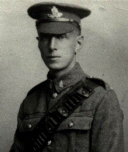
Joseph Henry Mees was born on Feb. 2, 1889, and 28 years old when he fought in the Battle of Vimy Ridge. As a gunner Joseph’s duty likely would have put him in frequent close proximity to direct combat – if he wasn’t participating directly.
He had left behind his wife Mary Julian Mees and two small daughters in Montreal. His role was as gunner, affectionately referred to as “the ammunition carrier”. During the First World War gunners provided close support to other men in combat or attacked targets and were often in close proximity to or participating in direct combat. Courage was incredibly important to these highly engaged artillery positions. One year after enlistment, Joseph found himself at the battle of Vimy Ridge. Joseph wrote home as much as possible and in one letter he mentions his Vimy Ridge experience. He writes that prior to the battle there was considerable shelling by the Germans, but until all their artillery was in place his crew could not fire back. However, the taking of Vimy Ridge went perfectly. He boasts that his infantry was tickled with his crew’s work. Soon after the battle, while he was resting in what was left of the village of Vimy, Joseph and three other crew members were injured by German shelling. Thankfully, his wounds were described as slight. He returned home to Canada in 1919, and quickly settled into the life of an ordinary man, like so many other returning heroes before and after him. He had two more children, worked as a tile settler and passed away at the age of 63 in 1952.Mees was born in Ireland of an English father and Irish mother. He is found in the 1901 Irish census. Like so many who served, he had moved to Canada in the decade before WW1. He is found in the Ancestry.ca's Canada, Voters Lists, 1935-1980 collection. There is further information at http://goo.gl/H2Y7D.
Sussex Family Historian, March 2013 Contents

The anniversary issue, wrapped in the usual colourful glossy cover, includes feature articles looking back:
The Early History of the SFHG
And To Bring Us Up To Date
A Link With The Past
Sussex Pre-1837 Marriages
40 Years Of Distributing The Historian
A Marked Card
The 1881 Census Indexing Project
Who Was John Doe?
Surnames As Given Names
Looking behind The Registers
Alfriston And Its Parish Registers
Ups and Downs Of Genealogy
Monumental Inscriptions
They Call Him 'Com' For Short
Henry's Crooked Little Fingers
The Sussex Baptismal Index
Aunt Sarah's Great Adventure
Envy Me?
There are also the regular items conventionally found in such a publication. One that caught my eye, reprinted from volume 8, was a note on deaths during the storm of 26-27 November 1703 (OS). Reportedly 8,000 people were killed, but the writer could find no excess burials in the East Grinstead parish register of the time. Today we have great online resources like a well referenced Wikipedia article.
06 April 2013
Coming to the Comox Valley, 20 April
A reminder to those in the Comox Valley, Vancouver Island and nearby BC mainland of an opportunity to hear BIFHSGO President Glenn Wright and Lesley Anderson from Ancestry.ca at a full-day seminar in Courtenay on Saturday, April 20th. Glenn and Lesley are perennially popular genealogy speakers.
There are six presentations, the first starting at 8:45am:
Treasures in the Parish Chest
They Came by Ship ... Finding Immigrant Ancestors Before 1865
Archives Revealed… Using Archival Resources, Online and On Site
Online Books ... Where to Find Them, How to Use Them
Wills and Probate
Getting Here From There – Immigration Records on Ancestry and Elsewhere 1865 - 1965
Norma O'Toole informs me there are still a few tickets available. The registration cut-off date is April 15th.
For more information and registration check out the Comox Valley Family History Research Group website at www.cvfamilyhistory.org/seminars.html
For a list of useful genealogy web site links compiled by Norma go to http://www.cvfamilyhistory.org/
The UK Curator's 100 Websites
To mark the start of a cooperative project "to archive the entire UK web, along with e-journals, e-books and other formats" curators and other experts from the British Library, the National Library of Scotland, the National Library of Wales, Bodleian Libraries, Cambridge University Library and Trinity College Dublin have chosen the 100 Websites which they judge will be essential reading for future generations researching our life and times in 2013.
The Curators' 100 is an interesting mix, sites familiar to most genealogists like http://www.nationalarchives.gov.uk/, sites more widely familiar like http://www.ebay.co.uk/ , and sites which reflect the quirks of the British such as http://www.unstbusshelter.shetland.co.uk/.
Information on a parallel Canadian initiative from Library and Archives Canada is here.
One World - One Family

You'll see some familiar names on the speakers list, in alphabetical order:
Grace Chan; Don Crawford; Mavis Finlayson; Steve Fulton; Nuala Farrell-Griffin; Dorothy Kew; Lori Oschefski; Shirley-Ann Pyefinch; John D. Reid; Donald Snow; James F. S. Thomson; Linda Westover; Christine Woodcock.
The topics are geographically diverse. See an almost complete list of the workshops and addresses at http://www.oneworldonefamily-theevent.com/Conference/Details/4
Why not make a holiday of it by visiting the Stratford or Shaw festivals, taking in one or more of the many cultural opportunities at museums, or reconnect at places in the family history.
FamilySearch adds Wales, Court and Miscellaneous Records, 1542-1911
This collection of more than 120 thousand images contains Court Records and Marriage Bonds from the National Library of Wales.
Court Records are gaol files for:
Breaconshire: 1666-1730
Cardiganshire: 1701-1730
Denbighshire: 1701-1730
Flintshire: 1542-1730
Glamorganshire: 1600-1730
Merionethshire: 1661-1727
Pembrokeshire: 1727-1730
Radnorshire: 1728-1730
Marriage Bonds are for:
St Asaph: 1616-1911
St David's: 1601-1817
05 April 2013
English Children in Canada
The following article was printed in The Ottawa Evening Journal 100 years ago today, 5 April 1913.
English Children in Canada
The Story of the Work of Mrs. Birt
Who Brought Thousands to Canada
During Her Forty-Three Years Work She "Mothered" no Fewer Than 14,000 Children, Whom She Settled in Canadian Homes
Canadians cannot fail to appreciate the book just published setting forth in a very lucid and interesting manner the work of Mrs. Burt, better known perhaps as Louisa McPherson, whose devotions to the settling of English children in Canadian homes has long ago proved an unbounded success, and the work in question will act as a permanent record of her life and that of her sisters, Miss Annie Macpherson and the Mrs. Merry.
The record is furnished by Ms. Lillian Birt, Mrs. Birt's daughter and bears the title of "The Children's Home Finder." Lord Strathcona has contributed an appreciative "forward" and the Hon. Lord Guthrie an introduction. It is published by James Nisbet and Co. Ltd, London, England at three shillings and sixpence net.
Mother of 14,000
The book states that during her 43 years work Mrs. Bert and her sisters "mothered" no less than 14,000 children, and found for each of them a welcome and a home in Canada. If we are not mistaken, Mrs. Bert was the pioneer of the emigration idea in England so far as destitute children are concerned. As long ago as 1870 she and her sister Annie opened their Home of Industry in Bethnal Green Road, in the East End of London.
Two years later their Sheltering Home in Liverpool was instituted. Those homes were called "Revival Homes,"from the fact that much of the money required for their support was obtained from readers of the religious weekly the "Revival," edited by Mr. R. C. Morgan.
The rough material with which the sisters had to deal, the orphaned and outcast children for whom they made themselves responsible, gave them at times a good deal of trouble.
"After having them washed, we had beds prepared for them, little thinking that we had to teach them to sleep in them – It was the same in everything. They had to be taught the most common ways of mortal life. But these early difficulties were overcome, and they learned to play, laugh and work, and sit still like ordinary children."
Young Citizens for Canada
The problems of what to do with the children after they had been transformed was forced upon Mrs. Birt and her coworkers by the acute labor troubles in London of the late sixties. In 1869 a circular was issued emphasizing emigration as a remedy, and in the following year Ms. Anne Macpherson accompanied by Ms. Bilborough made the bold resolve to go to Canada with a band of 100 boys who had been rescued from the perils of the London's slums. It was only natural that such an innovation should excite a little apprehension.
Rumors had come out that Miss. Macpherson was coming to Canada with 100 wild London street arabs, and the government ordered the immigration officer at Québec to make a strict inspection and send the whole lot back if they were unsuitable.
The agent, however, declared that they were a find, healthy, obedient set up boys, and that Canada could do with any number of that sort. He even offered to place the whole of them himself, but the offer was not accepted as Miss. Macpherson wished personally to place her boys and to know the families in whom they were to be entrusted.
Situations were found for 23 and 60 applications for boys came to hand from Hamilton alone. Miss. Macpherson adhered to the idea of distributing the boys as widely as possible so as to form a wider basis for future plans. At each point of her journey the immigration agents were ready to dispose of all the lads that remained.
Early Prejudices
In those early days there was understandably a prejudice against such material as that to whose welfare Mrs. Bert devoted herself. It affected both peoples and governments and it was not removed in a day. No one, probably, did more to overcome it than Miss. Macpherson and Mrs. Birt.
It was their persuasiveness and tactfulness, says Lord Guthrie, that induced the Canadians to allow the experiment to be made. Their careful selection of suitable boys and girls, the admirable training received in the London and Liverpool Homes, and the discrimination shown in planting them with suitable Canadian foster parents, secured results which made objection difficult, if not impossible.
In the end, as Ms. Birt shows, Canada passed from doubt to tolerance, and from tolerance to approval. At the outset the people and the government was disposed to ask "How many of these waifs must you send." Later the tendency was rather to demand "How many boys and girls can you possibly give us?"
That all but a small percentage of these young immigrants have turned out well is indicated by the records of the distributing house at Knowlton, Québec, which suffered from a fire last month while this book was passing through the press. During the past three years Mrs. Birt has been too feeble to take much part in the affairs of the homes, but the work of the Liverpool home is carried on under her daughter's supervision. This book is an interesting and worthy memorial to a noble woman and her great work.
04 April 2013
DNA Investigation: The Juggler’s Children
TVO has broadcast an interview by Steve Paikin with Carolyn Abraham, author of the recent book “The Juggler’s Children: A Journey Into Family, Legend and the Genes that Bind Us;” She tell him about her journey to India and Jamaica, and through stacks of archive documents and genetic tests, to solve the mysteries of her family history and find out who and what she is. The interview delves into some of the human relationship issues that arise.
You should be able to watch from http://ww3.tvo.org/video/187971/whats-your-genes or try http://theagenda.tvo.org/guest/154104/carolyn-abraham where you'll find a couple of other DNA-related videos as well. It may not play outside Canada.
Local BMD Updates
Every so often it can be helpful to check out the local BMD Index sites in UK BMD for your areas of interest as updates are added frequently.
2,976 Births for Cheshire, Trafford
Sale (1942-1946)
Sale (1942-1946)
2,106 Marriages for Lancashire, St. Helens:
Emanuel, Newton in Makerfield (1844-1990)
16,184 Marriages for Lancashire, Wigan and Leigh:
St. Elizabeth, Aspull (1951-1975)
St. Thomas, Wigan (1951-1970)
St. Paul, Goose Green (1951-1975)
St. David, Haigh (1951-1974)
All Saints, Hindley (1951-1975)
St. Peter, Hindley (1951-1975)
St. John, Hindley Green (1951-1975)
St. Matthew, Highfield (1951-1975)
Christ Church, Ince (1951-1975)
St. Mary, Ince (1951-1976)
St. John, Abram (1951-1975)
St. Thomas, Ashton in Makerfield (1951-1975)
St. Peter, Bryn (1951-1975)
Ince Register Office or Registrar Attended (1951-1966)
Wigan, Register Office or Registrar Attended (1951-1966)
5,349 Births in Staffordshire, East Staffordshire:
Burton-on-Trent (1968-1974)
5,023 Births in Staffordshire, Stoke-On-Trent
Burslem (1911-1912)
Fenton (1916-1920
Burton-on-Trent (1968-1974)
5,023 Births in Staffordshire, Stoke-On-Trent
Burslem (1911-1912)
Fenton (1916-1920
Ottawa Genealogist April-June 2013 Contents
The April-June issue of The Ottawa Genealogist for the Ottawa Branch of the Ontario Genealogical Society is out. The contents are:
NEWS
Upcoming Events
Message from the Chair
Notice of the 2013 Ottawa Branch OGS AGM
Cover Photo
This & That
Region VIII Ontario Genealogical Society AGM and Genealogy Day
Ottawa Genealogy 2013
FEATURES
The Ballad of Syd and Annie: A Genealogical Mystery
Norah Cousins-La Rocque Volunteer Award
Early Bytown Settlers Index
I’d Rather be Right Than Consistent!
Preserving Your Family Research
Obituary: Edward Jack Langstaff
Ottawa Branch Financial Statement for 2012
OLD-TIME STUFF: Sir James Grant and the Govt Museum
DEPARTMENTS
Electronic Notebook
Interesting Web Sites
Branch Library Additions
Gleanings from Newsletters in the Ottawa Branch Library
Special Interest Groups
Conferences, Meetings, Workshops & Blogs
Historic Plaques and Monuments
Note that there is an error in the date of the next DNA interest group mentioned. The meeting is as originally scheduled on May 4th and will take place in a meeting room on the 3rd floor of the City Archives building to accommodate the use of larger rooms for the Ottawa Genealogy event.
British Army WW1 Service Records
Ancestry.co.uk have updated there collection to now include all 1.9 million records for non-commissioned officers and other ranks who served in the British Army in WWI. The records are fully name indexed.
For viewing for free from Family History Centres FamilySearch has recently placed online 19,206,333 images from the same source, the National Archives: WO 363 (War Office: Soldiers' Documents, First World War "Burnt Documents") and WO 364 (War Office: Documents from Pension Claims, First World War). They are sorted by surname range.
03 April 2013
Margaret Burwell RIP
Margaret Ellen Burwell (nee Gallaher), a member of the BIFHSGO Hall of Fame, passed away at the Queensway Carleton Hospital on April 1, 2013.
At the founding meeting of the Society in 1994, Margaret agreed to be the Internet Group Coordinator. By 2001, her position had evolved into the Associate Director (Webmaster) position.
Margaret took on the responsibility of Registrar for the 2007, 2008 and 2009 conferences, and publicity for the 2010 conference. She was involved with introducing and refining on-line conference registration in 2008-09.
Marg was particular proud of her relative Nursing Sister Minnie Katherine Gallaher who died on June 27, 1918 in the deliberate sinking of the Hospital Ship Llandovery Castle by enemy action.
Condolences to Willis, daughters Lianne Burwell and Susan (Paolo) Pozzobon, granddaughters Kiera and Isobel Pozzobon, and her sister Anne (Keith) Wilson.
The official obit is at http://goo.gl/4W8o1
Genealogical Day at Lanark County Genealogical Society
Join members of The Lanark County Genealogical Society at the Beckwith Township Hall for a Genealogical Day on Saturday, April 27, 2013.
Starting at 9:30am the schedule includes presentations The First Nations and Lanark County by David Murdoch; The Forgotten Hero, Col. Alexander Fraser by Irene Spence and Ron Shaw and; Memory Trust by a panel of Lanark County “Old Timers”. The Society AGM will also be held.
Beckwith Township Hall, 1702 9th Line Beckwith, Blacks Corners, Ontario. is located at the corner of Highway 15 and Beckwith Concession 9. Free parking is available in the adjoining lot. Entrance is off Concession 9. The marketplace will include local heritage organizations.
Pre-registration, $25 including lunch, by April 17, 2013. Registration at the door $15 (no lunch). Further information at: http://www.globalgenealogy.com/LCGS
AFHS Journal Chinook Contents
The Spring issue of the Alberta Family History Society journal Chinook
is out featuring “Local Resources and Archives”. Here's the complete table of contents
• Alberta Family Histories Society – Contacts
• Editor’s Observations – Wayne Shepheard
• President’s Message – Lorna Laughton
• AFHS Discussion List
• Annual General Meeting Notice
• Future AFHS Meetings
• Call for Articles
• Your Family History in Canadian and British Newspapers – John D. Reid
• What’s Out There – Linda Murray
• Using Local Archives – Leslie Pearson
• Calgary Public Library – Christine Hayes
• The Provincial Archives of Alberta: A Personal Journey – Betty Thompson
• Library Research (Part 2) – Lois Sparling
• Germans From Russia – Mabel Kiessling
• Vital Statistics in Alberta – Susan Haga
• The Alberta Library Card and Archives Canada: Two More Resources – Laura Kirbyson
• Glenbow Library and Archives – Douglas Cass
• Family History Centres – Sheila Penner
• The Military Museums Library and Archives – Darlene Warren
• Computer Tricks – Jim Benedict
• AFHS Special Interest Groups
• Local Resources for Ukrainian Research – Xenia Stanford
• New AFHS Cemetery DVD
• AFHS Committees: Chinook – Wayne Shepheard
• Events – Laura Kirbyson
• AFHS Publications For Sale
• In Memoriam: Geoff Burtonshaw (1916-2012)
• In Memoriam: Joan Miller (1953-2012)
• Alberta Family Histories Society Information
Editor Wayne Shepheard comments that "While many of he articles will be mostly of interest to our local members, I think there are some that have more universal appeal due to their subject matter." Hopefully that applies to my article Your Family History in Canadian and British Newspapers.
If you have Alberta ancestors check out the new and updated databases accessible from the AFHS website.
02 April 2013
April Backup Nag
Did you remember to backup your hard drive this month? You wouldn't want to be an April Fool all month.
RootsTech Genetic Genealogy Panel Session
One of the most interesting sessions I attended at RootsTech was a panel on genetic genealogy chaired by CeCe Moore with Tim Jansen (advisory panel member, 23andMe), Catherine Ball (Ancestry DNA), and Bennett Greenspan (Family Tree DNA). Here's my summary.
Q. How do you persuade someone not interested in family history and DNA to contribute a sample?
A. Tell them you're interested in learning about your family history and you think you're related. Ask if they are interested in learning about your common family history and if you can collaborate?
Some people won't want to do it. Accept it, after you've explained the benefits to them in a way that they can understand. Many people don't want all the details, some just want a 15 minutes summary - then a brownie. In one case a cousin wasn't being cooperative, but his wife was able to persuade him!
Q. What do you tell people when they don't get good (high resolution) matches?
A. Be patient. As the databases get bigger it enriches the experience for everyone. Encourage others to test. Holes are being plugged all the time.
Q. What should I do if I get contacted by someone who is adopted and matches me on an autosomal DNA test but we don't know where the match might be?
A. He should join the Adoption DNA Yahoo Group. Make sure you've DNA tests from older generations so that you can limited the match to the mother's or father's side. Take it further by testing first and second cousins which will also help limit where the match occurs.
Q. If I have a DNA sample from a deceased person should I get an upgraded test now or wait until the technology advances?
A. Costs are coming down; technology is improving. Likely in 10 years everyone will be getting a complete DNA analysis so if you have limited sample wait. On the other hand despite the best preservation efforts by companies swab and spittle samples deteriorate. Although they'll always be good for Y- and mt- DNA tests they may not be satisfactory for the next generation of tests.
Q. Why is genetic genealogy still back in the old days of genealogy databases when each had its own incompatible format? If you and a cousin had your data on different databases they couldn't be brought together without reentering the data manually. Then came gedcom. When will the same thing happen for DNA data?
A. From each of the major companies you can download all of your own data. For Y-DNA you can place your data on YSearch and for mt-DNA on mitosearch both of which accept data from each of the major companies. For autosomal tests you can download your data from 23andMe and upload it to FamilyTreeDNA, for a price, and will soon be able to do the same for AncestryDNA results. Then you can use FTDNA's matching capabilities. Gedmatch, a private initiative, will accept the autosomal data for free. To ensure privacy you have to take the positive step of moving the data, just as you do with a gedcom. The database matching, maintenance and analysis provided is a value added commercial service.
Q. How can data from a whole genome medical DNA test be used for family history. How can it be used to help other medical studies?
A. From the medical test results it is possible to extract the SNPs used in genealogy. It requires a bit of programming; contact the people who did the medical testing. GenBank will take mt and complete DNA sequences for medical research purposes. You can also search the National Institutes of Health website and search for research on the disease of interest.
Q. How can I know whether there's enough sample available for future tests for someone who is elderly?
A. Family Tree DNA will respond to a request from clients and let you know how much sample remains. They will also send a new test kit so you can collect an additional sample if there is insufficient, without cost for existing clients.
Q. What is the limit of how many degrees of cousin-hood we can establish and are going to be able to to establish through an autosomal DNA test as technology improves?
A. At present the companies test pretty much the same SNPs, about 700,000 with 23andMe adding an additional 200,000 which are considered medically significant.
AncestryDNA is very confident (95%) in its prediction of a 4th or 5th cousin relationship. As you go further out relationship through multiple lines can muddy the waters. AncestryDNA has examples of correct predictions of 7th and 8th cousins.
There are examples of sections of autosomal DNA matching from ancestors with a common ancestor 500 years ago. But DNA inheritance is random so there may well be closer cousins that you don't match. Given the criteria established for matching by the testing companies 99% of the time you can identify a 2nd cousin, 90% of the time for 3rd cousins, 50% for 4th cousins, 10% for 5th cousins, 2% for 6th cousins.
Outside this session CeCe Moore had discussions with AncestryDNA which she reports at http://www.yourgeneticgenealogist.com/2013/03/ancestrydna-raw-data-and-rootstech.html
Sadly there's still no immediate prospect of AncestryDNA offering their service outside the US. I was told perhaps by the end of the year in Canada. Unlike Family Tree DNA which sold a large number of tests at WDYTYA Live last month because they had the test kits on hand, so the sample could be taken right there, AncestryDNA had no kits available at RootsTech!
01 April 2013
Benchmarks Update for March
Here's how March treated various favourite genealogy sites. Comparable figures are for a month ago. The higher the Alexa ranking the more popular the site.
Familysearch.org has 1,509 (1,489) record collections: census & lists 121 (121); birth, marriage, & death 924 (911); probate & court 132 (132); military 107 (106); migration & naturalization 81 (80); other 144 (139). It has Alexa rank 4,360 (4,660).
Ancestry.com has Alexa rank of 619 (652); ancestry.co.uk ranks 7.339 (7,757) and ancestry.ca 29,616 (32,182). There are 31,261 (31,241) datasets in the collections including 1,944 (1,943) for Canada, 1,798 (1,704) for the UK and, 25,082 (25,064) for the USA.
Findmypast.co.uk has an Alexa rank of 20,969 (21,204). Findmypast.com ranks 109,569 (108,642).
Coverage of MyHeritage.com is initiated with Alexa rank 5,050
Family Tree DNA has 405,351 (404,069) records in its database. It ranks 26,877 (30,605) on Alexa. 23andMe ranks 18,186 (20,483).
GenealogyinTime.com ranks 38,001 (37,212); Mocavo.com has rank 82,405 (78,847).
Britishnewspaperarchive.co.uk contains 6,678,465 (6,469,560) digitized pages adding 6,739 (4,378) pages per day. Major additions of more than 10 years in the last 30 days are: Aberdeen Evening Express 1879, 1881 - 1882, 1884, 1886 - 1892, 1894, 1899, 1914 - 1918; Arbroath Herald and Advertiser for the Montrose Burghs 1893 - 1906; Belfast Morning News 1859 - 1861, 1863 - 1864, 1867 - 1871, 1881 - 1882; Chester Courant 1794 - 1800, 1802 - 1806, 1810, 1812 - 1817, 1822 - 1824; County Courts Chronicle 1847 - 1870; Dublin Evening Mail 1849, 1861 - 1870; Grantham Journal 1854, 1857, 1890 - 1903, 1905 - 1906, 1908 - 1911, 1913 - 1914; Inverness Courier 1817 - 1892; Islington Gazette 1857 - 1872; John o' Groat Journal 1837 - 1871; Kent & Sussex Courier 1874 - 1909; Lichfield Mercury 1883, 1890, 1894 - 1896, 1919 - 1920, 1924 - 1925, 1932 - 1933, 1935 - 1936, 1944 - 1945, 1952, 1965; Maidstone Telegraph 1859 - 1871; Paisley Herald and Renfrewshire Advertiser 1853 - 1865; South London Chronicle 1859 - 1878; Alexa rank 124,939 (125,187).
Coverage of newspapers.com is initiated. It contains 37,237,601 pages and has Alexa rank 128,788.
Cyndislist.com claims 327,107 (326,552) total links in 197 (193) categories, with 1,791 (1,793) uncategorized. Alexa rank 85,289 (87,047).
FreeBMD.org.uk has 227,309,107 (226,280,181) distinct records, Alexa rank 77,176 (88,587).
UKBMD.org.uk provides 2,449 (2,446) links to web sites that offer on-line transcriptions of UK births, marriages, deaths and censuses. Alexa rank 261,316 (291,415).
CanadianHeadstones.com has over 604,000 (586,000) gravestone photo records from across Canada. It scores 434,324 (491,720) in Alexa traffic rank.
The Canadian Gravemarker Gallery, with over 711,073 (709,189) photographs from across Canada, ranks 3,223,526 (2,283,395).
bifhsgo.ca ranks 1,671,895 (2,247,578), qfhs.ca ranks 1,893,738 (1,864,093), ogs.on.ca ranks 218,660 (207,212).
And in case you're curious, Anglo-Celtic Connections has 4,484 (4,407) posts. March was a record breaking month with more than 31,000 pageviews. The .com site ranked 504,628 (441,748) on Alexa, the.ca site ranked 252,016.
Did I miss something significant? If so please post a comment with statistics if applicable.
Familysearch.org has 1,509 (1,489) record collections: census & lists 121 (121); birth, marriage, & death 924 (911); probate & court 132 (132); military 107 (106); migration & naturalization 81 (80); other 144 (139). It has Alexa rank 4,360 (4,660).
Ancestry.com has Alexa rank of 619 (652); ancestry.co.uk ranks 7.339 (7,757) and ancestry.ca 29,616 (32,182). There are 31,261 (31,241) datasets in the collections including 1,944 (1,943) for Canada, 1,798 (1,704) for the UK and, 25,082 (25,064) for the USA.
Findmypast.co.uk has an Alexa rank of 20,969 (21,204). Findmypast.com ranks 109,569 (108,642).
Coverage of MyHeritage.com is initiated with Alexa rank 5,050
Family Tree DNA has 405,351 (404,069) records in its database. It ranks 26,877 (30,605) on Alexa. 23andMe ranks 18,186 (20,483).
GenealogyinTime.com ranks 38,001 (37,212); Mocavo.com has rank 82,405 (78,847).
Britishnewspaperarchive.co.uk contains 6,678,465 (6,469,560) digitized pages adding 6,739 (4,378) pages per day. Major additions of more than 10 years in the last 30 days are: Aberdeen Evening Express 1879, 1881 - 1882, 1884, 1886 - 1892, 1894, 1899, 1914 - 1918; Arbroath Herald and Advertiser for the Montrose Burghs 1893 - 1906; Belfast Morning News 1859 - 1861, 1863 - 1864, 1867 - 1871, 1881 - 1882; Chester Courant 1794 - 1800, 1802 - 1806, 1810, 1812 - 1817, 1822 - 1824; County Courts Chronicle 1847 - 1870; Dublin Evening Mail 1849, 1861 - 1870; Grantham Journal 1854, 1857, 1890 - 1903, 1905 - 1906, 1908 - 1911, 1913 - 1914; Inverness Courier 1817 - 1892; Islington Gazette 1857 - 1872; John o' Groat Journal 1837 - 1871; Kent & Sussex Courier 1874 - 1909; Lichfield Mercury 1883, 1890, 1894 - 1896, 1919 - 1920, 1924 - 1925, 1932 - 1933, 1935 - 1936, 1944 - 1945, 1952, 1965; Maidstone Telegraph 1859 - 1871; Paisley Herald and Renfrewshire Advertiser 1853 - 1865; South London Chronicle 1859 - 1878; Alexa rank 124,939 (125,187).
Coverage of newspapers.com is initiated. It contains 37,237,601 pages and has Alexa rank 128,788.
Cyndislist.com claims 327,107 (326,552) total links in 197 (193) categories, with 1,791 (1,793) uncategorized. Alexa rank 85,289 (87,047).
FreeBMD.org.uk has 227,309,107 (226,280,181) distinct records, Alexa rank 77,176 (88,587).
UKBMD.org.uk provides 2,449 (2,446) links to web sites that offer on-line transcriptions of UK births, marriages, deaths and censuses. Alexa rank 261,316 (291,415).
CanadianHeadstones.com has over 604,000 (586,000) gravestone photo records from across Canada. It scores 434,324 (491,720) in Alexa traffic rank.
The Canadian Gravemarker Gallery, with over 711,073 (709,189) photographs from across Canada, ranks 3,223,526 (2,283,395).
bifhsgo.ca ranks 1,671,895 (2,247,578), qfhs.ca ranks 1,893,738 (1,864,093), ogs.on.ca ranks 218,660 (207,212).
And in case you're curious, Anglo-Celtic Connections has 4,484 (4,407) posts. March was a record breaking month with more than 31,000 pageviews. The .com site ranked 504,628 (441,748) on Alexa, the.ca site ranked 252,016.
Did I miss something significant? If so please post a comment with statistics if applicable.
31 March 2013
British First War Pension Records
The Western Front Association have posted an update to last year's announcement that they've acquired a collection of 6.5 million British WW1 pension cards:
Other Ranks Died (this contains nearly one million individual records)See an explanation and examples at
Widows and Dependents of Other Ranks Died (in excess of one million records)
Other Ranks Survived: Requested/Rejected/Receiving Pension (over 2.5 million records)
Officers survived and Officers' Widows (approximately 150,000 records)
Merchant Naval Cards (about 5,000 records)
http://www.westernfrontassociation.com/great-war-current-news/pension-records.html
Thanks to Glenn Wright for the tip.
Library and Archives Canada Report on Plans and Priorities 2013-14
The Library and Archives Canada 2013-2014 Report on Plans and Priorities has now been tabled in Parliament, along with those for many other departments and agencies. It shows actual spending, $120.3 million for 2012–2013, falling to $98.3 million in 2013-2014.
Last year's RPP showed human resources as stable at 1,117 Full Time Equivalents, but we were told to expect a 20% staff cut as a result of last year's budget. That would be 894 FTEs. The cut turns out to have been 23%, with this year showing 860 FTEs and expected to be stable for the next three years.

Each year I produce a Wordle showing the RPP's most used words. This the word modernization is entirely absent, it had ranked with documentary and information two years ago warranting 61 mentions which reduced to 28 mentions last year. Modernizing, modernized, modernize and modern are each mentioned once. Again this year there is no mention of genealogy, newspapers are mentioned once in connection with a storage facility. The phrase whole-of-society has come into fashion appearing 14 times.
Last year I wrote that "The section of most interest to clients is Resource Discovery" and the RPP explained that "LAC understands that its clients expect to have access to Canadian documentary heritage when, where and how they want it." I doubt clients needs have changed but Resource Discovery is out, mentioned only once "LAC will put in place an institutional discoverability policy that will address resource discovery issues and the specific policy instruments that are needed as a framework for the approach." In this inferno of frameworks and policies have pity on the front line employees attempting to deliver real resource discovery and access service to real people.
What service can we expect? Performance indicators and targets are supposed to be the benchmark of service.
The expected program outcome "LAC's collection is relevant to and representative of Canadian society" targets that 75% percent of users will consider that LAC's collection represents Canadian experience by March 31, 2015.
For fiscal year 2013–14 LAC targets 75% client satisfaction with the level of services provided through their preferred channels, specifically modernized online services.
For the same period they target 60% of clients being able to find what they are looking for online. As less than 1% of LAC material is online that seems like a hugely ambitious target.
Subscribe to:
Posts (Atom)


